
Commercial & industrial lighting · Milton
Commercial Lighting Maintenance in Milton
Lighting maintenance becomes easier to manage when a reported fault can be traced to a known location and fixture family. A list saying several lights are out is less useful than a record that identifies the aisle, room or exterior zone and explains what has changed since the last visit.
A maintenance plan connects those records with access, operating schedules and longer-term replacement decisions. It can help a facility avoid treating every new report as an unrelated event. Start with an accurate inventory and clear priorities, then establish which needs belong to routine care and which require separate investigation.

Separate a fault report from a maintenance priority.
Prioritisation should reflect the affected activity, extent of the concern and the facility's procedures. A failed light over an active work position can have a different consequence from a failure in an unused room. Emergency and exit-lighting concerns should be identified separately rather than combined with routine lamps on a general work list.
Commercial lighting repair addresses investigation of an existing problem. Record whether the light stays off, starts intermittently, changes with another control or has been reported repeatedly. The lights not working guide helps describe an outage, while the flickering lights guide helps capture the timing and affected area of inconsistent output. These are observation aids, not instructions to diagnose electrical equipment.
Where a concern affects how an area can be used, follow the facility's established arrangements for restricting or redirecting activity. Do not assume that another nearby fixture provides adequate visibility for the affected task. The maintenance plan should identify who receives reports and who decides the operational response while professional service is arranged.
Give each lighting location a useful identity.
A workable inventory does not have to begin with a complex database. Use room names, aisle identifiers, floor levels or exterior zones that staff already recognise. Associate each location with the fixture type, approximate quantity, mounting conditions and control group where known. Note uncertainty instead of filling gaps with guessed model numbers.
Existing drawings and product records can help, but check them against the present layout. A room renovation may have changed fixture positions; a tenant may have added a switch; older records may describe equipment that was replaced in stages. Retain a date and a source for the information so the next reviewer knows what has actually been checked.
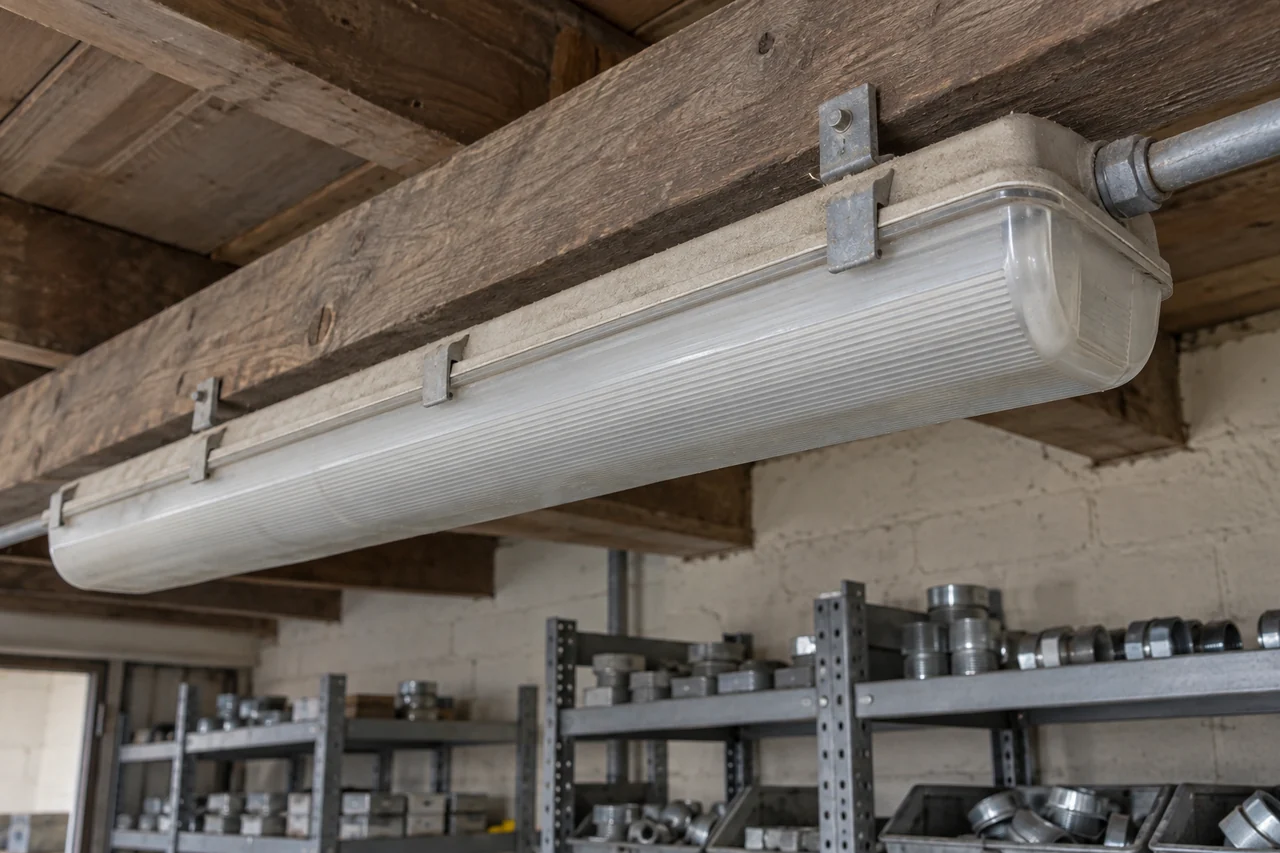
The lighting maintenance planning guide explains how these records support property-level decisions. At a single facility, the first benefit is clearer communication: an observation can be connected to a specific place, previous service and an agreed access route. Photographs taken from ordinary ground level can illustrate the location without asking staff to remove covers, reach ceiling equipment or read inaccessible labels.
Assign a reporting route that survives staff changes.
A maintenance plan needs a clear way for users to report new concerns between scheduled reviews. Identify the person or role receiving observations, the location reference to use and where the record is retained. The arrangement should remain understandable when staff, occupants or property contacts change.
Ask reports to include the observable symptom and relevant time without requiring a technical diagnosis. One central record can reduce the chance of several people creating separate requests for the same location. It can also preserve reports that need follow-up after a planned access window, instead of treating a visit as proof that every item was resolved.
Review outstanding questions with the confirmed service actions. A part awaiting identification, an inaccessible area and a recommendation for broader assessment are different statuses. Keeping them distinct helps the next request progress from the previous finding rather than restart the discussion from an incomplete fault list.
Service history can reveal a decision that an isolated report misses.
Repeated replacement at the same location deserves a broader review of the circumstances. Record the date, symptom, affected component if professionally identified and the action taken. A consistent record can show whether problems concentrate in one zone, one fixture family or a particular operating period. It does not establish the cause by itself.
Compare recurring reports with temperature, moisture, physical exposure and control behaviour known to the facility. A light that is switched frequently or exposed to an unsuitable environment may need a different investigation from equipment approaching the end of its useful service. Maintenance notes should preserve those distinctions instead of describing every event simply as a lamp change.
CCOHS guidance on flicker describes flicker as a lighting concern that can have several equipment-related causes. If staff report it, record what they notice and provide that information for qualified review. Keep the service finding separate from staff speculation. That protects the maintenance record from accumulating assumptions that later become treated as confirmed facts.

Parts consistency should support the application.
A growing collection of unrelated replacements can make future maintenance more difficult. Similar-looking products may have different drivers, mounting details, control requirements or replacement information. Retain the product documents for installed equipment and identify alternatives that require further checking rather than assuming that any fixture of the same shape will fit.
Consistency is useful when it preserves the distribution and environmental suitability needed at each location. A standard product family may include several versions for different areas. It should not force an exposed exterior location and a sheltered interior room into the same specification. Changes to control compatibility should also be recorded so later service does not unintentionally alter how a zone operates.
End-of-life equipment needs an appropriate disposal route. RPRA's lighting program information provides the official Ontario starting point for understanding lighting-product collection. The specific route depends on the material and applicable program arrangements. Include removal and disposal responsibilities in the work scope, especially where older lamp technologies are present, instead of leaving them as an unassigned handover issue.
Group access without making the work area harder to operate.
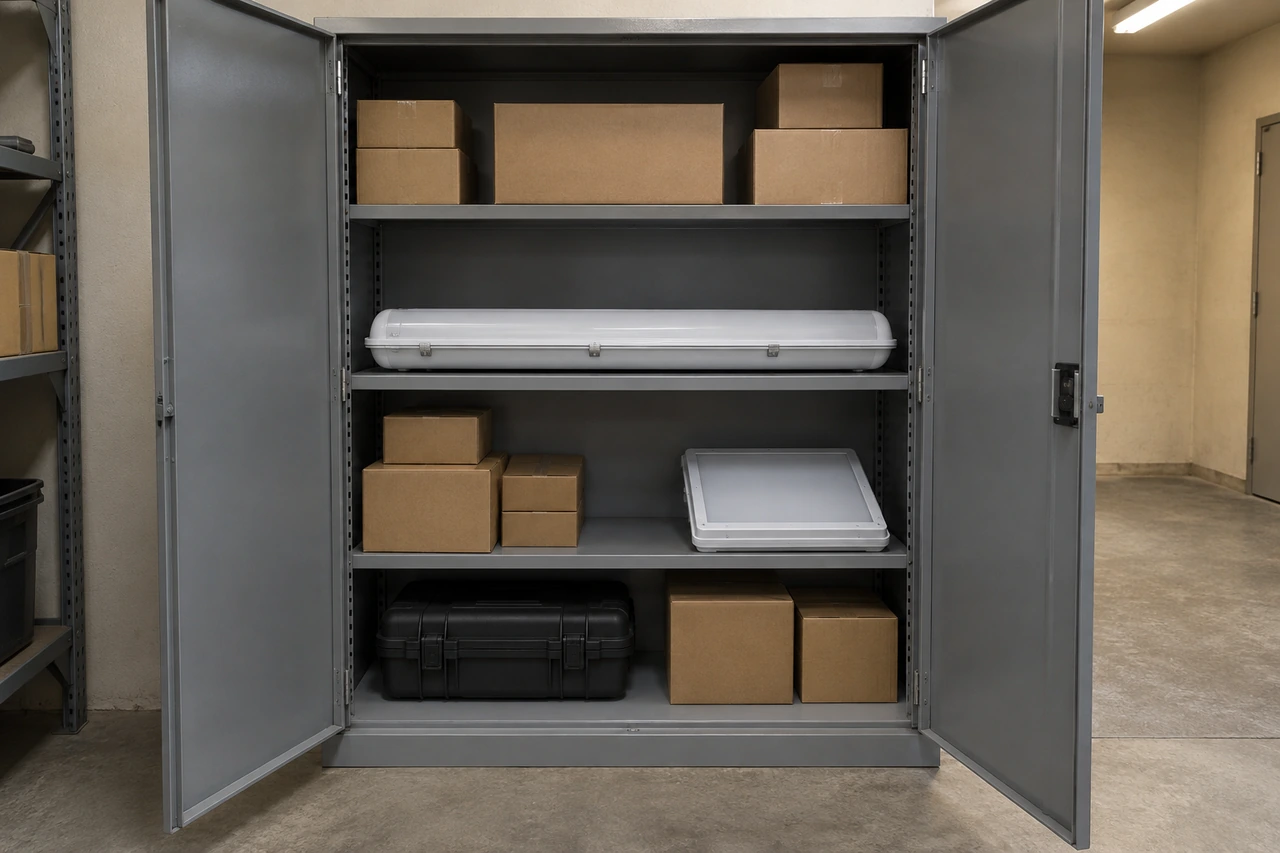
At elevated fixtures, the access arrangement can matter as much as the parts list. Racking, parked equipment, finished surfaces and pedestrian traffic may limit where work can occur. Grouping locations into a planned access window can be sensible, but only if the corresponding areas can be made available together.
For warehouses and distribution centres, identify the aisles that can be isolated and the stock movements needed beforehand. In manufacturing and industrial facilities, coordinate around machinery and production constraints. The plan should name the access contact and describe the available window, with the actual work method established for the site.
Exterior service adds different conditions. The parking lot outage guide helps identify affected poles or zones from safe observations. The parking lot repair and replacement guide then supports a comparison where repeated elevated access is becoming difficult to manage. Avoid promising a fixed completion period solely from the number of failed lights; access, components and findings can change the work needed.
| Maintenance record | Information to retain | Why it matters |
|---|---|---|
| Location | Recognisable zone and fixture reference | Connect future reports to previous work. |
| Symptom | What happens and when it occurs | Distinguish a new concern from a recurrence. |
| Access | Restrictions and available work window | Coordinate service with the operation. |
| Finding | Confirmed action and remaining questions | Keep facts separate from assumptions. |
Use maintenance evidence when planning replacement.
Maintenance and replacement budgets answer different questions. Service addresses equipment or functions that need attention now. A capital proposal evaluates whether a wider change is justified by the condition, performance and manageability of the system. Keeping the records connected allows that proposal to use evidence rather than a general impression that the lights are old.
Commercial LED retrofits can be compared when equipment availability, mixed fixture ages or ongoing service disruption warrants review. The retrofit guide describes baseline information relevant to that comparison. Use actual inventory, operating schedules and documented maintenance experience; generic savings percentages do not explain the value of a particular facility project.
Property management lighting services address responsibility and approvals across managed premises. Multi-site commercial lighting adds a portfolio perspective where locations need common records or procurement standards. For property managers and multi-site portfolios, a maintenance plan should still retain site-specific exposure, access and operating differences. A common reporting format can help without turning every property into the same physical scope.
The lighting service scopes can help keep immediate maintenance, a wider replacement proposal and portfolio work identifiable in the same property discussion.
Maintenance questions for facility records and scheduling.
How often should a commercial lighting system be maintained?
The interval should reflect the equipment, environment, observed condition, operating hours and applicable obligations. Product information and the facility’s existing procedures are useful inputs. Avoid a blanket schedule for every building. A plan can combine periodic review with a clear method for reporting new faults between planned visits, and should identify any separately required testing arrangements.
Should working fixtures be included in a service inventory?
Yes. A complete location inventory helps show the extent of a partial outage and the relationship between functioning and failed equipment. It also supports grouped access and future replacement decisions. Record working equipment without treating an inventory exercise as confirmation of its internal condition or compliance; those are separate findings that require the appropriate scope.
Can maintenance records support several properties?
Use a consistent format for location, symptom, action and outstanding questions, then retain the operational details of each site. Shared records can improve comparison, but different ceiling heights, weather exposure and tenant schedules still need individual attention. Identify who can approve work at each property so a portfolio report leads to an actionable local request.
Lighting service
Request service with a clear location and symptom record.
Share the facility address, affected locations, symptoms and relevant service history. Include access restrictions and identify whether the request concerns current faults or a planned maintenance review.