
Commercial & industrial lighting · Milton
Wall Pack Lighting in Milton
A wall pack's existing mounting point does not tell the whole story of its performance. The fixture may light a doorway effectively, create glare along an approach or send light beyond the intended service area. A replacement should be compared for the application, distribution and controls as well as its physical fit.
Start with the location and observed condition. Identify failed equipment separately from a functioning light that is poorly directed or unsuitable for a changed use. Include the surrounding routes, property boundaries and practical access so the scope addresses the wall-mounted system in context.
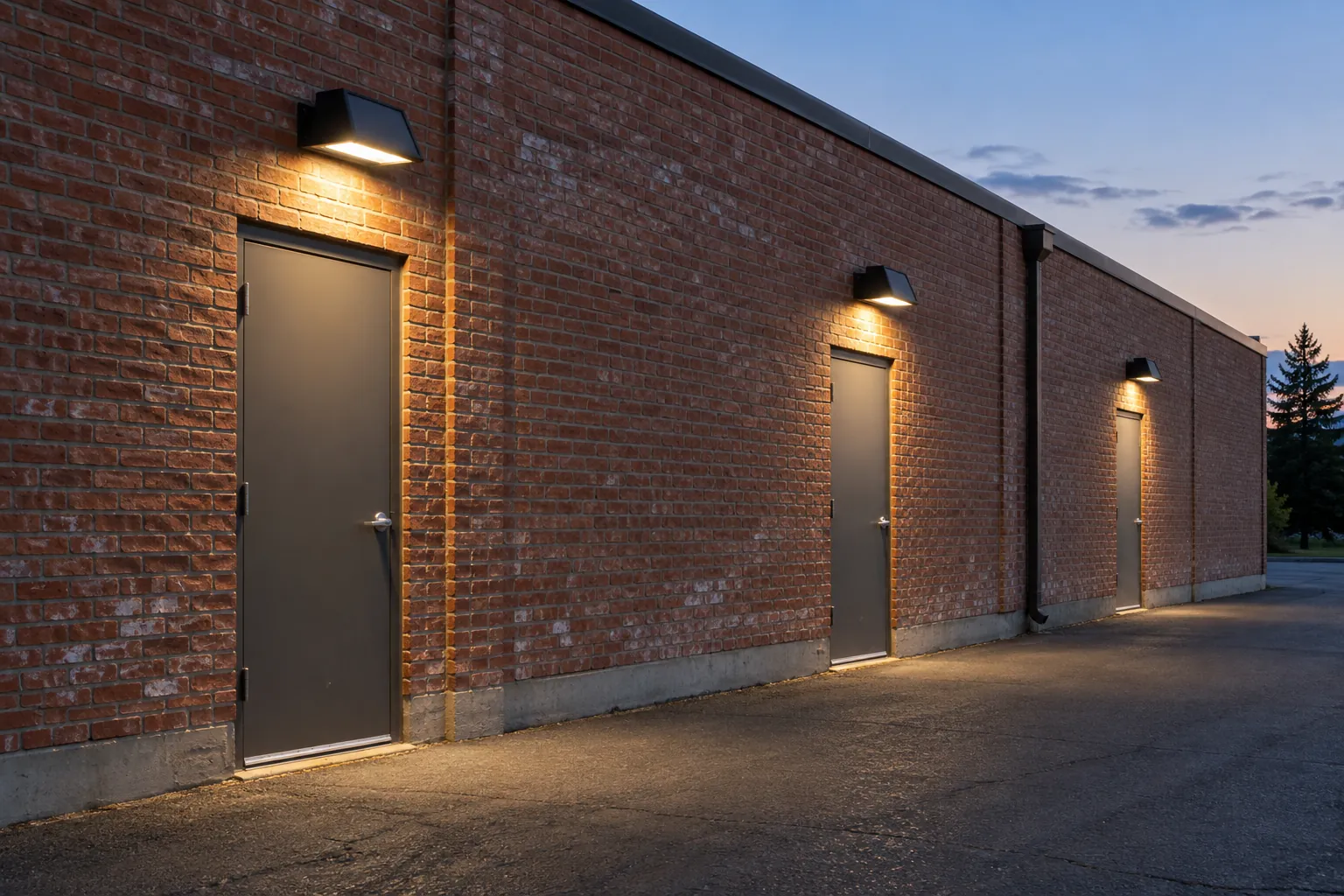
Give the fault or distribution concern a location record.
Identify the building face, nearest door or service area and a reference that the property can recognise. Record whether the fixture remains off, flickers, operates at unexpected times or appears to illuminate the wrong area. Include the operating period and any relevant service history without treating an observation as a diagnosis.
Commercial lighting repair covers investigation of existing problems. The flickering lights guide and lights not working guide help organise symptoms for the service request. Keep those details distinct from a general desire to modernise the exterior equipment.
Ordinary photographs can show the fixture location and surrounding area from safe positions. Do not reach the unit, remove a cover or inspect wiring to complete the report. Unknown product information can remain a survey question. A useful initial record allows the location and concern to be understood without requiring staff to establish the technical cause.
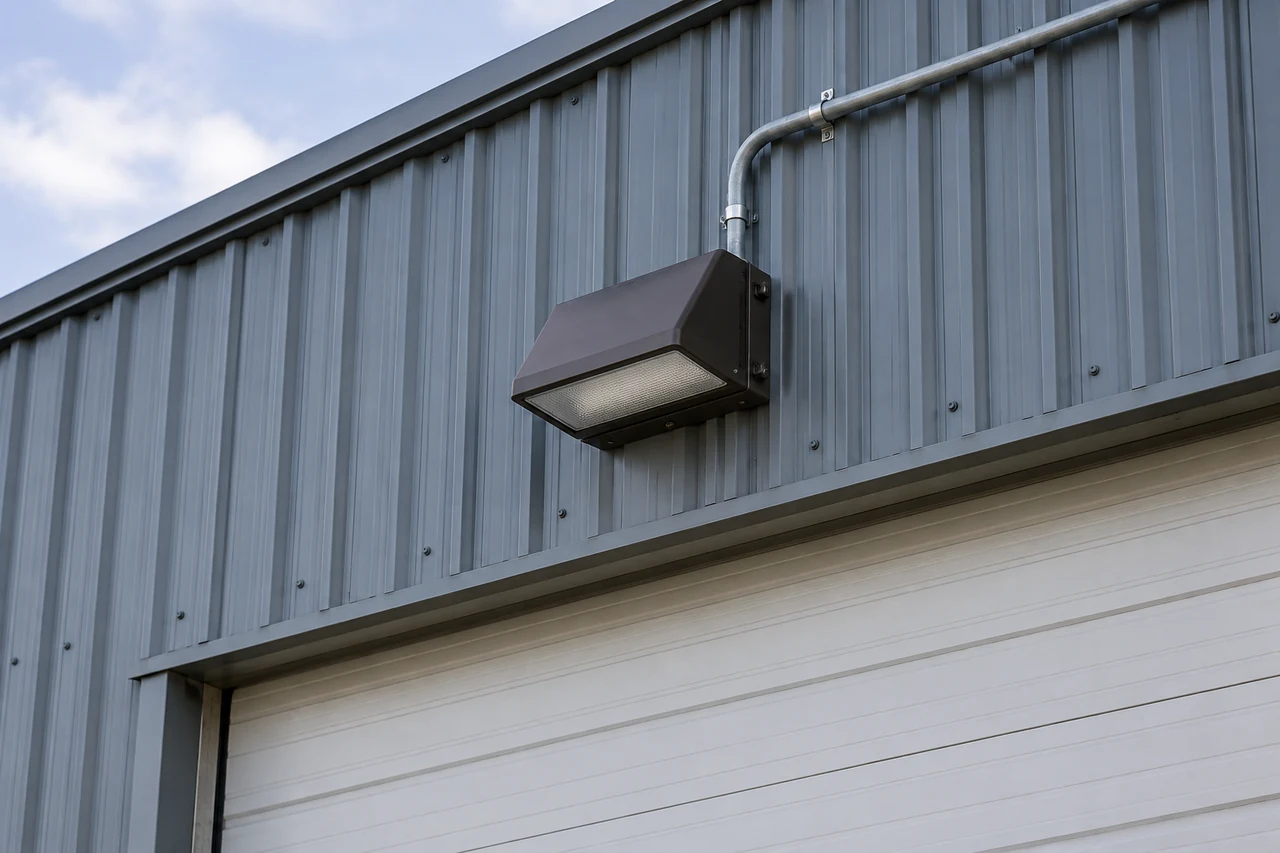
Photocell behaviour is part of the system review.
A wall light that operates unexpectedly may involve a photocell, timer, another control or the fixture itself. Record what happens and when, including whether nearby lights show the same behaviour. The observation helps define the investigation but does not establish the responsible component.
Photocells and exterior lighting controls covers the relationship between daylight-responsive operation and the wider control arrangement. The exterior lighting control problems guide helps describe timing or switching concerns. Confirm compatibility and intended behaviour for any proposed replacement rather than assuming the old control can be retained unchanged.
Do not bypass controls or cover sensors as an improvised diagnosis. Provide ordinary operating observations for qualified review. Where wall packs form part of a larger site group, the parking lot lights not working guide can help organise the affected zones. Keep wall-mounted and pole-mounted locations distinguishable even if their symptoms appear at the same time.
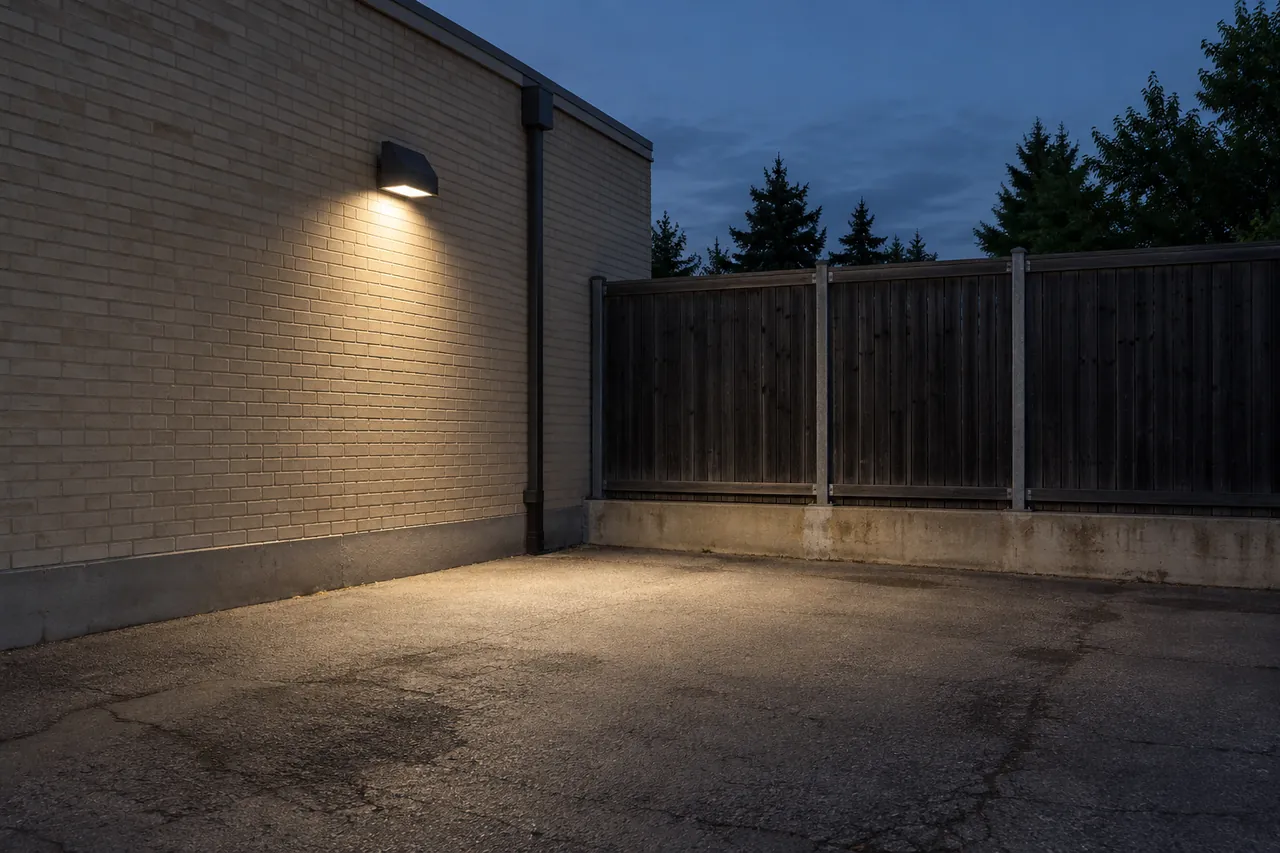
Compare distribution at the intended surface.
Wall-mounted equipment can have different distributions even when the housings appear similar. Forward light, downward light and shielding affect where the output goes and how the source is seen along the approach. The proposal should identify the intended surface or route and the normal direction of view.
Commercial exterior lighting develops the broader site relationship. A wall pack can serve a focused area within that scope, but a stronger replacement may not address a gap further from the building. It can also change glare or boundary effects if the distribution differs from the old unit.
The exterior lighting and photometric planning guide explains the information relevant to site-lighting review. Include current plans, known mounting heights and neighbouring conditions where available. Detailed photometric or approval documentation should be defined when required, rather than assumed to be included because the project involves a wall-mounted fixture.
The commercial lighting service scopes can help distinguish local wall-fixture service from a wider exterior improvement.
Review doors, approaches and service work together.
A wall pack may serve an entrance, a loading-related route or a small outdoor service area. These uses can involve different surfaces and viewing directions. Identify where people stand, move or check information, and whether doors, canopies or stored items obstruct the useful light.
Entrance and walkway lighting covers the pedestrian approach in more detail. Connect that scope where the concern extends beyond the immediate wall face. A light close to the door may leave an adjoining step, path or turning point less useful to see, particularly when the approach direction differs from the fixture's main distribution.
For warehouses and distribution centres, a service-area wall light may connect to staging or a dock route. Industrial condominiums and small-bay units may have several unit entrances close together, while retail stores and shopping plazas add tenant and shared-property boundaries. Describe the actual use and responsibility rather than assuming every building-mounted light serves the same function.
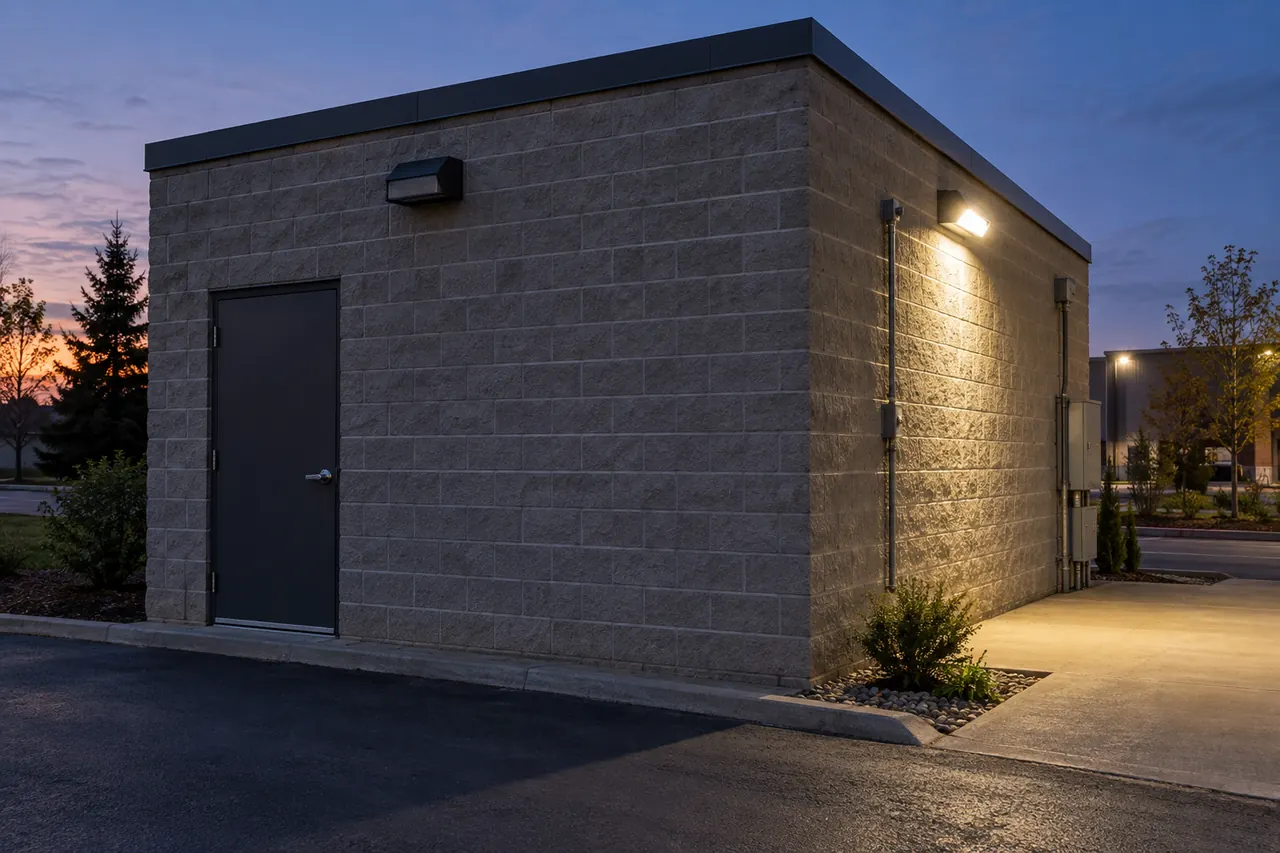
Keep glare and neighbouring property effects visible.
A bright wall fixture can be conspicuous from a walkway, parked vehicle or adjacent premises. Review the source from relevant ordinary viewing positions and record any reported spill or reflection. Useful light at the intended area and unnecessary light elsewhere are separate parts of the comparison.
The Town's zoning by-law information directs users to the applicable current material. Site requirements and property circumstances need confirmation for the proposal; avoid reducing them to one general rule for every wall pack. Where development documentation is relevant, the lighting scope should identify the appropriate review and records.
Shielding and distribution can be compared as product and application choices. A similar-looking replacement should not be assumed to preserve the old boundary effect, and a higher output should not be treated as an automatic improvement. Keep the intended coverage, viewing direction and surrounding property context together so the alternative can be assessed meaningfully.
| Wall pack question | Information to provide | Decision supported |
|---|---|---|
| Existing condition | Location, symptoms and service history | Repair investigation versus replacement comparison. |
| Useful distribution | Door, route or service surface | Product distribution and positioning. |
| Boundary effects | Approach views and neighbouring uses | Shielding and site review. |
| Controls | Normal schedule and unexpected behaviour | Compatibility and operating strategy. |
Weather exposure and mounting details need confirmation.
Describe whether the unit is sheltered, directly exposed to weather or subject to nearby cleaning and service activity. Product suitability should be checked for the actual application and manufacturer information. A fixture marketed for exterior use still needs to fit the intended mounting, control and environmental conditions.
Existing fixing points and housing size are only part of the replacement comparison. Record the details that need professional confirmation, including the condition of the mounting arrangement and equipment information unavailable from ground level. Do not treat a similar outline as proof that a new product is a straightforward substitute.
The ESA recognised certification marks information provides an official reference for approved electrical products. Approval, compatibility and application suitability remain distinct questions. A clear proposal connects all three with the intended distribution and future service arrangements, rather than relying solely on a recognisable certification symbol or product name.
Plan service around the building face and active routes.
Wall-mounted fixtures can sit above doorways, canopies, parked vehicles or narrow service lanes. Identify the access restrictions and the periods when the surrounding area can be made available. The work method should be established for the actual location rather than assumed from the fixture being lower than a parking pole.
Coordinate any temporary route or doorway restriction with the property contact. If several units can be reviewed together, group them where the scope and access allow, while keeping current priorities visible. A preferred window is a planning input, with the schedule confirmed against findings and equipment availability.
The parking lot repair and replacement guide provides a useful comparison framework where repeated exterior service prompts a broader replacement discussion. For wall packs, retain the local mounting and distribution differences. A replacement decision should explain the particular reason to change each area, rather than apply a blanket rule to all exterior equipment.
Retain product and location information after the work.
Update the wall pack inventory to identify the equipment actually installed or retained, its location and control group. Similar housings may contain different distributions or drivers, so the record should preserve those distinctions. Keep product documents and approved operating arrangements available for later service.
Review the result at the intended door, approach or service surface and from the normal viewing direction. Include the period relevant to the concern, particularly where daylight-responsive controls or after-dark distribution formed part of the scope. Look at surrounding property effects as well as the appearance of the fixture itself.
If the entrance use, outdoor storage or neighbouring conditions change later, the location record helps frame a new review. A fixture can continue operating normally while becoming less suitable for a changed route. Connecting product details with the original application makes future repair or replacement decisions more precise.
Wall pack repair and replacement questions.
Can a new wall pack use the existing mounting point?
Possibly, if the proposed equipment and application suit the mounting arrangement after appropriate review. Confirm distribution, weather exposure, controls and product requirements as well as physical fit. A replacement at the same point may restore operation without addressing a glare or coverage concern.
Why would a working wall pack need a different distribution?
The light may serve the wrong area, be conspicuous along the approach or affect neighbouring premises. A route or building use may also have changed. Describe the intended surface and observed concern so alternatives can be compared on their useful effect rather than only housing size or output.
What should we report when a wall light operates at the wrong time?
Record the location, normal expected period and what is observed, including whether other lights behave similarly. Provide readily available control information and service history. Those details support qualified investigation without staff bypassing controls, opening equipment or improvising tests.
Does replacing the housing automatically preserve the old coverage?
No. Similar external dimensions can contain different distributions and source positions. The comparison should retain the intended door or service surface and normal viewing direction as its objective. Record the selected product variant so later service can preserve that application rather than rely on visual resemblance.
Lighting service
Request service with the wall light location and observed condition.
Share the Milton building location, affected wall fixtures and symptoms. Include the door or service area they serve, operating behaviour, neighbouring concerns and restrictions on access.