
Commercial & industrial lighting · Milton
Commercial LED Lighting Retrofits in Milton
A commercial LED retrofit begins with the lighting already in the building: what is installed, how long it runs, which fixtures are failing and whether the layout still works. Replacing lamps, changing components and installing complete fixtures are different choices with different practical consequences.
Build a retrofit plan around the conditions in your Milton warehouse, office, workshop or commercial property. Compare useful light, control compatibility, access and future maintenance alongside the equipment cost. The aim is a defined replacement scope with realistic inputs, rather than a promised saving based on fixture wattage alone.

Establish a baseline you can trust
Start with a fixture inventory organized by area. Identify fluorescent systems, enclosed HID fixtures, older LED fittings and any mixed equipment introduced through earlier repairs. Record approximate quantities and known models from available schedules or maintenance records. A room containing several generations of lighting should not be represented by one assumed wattage.
Next, describe how each area operates. A warehouse dispatch strip may remain occupied after its storage aisles empty. A trade counter may use lighting during customer hours while its stock room runs only when accessed. Include seasonal patterns, shift overlap and areas currently left on for convenience. These differences influence both the replacement scope and any later energy estimate.
Condition belongs in the baseline too. Note repeated failures, damaged lenses, contamination, inconsistent colour and fixtures that are difficult to service. Existing light distribution may be acceptable in one zone and poorly matched to racks or worktables in another. Separate replacement of an ageing source from correction of a layout problem, so the proposed work addresses the right concern.
Use information already held by the facility and photographs taken from safe accessible positions. Unknown input should remain unknown until reviewed; it should not be filled with an optimistic assumption. A sound baseline explains what the proposed equipment is being compared with and which operating conditions are expected to stay the same.
The Milton LED retrofit guide explores the baseline in more detail. Facility context differs across warehouses, manufacturing properties and office and business-park areas; keep their operating assumptions separate.
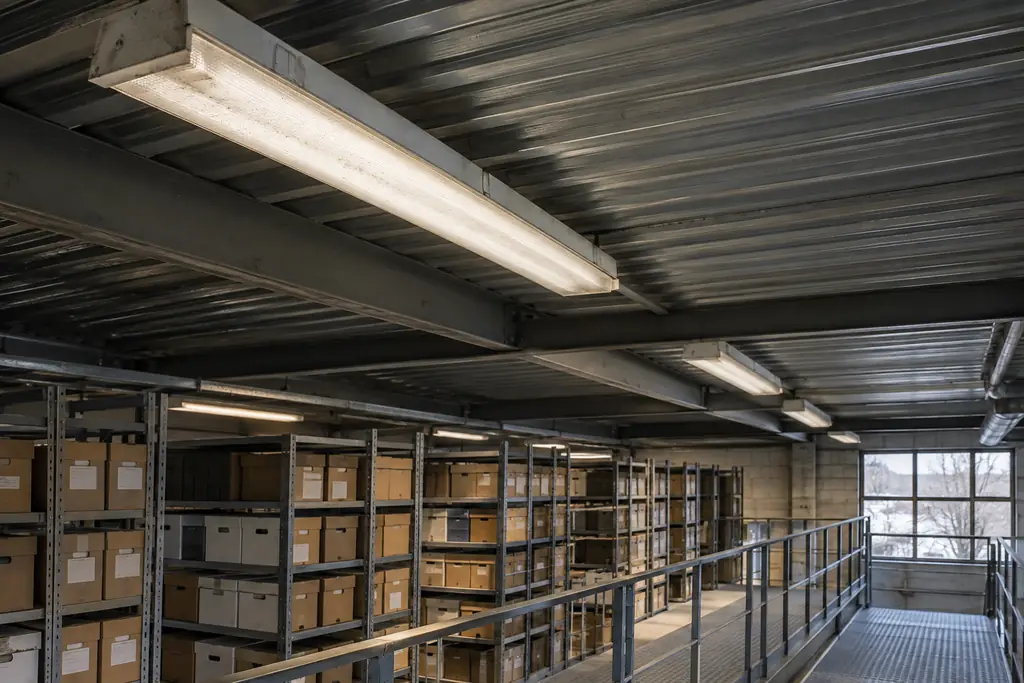
Compare replacement routes, not just product prices
These routes are comparison categories, not instructions for altering a fixture. The selected method must be suitable for the actual equipment and electrical installation. Product information and a clear scope should explain what will be retained, what will be removed and how the replacement will operate.
| Possible route | What needs checking | Important distinction |
|---|---|---|
| Lamp-based conversion | Existing housing condition, intended lamp and control compatibility, and the applicable installation method. | Retaining the housing does not make every conversion interchangeable. |
| Component replacement | Serviceability, compatible parts and the condition of the rest of the fixture. | A repair or conversion should account for the complete fitting, not one component alone. |
| Complete fixture replacement | Mounting, distribution, electrical interface, controls and access. | A new fixture can change coverage as well as input power. |
| Replacement with layout changes | Work positions, obstructions, spacing and control zones. | The project includes lighting improvement beyond a direct conversion. |
Fluorescent, HID and older LED need different reviews
Fluorescent lighting may be found above offices, stock shelves, workbenches and low industrial ceilings. The condition of the housing and optics matters alongside the lamps and ballast. Some areas can be discussed as a direct replacement, while a ceiling already cluttered with poorly placed fittings may call for a more deliberate rearrangement. The office LED lighting upgrade page considers occupied workstations, glare and room-by-room coordination.
Older HID systems introduce different questions about output, distribution, mounting and operating behaviour. A replacement high-bay should be evaluated at the actual height and with the racking or equipment below it. A smaller LED fixture that looks convenient in a catalogue is not automatically the right optical replacement for a broad older fitting. Review the high-bay LED lighting scope where access height and open-floor or rack coverage drive the decision.
Existing LED does not remove the need for a retrofit assessment. Components may no longer be available, colour may vary between repaired fittings, or the original control method may not support the proposed operation. Record the exact generation of equipment where possible and distinguish a localized service issue from a system-wide replacement opportunity.
For every route, review the complete product and intended installation. Electrical safety approval, efficiency qualification and compatibility are separate checks. A qualifying efficiency listing should not be treated as evidence that any proposed conversion method is suitable for the existing fixture.
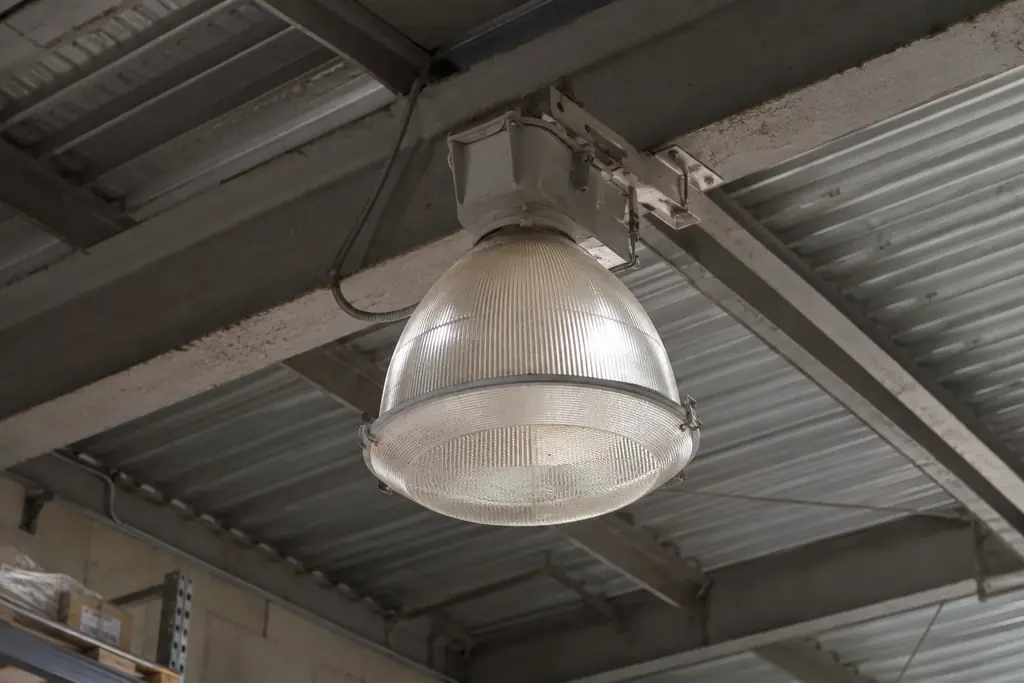
Estimate energy use from actual operating assumptions
A meaningful energy comparison uses the existing system input, proposed system input, fixture quantity and operating hours for each area. It should state whether control-related changes are included. If a sensor reduces lighting time in an intermittently used stock zone, that reduction should not also be counted as a separate full saving in the fixture calculation.
Keep the assumptions visible. A manufacturer’s fixture wattage is not necessarily the complete input of an older lamp-and-ballast system. Similarly, a schedule written on a wall may differ from the hours the lights actually operate. Where records are incomplete, identify the information needed to improve the estimate and show how the result depends on it.
Cost comparison should include more than purchased fixtures. Access, removal, installation, control changes, work-area preparation and the proposed phasing can be material parts of the scope. A lower equipment price may come with a less useful distribution or a maintenance arrangement that is harder to support. Put those differences beside the expected operating benefit.
Treat projected savings as a planning estimate, not a guarantee. Changes in production, occupancy, tariffs, schedules and future layout can affect the outcome. Where energy reduction is an important investment criterion, agree the baseline and the method for reviewing post-installation operation before the equipment is ordered.
Let replacement improve the light people use
An LED conversion should preserve or improve the intended visibility, rather than simply produce a lower connected load. Compare where the light falls, how the source appears from working positions and whether important vertical surfaces remain visible. Rack labels, trade-counter displays and workbench details can reveal problems that a photograph of the whole room misses.
Colour temperature and colour rendering should be considered in relation to the activity. A wholesale counter with daylight at one end may show replacement differences more clearly than an enclosed store room. Selecting a consistent family of fittings can help future maintenance, but consistency should still allow for the different needs of offices, storage and task areas.
Existing shadows or glare do not necessarily disappear when the source changes to LED. A fixture still positioned over a rack rather than its aisle can leave the same work location poorly served. If the objective includes redistributing lighting, describe that as an upgrade scope rather than assuming a direct replacement will solve it.
Controls can be reviewed with the replacement. Identify which fittings must dim, which zones may respond to occupancy and which areas need predictable manual operation. The fixture driver and selected control system must be compatible. The lighting controls pathway helps frame that behaviour before a collection of new devices is added.
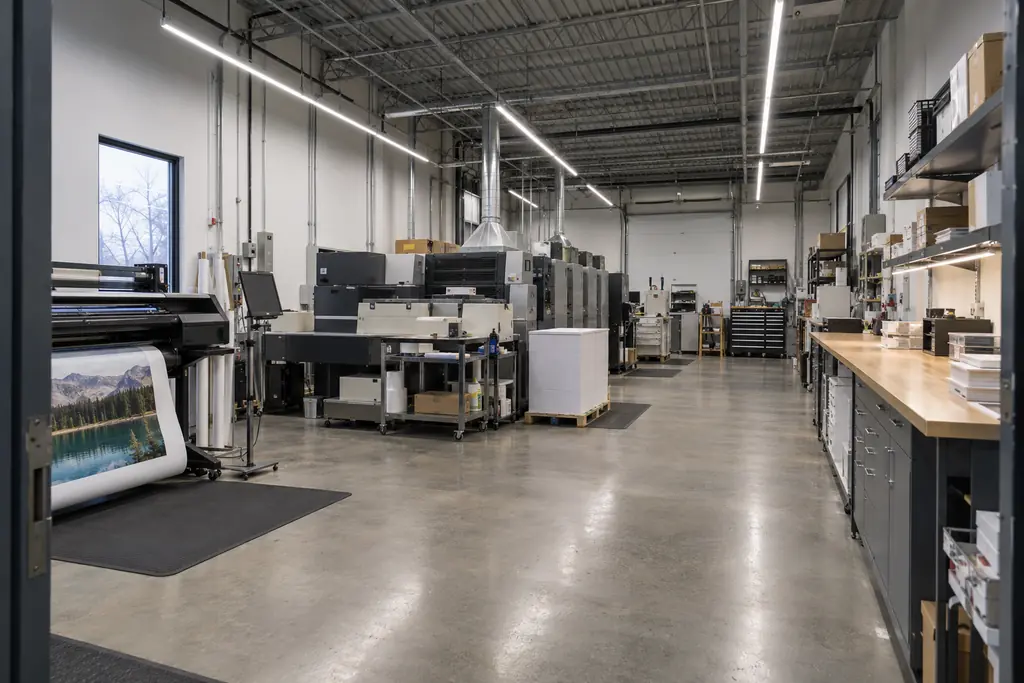
Organize a retrofit that fits the operating window
Group the baseline
Divide the facility into meaningful areas with their own fixture types, operating hours and concerns. Identify immediate service issues separately from the planned replacement. Keep an inventory version that everyone involved can use when equipment and access are discussed.
Compare the defined options
Review retained housings or complete replacement, intended distribution, controls and maintenance information. Include access and removal in the comparison. Record exclusions and uncertain conditions so the apparent equipment saving does not conceal work still to be established.
Set the phase boundaries
Agree what must be cleared, which activities continue and how each work area returns to operation. A phase may follow an aisle, room or department rather than an arbitrary fixture count. Coordinate product availability with the window actually offered by operations.
Review the installed result
Check the agreed control sequence and observe the replaced area under its normal use. Retain model information, settings and disposal records relevant to the scope. Where an energy estimate was prepared, compare later operation using the same stated boundaries and assumptions.
Check incentive structure before a purchasing decision
Ontario lighting incentives should be investigated while the project is being defined. The current Save on Energy Instant Discounts program is a relevant route for eligible retrofit purchases through participating distributors. Qualifying products and customer requirements need confirmation before buying. A posted program amount should not be described as a guaranteed cheque or a fixed reduction in the whole installed project cost.
Networked lighting controls have a separate Retrofit pathway. Confirm commitment timing and any proposed combination directly against the current program requirements and FAQs. Do not assume that every fixture, sensor, exterior product or mixed project qualifies. A project at an existing address may still contain work treated differently by the applicable program.
Keep the proposed models, quantities, customer information and invoice expectations connected to the actual scope. If a substitution is considered, recheck the relevant qualification rather than relying on the original product selection. Treat potential incentives as conditional inputs until the appropriate requirements have been confirmed.
The commercial lighting incentives page provides the broader program context. For the initial retrofit enquiry, it is enough to flag incentive interest and whether any equipment has already been purchased or contractually committed. That timing information can be important when deciding what options remain available.
Before procurement, ask how the selected fixture will be maintained. Establish whether serviceable parts are identified, what information should be retained and what happens if the model changes later. Review product service and support information, including what records and parts are needed later. Keep the fixture support question distinct from access and installation arrangements. These questions help compare replacement options on a basis that remains useful after the first purchase.
The current Ontario incentive guide explains the program distinctions to check before purchase.
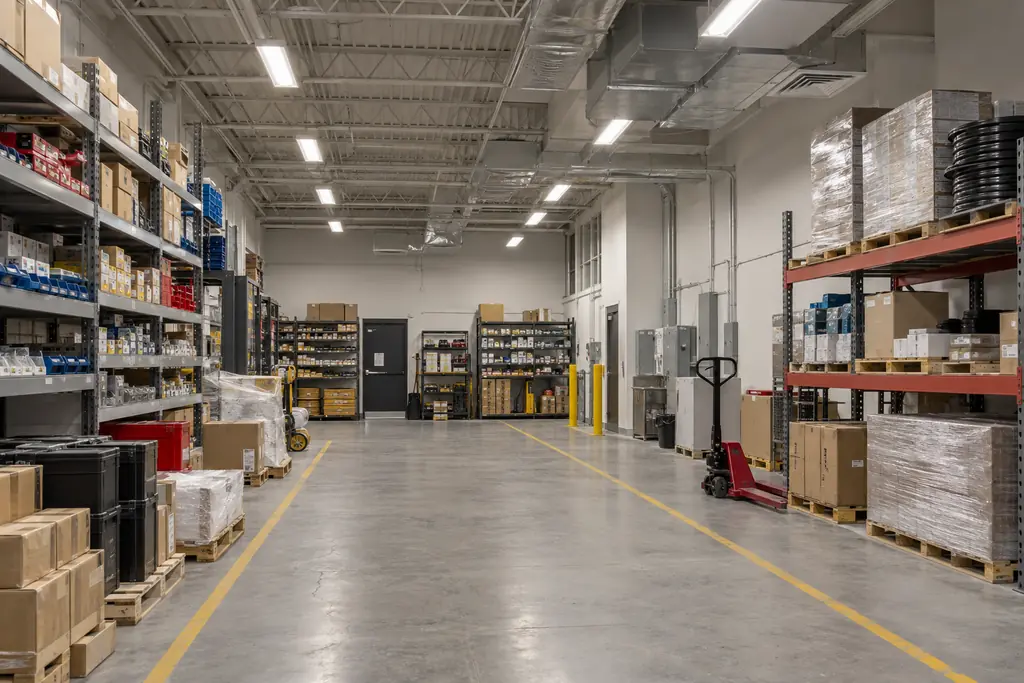
Plan removal, access and future maintenance together
A retrofit may remove lamps, complete fixtures, drivers or other components. Identify those material streams in the scope and confirm the collection arrangements appropriate to them. Lamp collection and whole-fixture disposal are not necessarily the same service. Do not leave removed equipment in a work aisle while responsibility for it is unresolved.
Access planning should include the removal stage as well as installation. A loaded rack bay, busy print room or customer-facing trade counter may need different preparation. Explain floor and aisle restrictions, delivery windows and any building rules governing equipment movement. If an area can only be released briefly, equipment and material handling must fit that window.
For future service, retain a fixture schedule by zone with model references and control information. Avoid a replacement plan that introduces numerous almost-identical fittings with different components unless the differences serve a clear purpose. Consistent records can make the next isolated failure easier to describe and reduce uncertainty when replacement availability is discussed.
A retrofit also provides a useful point to separate recurring maintenance from capital improvement. Some retained fixtures may remain serviceable and need a planned maintenance approach, while other areas justify replacement. Record both decisions. A staged project is easier to manage when the remaining system is described as clearly as the newly installed one.
For the retained system, consider maintenance planning. Exterior replacements may warrant the separate parking lot repair-versus-LED comparison rather than an interior retrofit assumption.
Questions about this lighting scope
Should every failed fluorescent or HID fixture be replaced with LED?
A current failure and a planned retrofit are different decisions. Consider repairability, the surrounding fixture condition, recurring faults, access cost and how well the lighting serves the area. A localized repair may be appropriate while a broader replacement is evaluated separately. Start through lighting service if the immediate need is an existing fault.
Can older LED fittings be included?
Yes, the assessment can consider an existing LED system. Record models and any control limitations or recurring service concerns. Replacement may be relevant when the existing arrangement no longer suits the operation or compatible support is difficult to establish. The LED label alone does not indicate the equipment’s condition or justify replacing every fitting.
Can work be phased around an occupied facility?
Discuss the areas that can be released and the hours available. A phased scope should include equipment delivery, fixture removal, access preparation and control changes, rather than only installation time. The practical sequence depends on the building and operational restrictions, so provide those details before assuming a particular completion schedule.
What information is useful for the first discussion?
Provide approximate quantities by area, known fixture types, normal lighting hours, recurring problems and a safe overview photograph. Include ceiling height if known and the activities that restrict access. Flag incentive interest and any purchases already made. Unknown details can be recorded for review without delaying an initial description of the project.
Ready to plan?
Plan the replacement around the existing system.
Tell us where the lighting needs to change, how the building operates and what timing matters. Start with the information you already have.