
Commercial & industrial lighting · Milton
High-Bay LED Lighting in Milton
High-mounted lighting needs to be selected as a fixture system: output, optics, mounting, controls and service access all belong in the decision. A brighter product is not necessarily a better match for the space below it.
Explore LED high-bay installation or replacement for a planned project, or request service for existing failed fixtures. Start with mounting height, the illuminated area and the condition of the present system so repair and replacement can be compared on useful information.
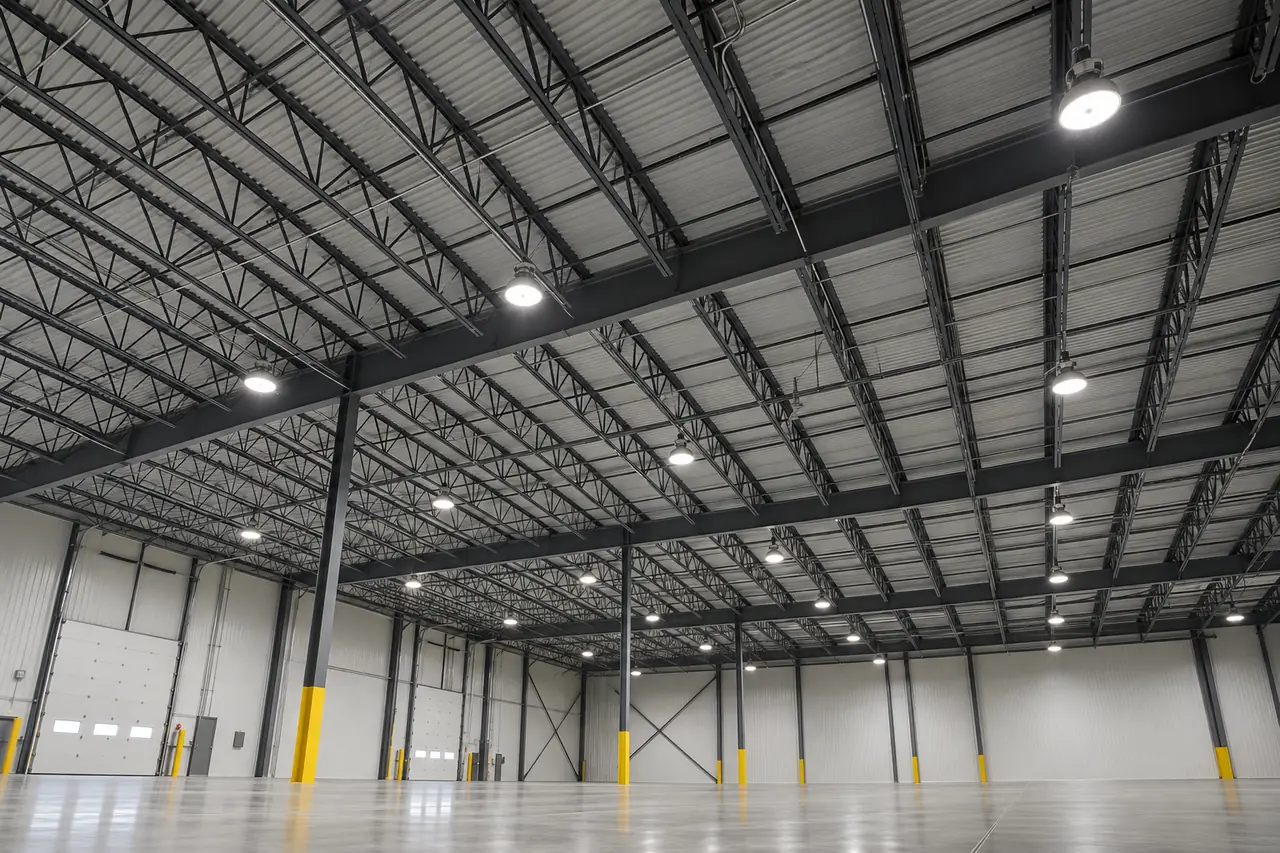
What makes a high-bay decision different?
A high-bay fixture is intended to illuminate a working area from an elevated mounting position. The distance to the task, the shape of the space and the way light is distributed matter together. A product's wattage describes electrical demand; it does not show whether enough useful light reaches a shelf face, assembly position or aisle.
Fixture form is only one part of the comparison. Circular and linear products can have different optical choices, output options and mounting arrangements. The appropriate selection depends on the application, not on a rule that every warehouse needs one familiar shape. A regular ceiling grid can also be a poor fit after equipment or racks are added.
This page focuses on the high-mounted fixture and its practical installation or service scope. For the overall work-zone plan, use warehouse lighting; for rack-specific coverage, use warehouse aisle lighting. Keeping those decisions connected helps avoid selecting a high-bay product first and discovering later that its distribution does not suit the operation. The correct comparison begins with where useful light is required.
For the wider operating context, compare warehouses and distribution centres with logistics and supply-chain facilities. Their work patterns can differ even when each uses high-mounted fixtures.
Use the services overview to distinguish high-bay fixture selection from wider warehouse layout changes, repairs and site controls when several decisions are involved.
Compare distribution alongside output.
The same nominal output can be delivered differently by different optics. A broad open bay, a narrow rack aisle and a tall room with lower work islands do not present the same geometry. Review fixture spacing, mounting position, surfaces and the height of obstructions before comparing replacement candidates.
An existing fixture layout is a useful record of what is there, not proof that every position should stay. A linear arrangement may support a particular aisle orientation, while an open area may call for a different distribution. Glare also matters where people can see the source from their normal working position. Review the intended sightlines rather than judging the fixture only from directly underneath.
Product information should make the output and optical configuration clear. If a fixture offers selectable settings, the proposed setting belongs in the scope; a maximum-output headline is not an installation plan. Colour temperature and consistency across adjoining areas should be considered as well. Compare the complete proposed product and its intended use, so apparently similar high bays are not treated as interchangeable simply because they share a wattage or external shape.
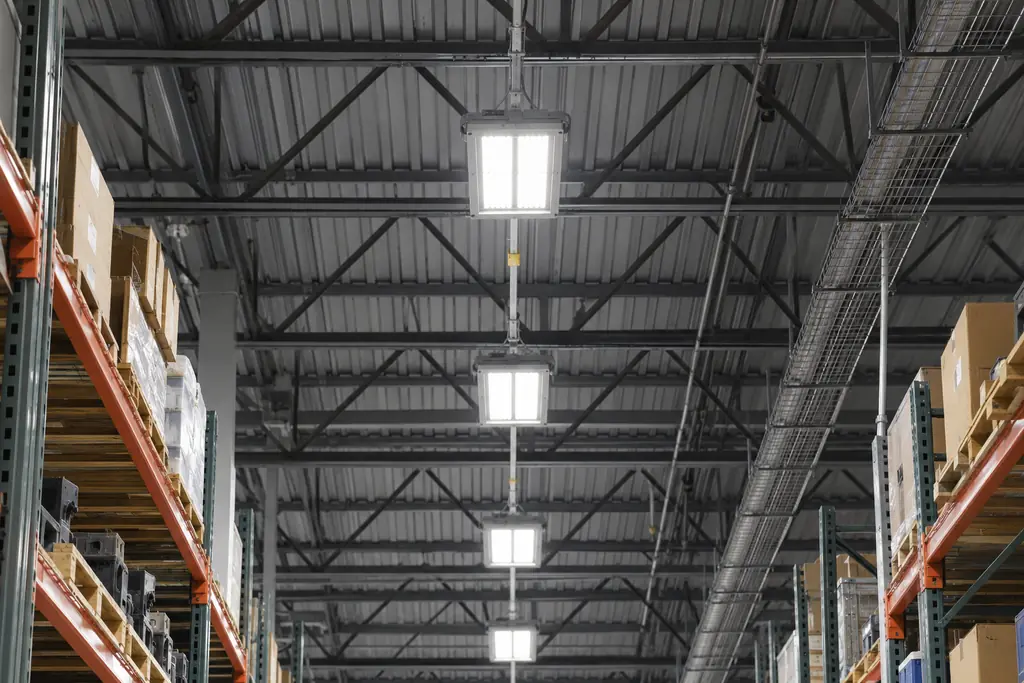
Roof conditions and clearances matter.
Deep joists, ducts, sprinkler piping, crane runways and other services can interrupt a high-bay layout. The mounting position needs to be considered with these surrounding conditions and with the selected product's instructions. The available height is not always the height that best serves the task.
Ambient and environmental conditions are also part of the product review. A roof space can differ from the occupied floor in temperature, dust and moisture exposure. Some industrial applications need specific equipment suitability; a general commercial fixture should not be assumed suitable for every production environment. Record the conditions and obtain the relevant product information instead of filling that gap with a generic durability claim.
Electrical safety approval is separate from energy-efficiency program qualification. The ESA approval-mark information explains recognised product approval. A component marking, efficiency listing or familiar brand name does not establish every requirement for the complete luminaire in the proposed application. Installation details and the actual electrical scope must be reviewed by the responsible qualified parties. Selecting LED technology alone does not resolve those responsibilities.
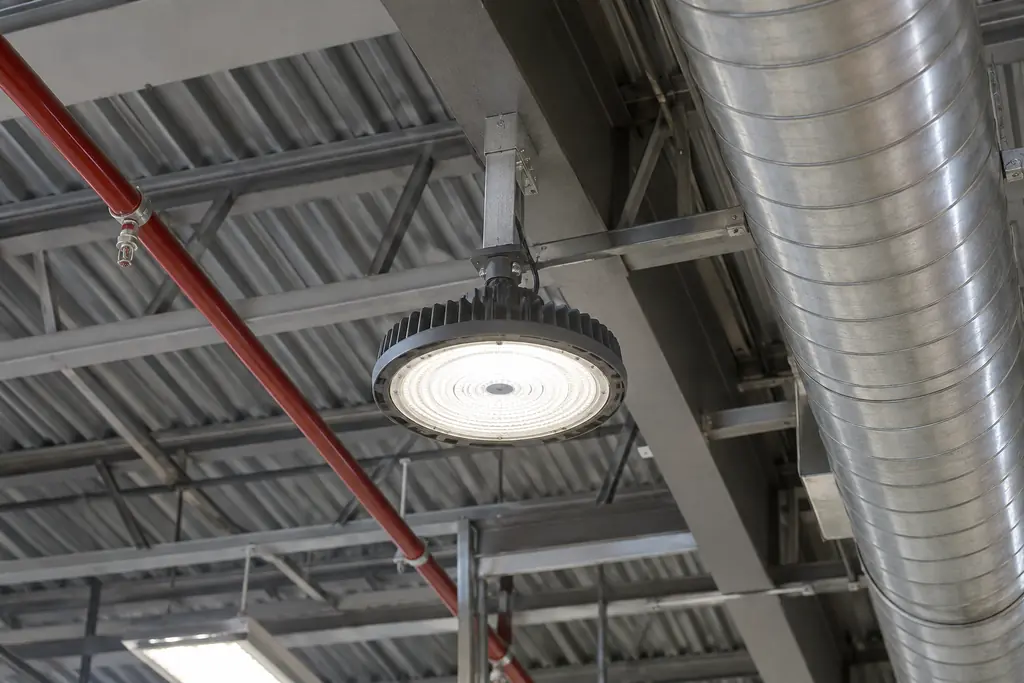
Use a complete fixture comparison.
A practical comparison should cover the installed system and the work needed to support it. Purchase price is one input; access, compatibility and future servicing may change the overall decision. Ask which assumptions are confirmed and which require a site review.
Use a consistent information set for each option. This makes differences visible when one proposal retains existing controls, another changes them, or two products offer different maintenance approaches. Avoid comparing a bare fixture price with a complete installed scope. A documented selection should explain the intended position, output configuration and operating behaviour, not simply the number of luminaires being supplied.
| Compare | Useful information | Why it belongs in the scope |
|---|---|---|
| Optics and output | Specific distribution, output setting and mounting position. | The useful coverage must suit the space and task. |
| Driver and controls | Supported dimming or sensing arrangement and compatibility. | Control behaviour depends on the selected equipment. |
| Mounting and environment | Support method, clearances and product suitability. | The roof structure and conditions affect installation. |
| Serviceability | Component availability, access and maintenance instructions. | Future work at height is part of the ownership decision. |
Repair, component replacement or a complete new fixture?
A dark or intermittent high bay does not identify its own cause. Driver condition, controls, supply issues and the light source can be relevant, but diagnosis requires an appropriate review. A ground-level video may help communicate when a symptom occurs; it should not be treated as proof that a particular component has failed.
Repair can be worth considering when the fixture family is suitable and serviceable, supported components are available and the surrounding system remains useful. Complete-fixture replacement may be a better option where component availability, age, mixed equipment or an unsuitable distribution makes continued repair less practical. Keep the immediate fault response separate from the reasons for a broader upgrade.
Commercial lighting repair provides the service route. If a replacement project is under consideration, commercial LED retrofits addresses inventory and baseline questions. Record the number of affected units, their locations and repair history before making that comparison. Do not assume every failed high bay must be replaced, and do not assume that changing a driver is appropriate for every product or fault. The actual equipment and findings determine the scope.
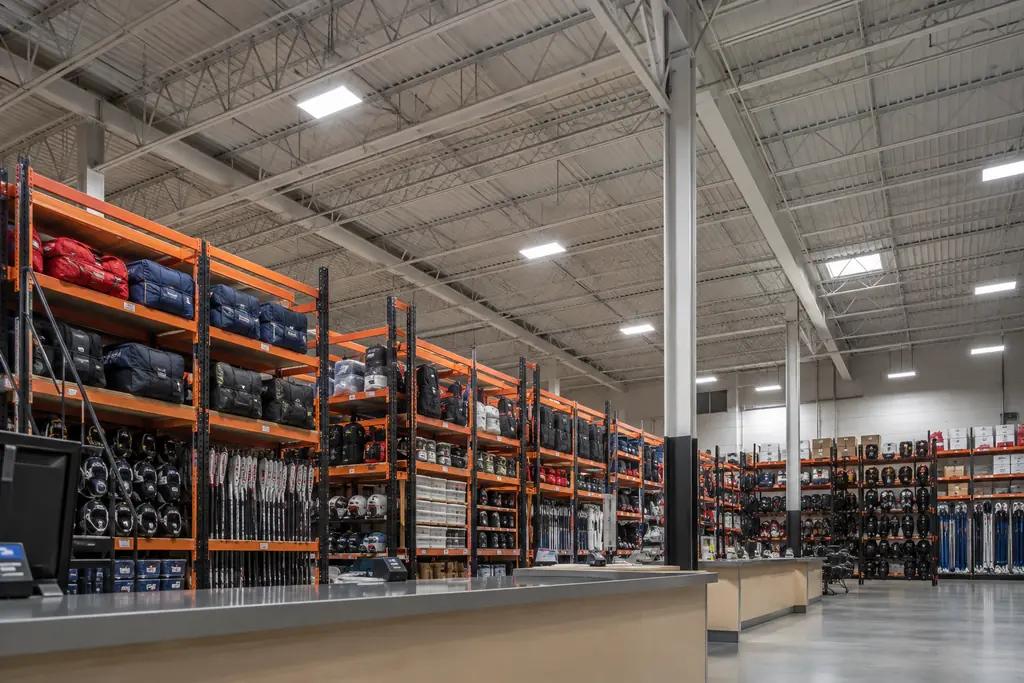
High access changes the project economics and sequence.
The cost and disruption of reaching a fixture can be significant, particularly where racks, equipment or ceiling obstructions limit the route. Review access for the installed position rather than assuming an open floor somewhere in the building provides the necessary clearance.
Describe the aisle width, overhead restrictions, floor conditions and areas that can be isolated. A new fixture installation, grouped replacement and isolated repair can each call for a different sequence. For an occupied bay, the work zone needs coordination with normal movement and stored material. A proposed programme should identify stock or equipment relocation and any shutdown restriction that affects the work.
Repeated access for a mixed ageing system can be a reason to evaluate a larger replacement phase, but that choice should be tied to condition and maintainability. There is no universal threshold at which repair stops being worthwhile. Compare a defined repair option with a defined replacement option and include the access arrangements in both. Do not climb racks or use improvised platforms to collect information. The initial enquiry can use ordinary safe observations and existing records, with technical identification completed through an appropriate site process.
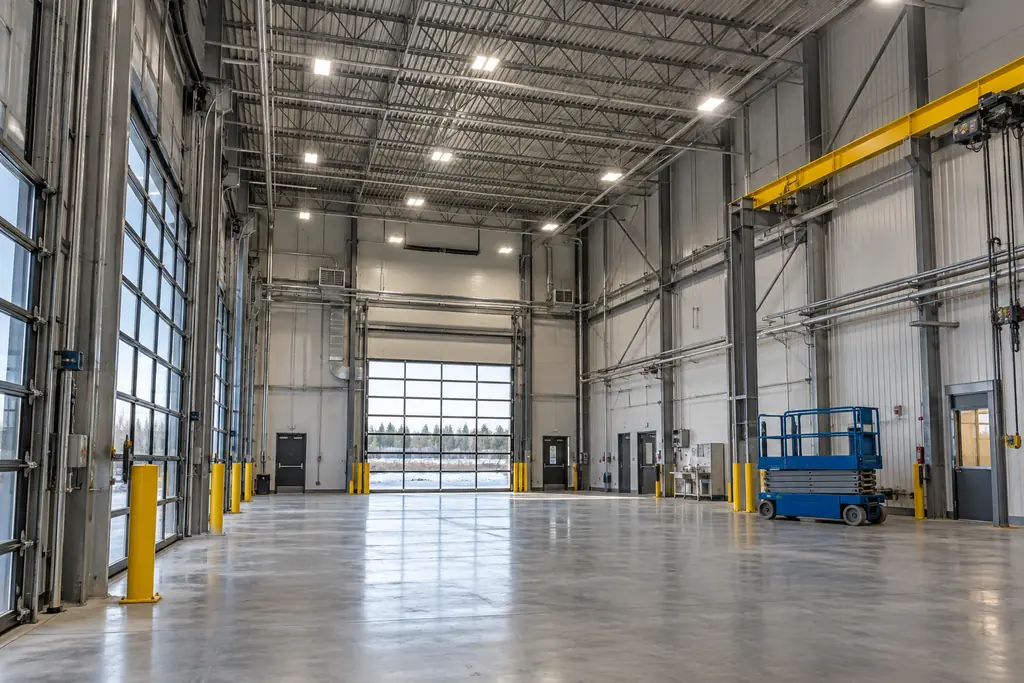
Coordinate high bays with adjoining lighting and sensors.
A tall storage bay may meet a lower receiving area, office mezzanine or packing bench. These transitions matter when choosing output and controls. An isolated bright zone can make an adjoining area appear difficult to see, while a fixture above a high opening may not serve the lower task beneath it.
Review whether the high-bay system should share a schedule with surrounding areas. Occupancy can differ between an infrequently used stock aisle and a continuously used packing station. Where occupancy and vacancy sensors are considered, coverage, mounting suitability, control compatibility and the work pattern need to be checked together. A sensor fitted to a fixture does not establish that the zone will behave correctly behind racking.
Discuss entry behaviour, inactive settings where supported, time delays and authorised overrides. These settings should suit the facility's operation and relevant requirements, with representative conditions checked after installation. The warehouse controls guide helps organise the questions. Controls can be an important part of a high-bay upgrade, but they are not an automatic remedy for dark shelf faces or poor fixture distribution.
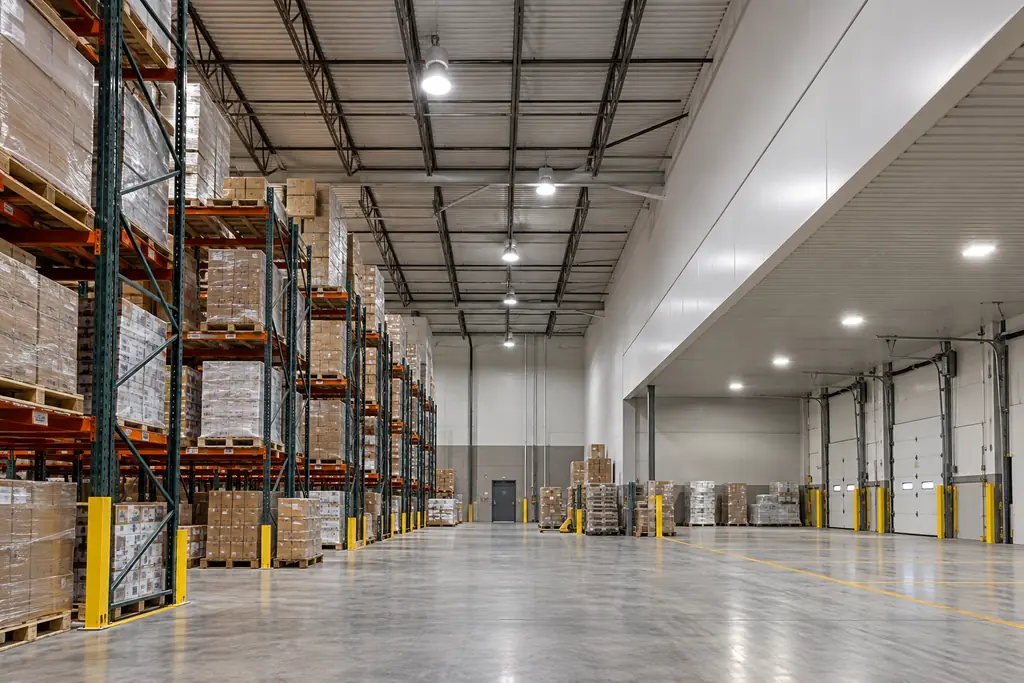
Prepare information for a high-bay assessment.
Start with the property location, the type of space and the reason for the enquiry. Is the objective to replace an older system, add fixtures after a layout change, reduce recurring access or restore failed lights? Provide approximate quantities and heights only where known. Identify uncertainties so they can be checked before products or quantities are finalised.
Helpful records include existing product information, maintenance history, operating hours, control descriptions and a current layout. Photographs can show the roof structure, obstructions and area below the fixtures when taken safely from ground level. A night-shift concern should be described as such; a daytime photograph alone may not show it.
Milton's employment-area mix includes industrial, logistics and manufacturing uses, according to InvestMilton. High-bay needs within those facilities can differ substantially. The manufacturing and industrial facility context is useful when environmental conditions and task areas influence selection. Request a site assessment for a planned scope, or use lighting service for an existing fault. Confirm any potential incentive pathway separately before a purchase commitment; no high-bay product or project is assumed eligible here.
Make the selection review specific.
Where several high-bay options appear similar, identify the questions that would change the choice. A proposal may need clarification of the exact optic, a manufacturer control-compatibility statement or confirmation of the permitted operating conditions. These are specific information gaps; they should not be concealed by a broad description such as industrial grade.
A representative trial area can be useful when its scope is agreed. Select a position that reflects the actual mounting height, obstructions and task, then define what will be reviewed. An easy open bay may not represent a dense rack block. Staff feedback should identify visibility and comfort at normal work positions, while technical checks remain the responsibility of the appropriate qualified parties.
Document the accepted configuration before expanding a phase. If output settings, control parameters or product options change, retain the revised information with the fixture schedule. That record helps avoid a later shipment or replacement being assumed equivalent when it uses a different configuration. A trial is a decision tool, not a guarantee that all areas need the same arrangement, and it does not replace any detailed design, approval or testing required by the actual project.
Explore high-bay and retrofit guidance.
Commercial LED retrofit guide
Organise the existing system before evaluating a replacement.
Flickering commercial lights
Record an intermittent symptom without attempting electrical diagnosis.
Commercial lights not working
Prepare clear locations and observations for a service request.
Dark warehouses and aisles
Separate a visibility concern from a failed-fixture assumption.
High-bay LED questions.
Can an LED high bay replace an HID fixture one for one?
Sometimes a replacement position can be retained, but a one-for-one count does not establish equivalent useful coverage. Compare mounting height, distribution, output, task locations and control arrangements. Changes in racks or activity may justify a revised layout. Include removal, access and the electrical scope in the comparison rather than treating the physical swap as the whole project.
Is a linear high bay always better for an aisle?
Fixture shape alone does not settle the choice. Review the specific optics and how they align with the aisle, shelf faces and mounting height. Products with similar shapes can distribute light differently. The rack layout and proposed fixture information should be considered together. A narrow aisle also needs to be reviewed as part of adjoining cross aisles and control zones.
Should replacement high bays have the highest available output?
Choose output for the application instead of selecting the maximum by default. More output can increase glare or create strong contrast without improving the task that prompted the enquiry. The selected output setting, fixture positions and distribution should be explicit. Where task-specific design or measurement is required, identify it as part of the project scope.
What belongs in the handover information?
Keep a record of the products, locations, output settings where applicable and control zones actually installed. Include manufacturer information relevant to maintenance and future service. Any changes made during operating checks should also be recorded. Clear identification helps a later service request describe the affected fixture and reduces reliance on visual guesses from the floor.
Ready to plan?
Plan the next step around your facility.
Include the mounting height if known, affected fixture locations and whether this is a new system, replacement project or existing fault. Ground-level photographs of the roof structure and work area can help explain obstructions and access. Do not climb to obtain a fixture label.