
Commercial & industrial lighting · Milton
Manufacturing Facility Lighting in Milton
Manufacturing lighting needs to fit the production task, the machinery around it and the conditions in which work takes place. Assembly, inspection, changeover and movement can require different approaches within one hall.
Plan improvements around the positions where visibility matters, including equipment shadows and reflections from work surfaces. General lighting, local lighting and task lighting should be considered together, with environmental suitability and maintenance access included from the beginning. The process determines the questions; one universal brightness target cannot describe every manufacturing operation.
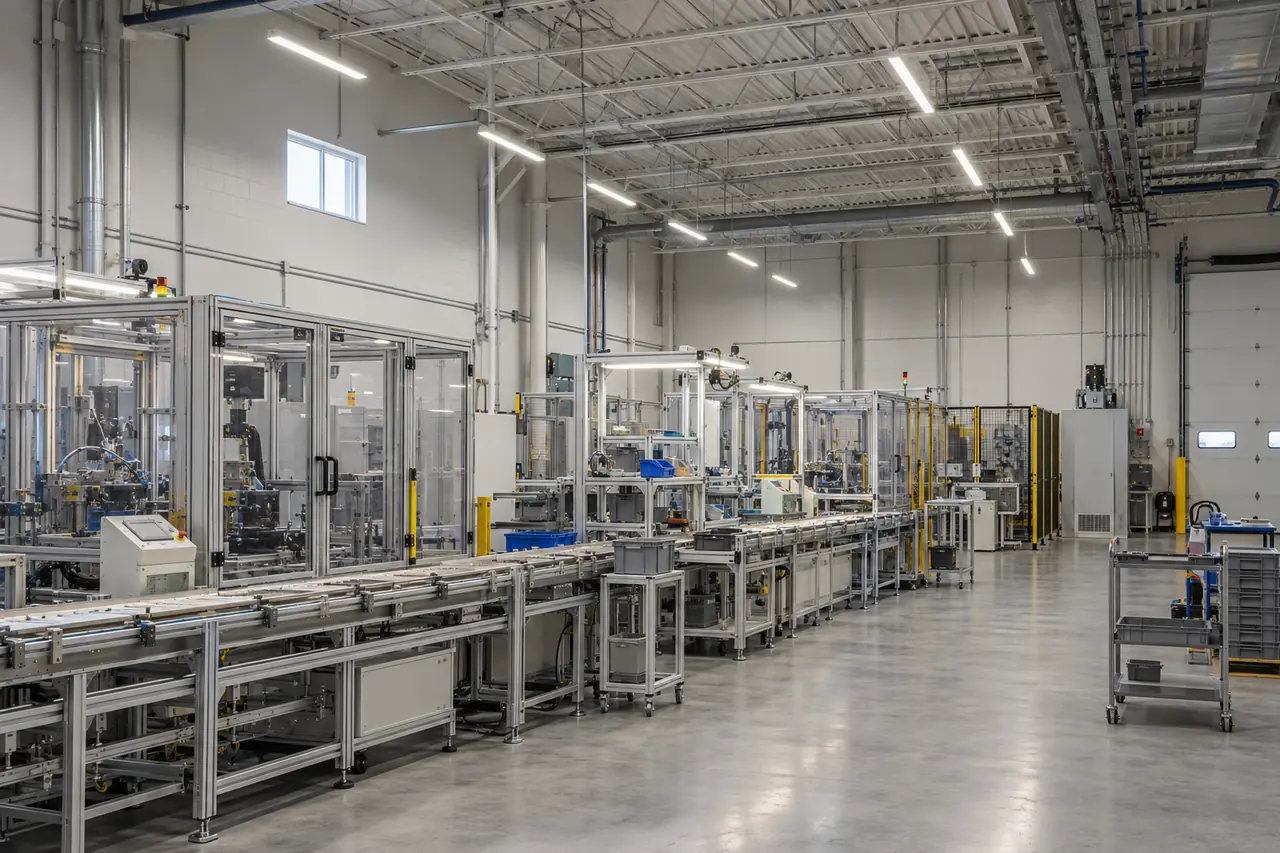
Inspection starts at the surface being examined.
A quality-inspection position may involve small features, subtle differences or reflective materials. The direction of light and the viewing position can influence what is visible. Simply increasing the overhead output may leave glare on a metal part or a shadow where the detail is being checked.
Describe the inspection task before discussing products. What surface is examined, at what working height, and from which normal position? Are staff comparing colour, checking a printed mark, looking for a surface defect or reading a gauge? These tasks can call for different lighting characteristics. Record whether the difficulty changes with part orientation or the time of day.
Industrial task lighting can be relevant where a defined work position needs local attention. It should be coordinated with general lighting and the surrounding visual environment, rather than added as an isolated bright source. Positioning, shielding and practical adjustment may matter alongside output.
The CCOHS lighting survey guidance explains that task demands, surfaces and surroundings affect lighting needs. Where exact performance requirements or measurements are needed, establish that specialist scope for the actual process. The initial enquiry describes the problem and establishes the information needed for that detailed review.
If production shares a building with shipping or stock transfer, the logistics facility context helps describe adjoining schedules and routes. Retain the manufacturing tasks as a distinct part of the scope.
For production projects that also involve offices, parking or property-wide maintenance, use the commercial lighting services to keep each supporting scope visible.
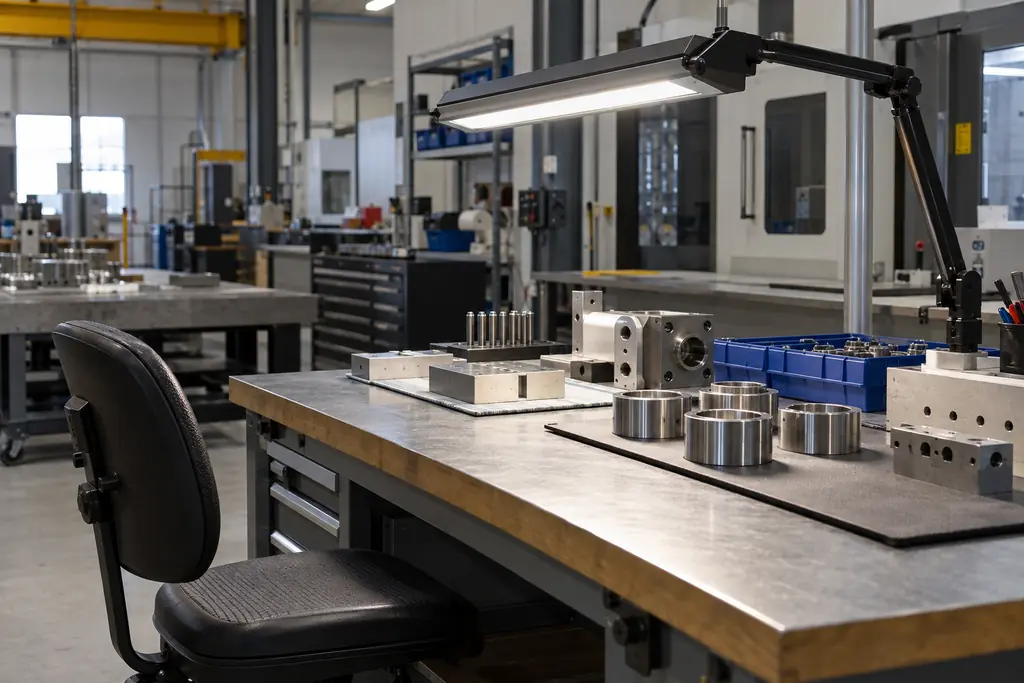
Separate production tasks before standardising fixtures.
A consistent fixture family can simplify maintenance, but the manufacturing floor may still need different distributions or local arrangements. Identify the work that each zone supports, then compare the equipment required to serve it. Standardisation should follow a suitable scope rather than become a reason to ignore the differences between tasks.
The following categories can help organise an assessment. They are not universal illumination specifications. Include the actual process and surroundings, especially where a station combines several activities. A worker may assemble a part, check it and move it to an adjacent conveyor without changing position; the lighting review should recognise that sequence.
| Production activity | Conditions to understand | Possible scope focus |
|---|---|---|
| Assembly | Part size, work height, tools and operator sightlines. | General coverage with defined station lighting where needed. |
| Inspection | Surface finish, detail, contrast and viewing direction. | Task-specific review rather than blanket output increases. |
| Machine operation | Guarding, equipment shadows, controls and service positions. | Fixture distribution around fixed obstructions. |
| Changeover and maintenance | Different positions and hours from normal production. | Separate task needs, access and control behaviour. |
Machinery changes the light that reaches the work.
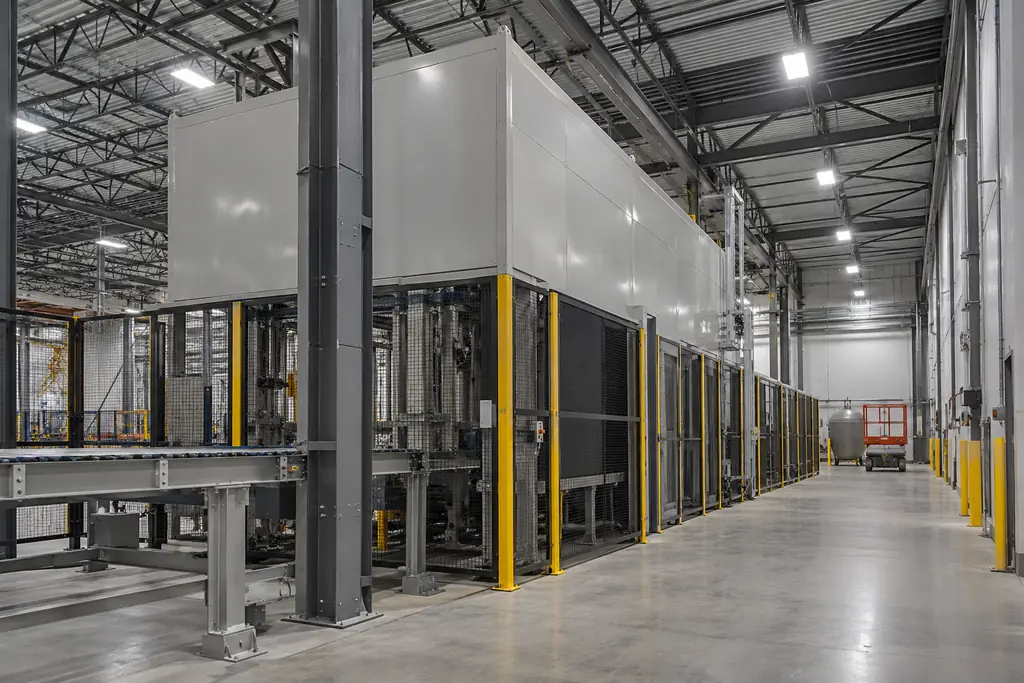
Tall enclosures, conveyors, ducts and equipment can block overhead light. A well-spaced ceiling row may therefore leave a service position or work surface in shadow. The machinery arrangement should be reviewed at operating positions rather than only from an open walkway.
Record where staff stand, reach and look during the normal task. Identify guards and barriers that affect both light and access, without assuming they can be moved for a lighting project. A fixture above a machine may be difficult to service after an enclosure is installed even if it was easy to reach during construction.
Consider whether a revised general-lighting arrangement, a local source or a task-specific solution addresses the actual problem. Any proposed equipment must be suitable for the environment and installed without undermining the machinery's guarding or safe operation. The relevant responsibilities should be coordinated with the facility's production and maintenance teams.
Changes to the line can create new shadows. Record planned equipment additions or relocations before deciding fixture positions. If the project covers only one machine cell, make that boundary explicit and consider its adjoining routes. A local improvement should be evaluated within the surrounding production area, not judged as if the machine were sitting alone in an empty room.
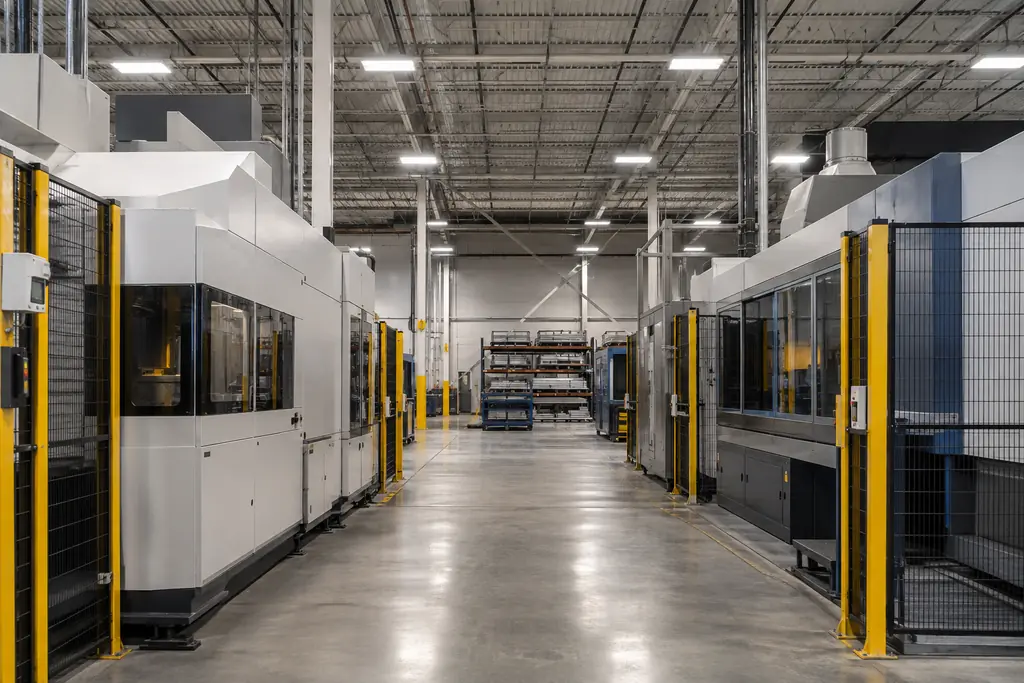
Environmental suitability needs specific information.
Manufacturing environments vary widely. Dust, moisture, cleaning practices, temperature and exposure to materials can influence equipment selection. A fixture described broadly as industrial is not automatically suitable for every process or room. Establish the actual conditions and the product requirements before making that assumption.
For areas that use washdown or other specific cleaning methods, the cleaning conditions should be part of the product review. Where a classified or otherwise specialised environment may be involved, the appropriate qualified parties must establish that scope. Do not infer a hazardous-location classification from a photograph or presume ordinary commercial equipment is acceptable because the room looks clean.
The broader industrial lighting service addresses environmental and installation considerations. Here, relate them to the manufacturing process and the way fixtures will be maintained. Enclosed construction, service access and manufacturer instructions should be considered together. A product's suitability claims need to apply to the complete equipment and proposed application.
Electrical-product approval remains a separate requirement from efficiency-program listings. Keep the exact product information available for the responsible review. This helps avoid replacing a well-defined requirement with a familiar label or an unsupported statement that every LED fixture is approved for any factory use.
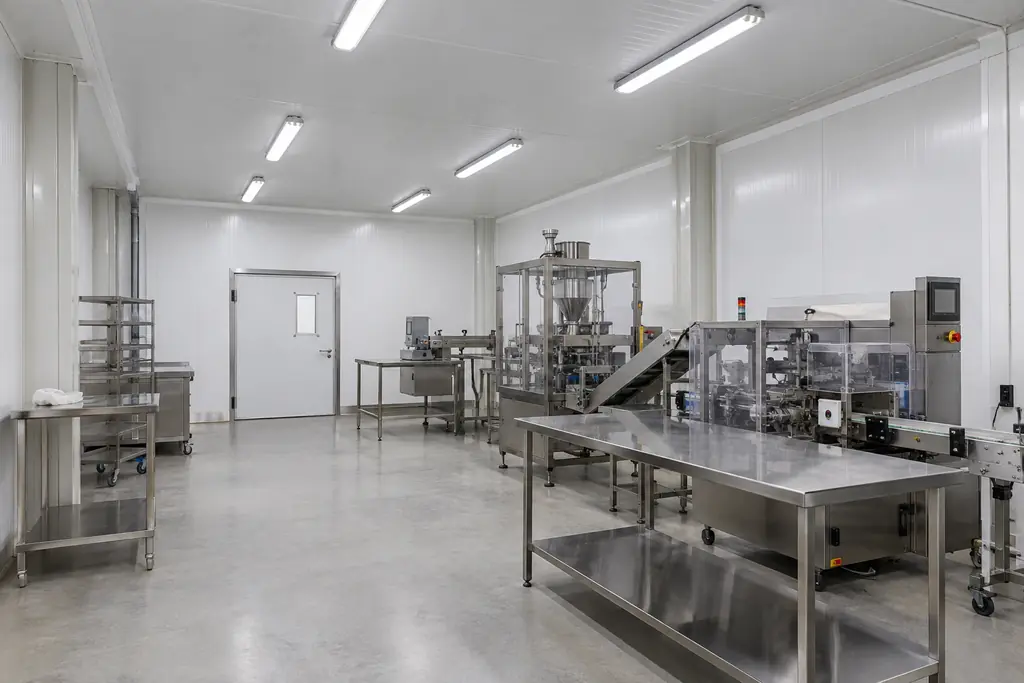
Changeover has its own tasks and schedule.
During normal production, lighting may be focused on a line or station. Changeover, tool preparation and maintenance can use adjacent surfaces that receive less attention. These activities may also happen when the main shift has ended, creating a different occupancy pattern from the one used to set the controls.
Include the work performed between production runs in the brief. Identify tooling benches, preparation areas and positions used to check a machine while it is safely out of service. The lighting scope should support the intended activity without assuming that the normal line arrangement covers every maintenance task.
A changed product or process may alter the required view even when the equipment stays in place. Ask whether future line revisions are known and which parts of the lighting arrangement need flexibility. A local task source, a revised zone or a different fixture position may each be relevant depending on the problem.
Keep production and changeover access responsibilities clear. Work around machinery requires coordination with the site's procedures; the lighting enquiry should not prescribe isolation methods or override those procedures. Define the time window, responsible contacts and affected areas so a proposed phase can be assessed against the actual operating cycle.
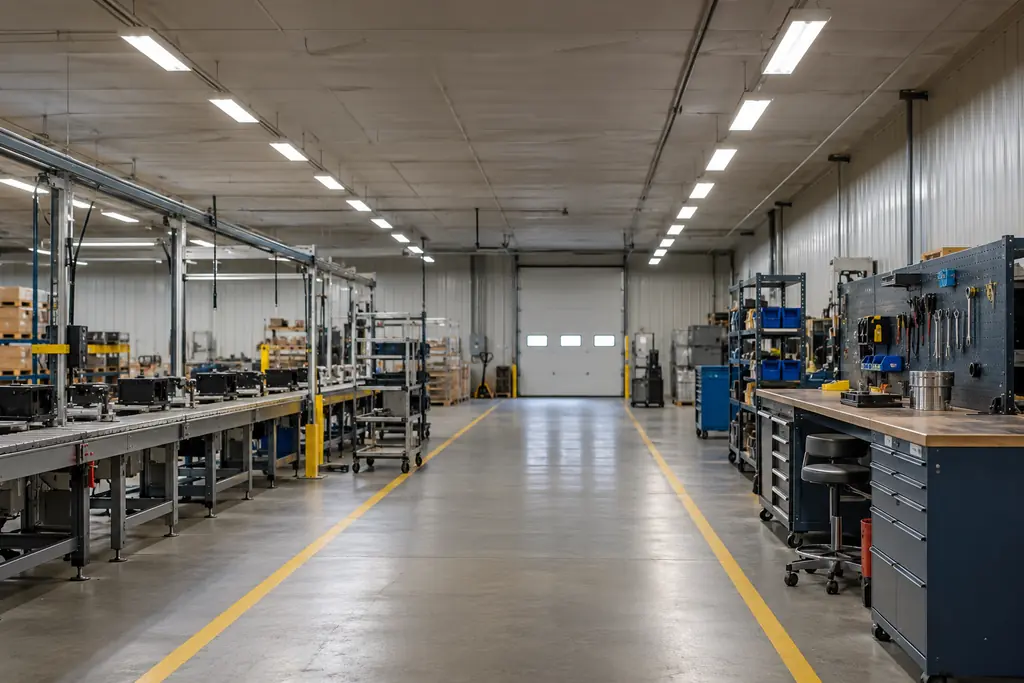
Maintenance access should survive the completed layout.
Fixture servicing becomes difficult when tall equipment, pipework or stored tooling occupies the route beneath it. A project should consider how the installed system will be reached later, not only how it can be installed in the current arrangement.
Identify clear corridors, overhead restrictions and areas that can be isolated. Discuss whether a service position will remain available after proposed equipment changes. Access suitability and the work method must be established for the actual site. An available lift elsewhere in the building does not prove that every fixture can be reached safely from its operating location.
Commercial lighting maintenance can organise recurring needs, while high-bay LED lighting addresses elevated fixture systems and serviceability. Grouping replacement work into a shutdown may be practical, but the scope should state which equipment and areas are involved. Avoid assuming all lighting work fits one brief pause in production.
Preserve a fixture and zone record for future service. Include product information and accepted settings where relevant, with locations that maintenance can identify without guessing from appearance. The handover should make clear which areas were covered and which remain outside the project. That is especially useful when the plant later expands or changes its production arrangement.
Flicker and controls need a process-aware review.
Flicker should not be diagnosed from the symptom alone. The light source, electrical conditions, equipment state and control arrangement can all be relevant. In a manufacturing environment, the concern may also involve how moving machinery appears. CCOHS discusses flicker and stroboscopic effects, which is a reason to treat reported issues around machinery seriously and follow the site's safety procedures.
Record when the symptom occurs, which fixtures are affected and what activity was taking place. Do not approach moving equipment to investigate, open fixtures or attempt electrical tests. A video taken safely may communicate the observation, but camera behaviour does not establish the cause or certify an acceptable result.
Occupancy and vacancy sensors need similar attention to the task. Staff working steadily at a fixed station may show less movement than people passing along a corridor. Define the intended behaviour at each position, including cleaning and maintenance periods. Confirm compatibility and review settings under representative conditions.
Lighting is one part of the workplace system. It should be coordinated with guarding, movement arrangements and operational procedures, without claiming that an upgrade alone certifies compliance, prevents incidents or guarantees production performance. Specific technical requirements and acceptance responsibilities should remain visible in the project scope.
Prepare the production brief in four parts.
Useful manufacturing information is organised by process and location. A fixture inventory can support it, but the purpose is to explain the work and the constraints that affect the lighting decision. Include known future changes so an improvement is not based only on a temporary arrangement.
Milton's employment-area context includes manufacturing uses, as described in InvestMilton's business park information. The manufacturing and industrial industry page connects that facility perspective with procurement and operating needs.
Describe the task
Name the process and the work position. Explain what is difficult to see, the surface involved and when the concern occurs. Include operator feedback tied to specific conditions.
Describe the surroundings
Provide equipment height, obstructions, environmental conditions and the lighting already present. Flag specialised areas for the appropriate professional review.
Describe the operating window
List shifts, shutdown opportunities, changeover periods and access restrictions. Identify who authorises work around the line or machine cell.
Describe the intended decision
Separate a local task improvement, a failed-fixture repair and a broader replacement phase. Establish which design, measurement and closeout deliverables the project actually needs.
Manufacturing lighting questions.
Is there one lighting level for every production area?
No. The task, surface, surroundings and viewing needs can differ substantially between assembly, inspection and occasional movement. Applicable requirements and detailed design should be established for the actual activity. Avoid applying a single generic lux figure to every factory zone. A useful scope identifies which tasks need specialist evaluation and which conditions prompted the enquiry.
Can task lighting solve equipment shadows?
It may help at a defined work position, but the arrangement needs to be reviewed with the machine, guarding and surrounding lighting. Position, reflections, adjustment and environmental suitability all matter. Do not assume that adding a brighter lamp addresses the underlying shadow or that it can be attached wherever convenient. Coordinate the solution with the responsible facility and equipment parties.
Can lighting replacement use a planned shutdown?
A shutdown may provide useful access, subject to the actual scope and coordination required. Identify the affected line, access route and isolation responsibilities. Include procurement, removal and review tasks in the programme rather than treating fixture installation as the entire activity. The schedule must be confirmed for the project; a shutdown date alone does not establish that every area can be completed within it.
What should be checked after an improvement?
Return to the task and conditions that prompted the project. Review the normal viewing positions, shadows, reflections and intended control behaviour. Record agreed settings and product locations for maintenance. Where detailed measurements, specialist verification or formal acceptance are required, those responsibilities should be expressly included. A visual walk-through is useful feedback, but it does not replace the specified technical deliverables.
Should lighting be reviewed when a new machine is added?
Yes, include lighting in the coordination discussion. A taller enclosure or moved station can change shadows, sightlines, fixture access and control coverage. The existing system may remain useful in some positions while others need adjustment. Bring the proposed equipment layout and expected tasks into the scope before installation, then identify what requires confirmation once the final arrangement is in place. Keep the machine supplier, facility and lighting responsibilities clear instead of assuming one party covers all related changes.
Ready to plan?
Plan the next step around your facility.
Describe the production process, affected stations and the specific visibility concern. Include shifts, equipment restrictions, environmental conditions and planned line changes. Explain when areas can be isolated for review or work, and identify who coordinates production access.