
Commercial & industrial lighting · Milton
Parking Lot Lighting in Milton
Parking lot lighting has to be understood from the lot itself: pole locations, the direction people walk, where vehicles enter and how the property operates after dark. A failed head, uneven coverage and an ageing row of fixtures can lead to different repair or replacement decisions.
Share the affected area and the conditions at your Milton commercial property. An existing outage needs useful service observations; a planned LED upgrade needs an inventory, distribution review, controls sequence and access plan. Keep those scopes clear while considering the parking area as a connected part of the site.

Start with the parking pattern, not the pole count
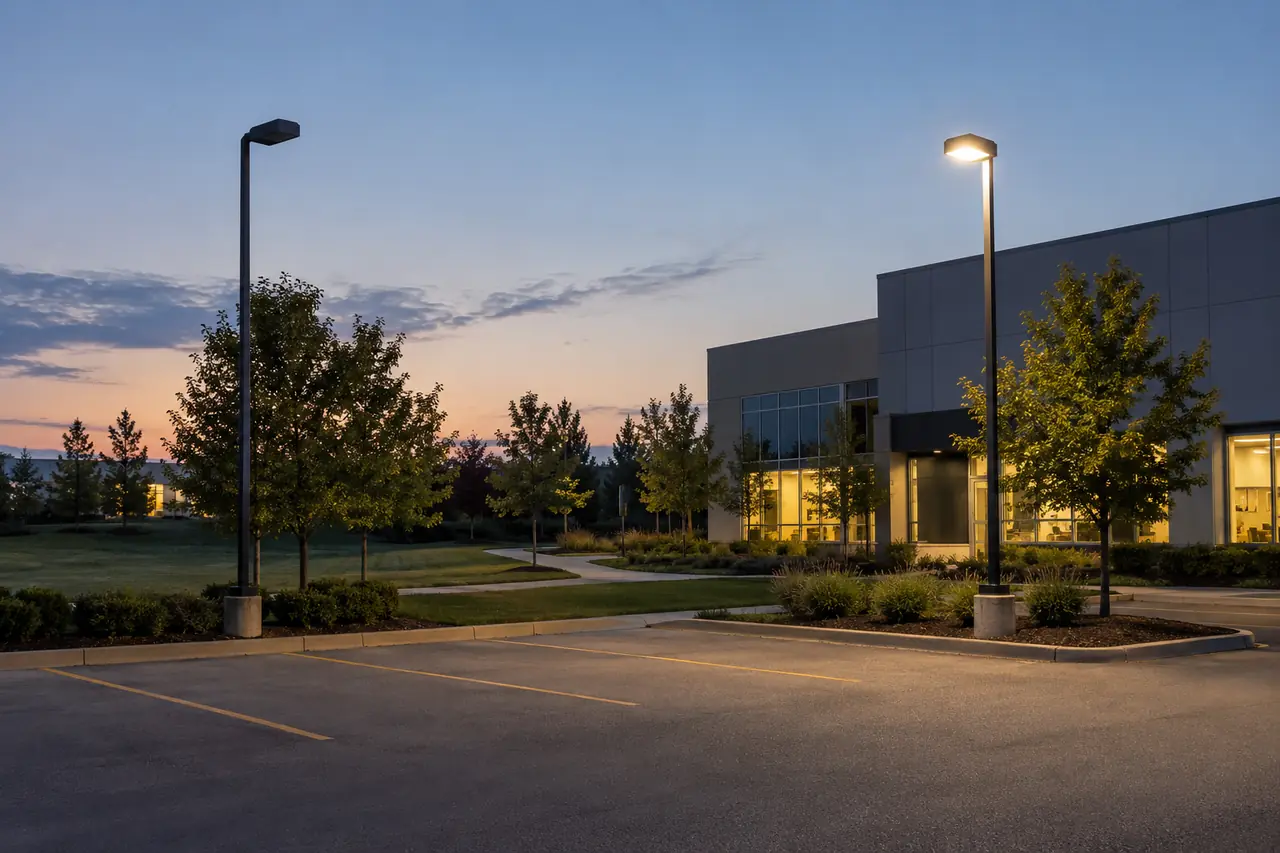
A lot is more than its number of stalls. Vehicles enter, turn, park and leave through different parts of the property, while pedestrians move between their vehicles and the building. Identify the entrance, accessible routes, crossing points and any areas used for waiting or deliveries. Include unusual grade changes or structures that influence the view across the lot.
Existing pole locations may reflect an earlier parking arrangement. An expansion, revised driveway or changed tenant use can alter where coverage is needed. Show those changes on a current plan if one is available. Where the layout is staying the same, explain the specific concern: a dark corner, a failed head, uncomfortable glare or a control pattern that does not match use.
Record the hours of activity. An office lot can be quieter after staff leave, while an industrial property may have shift changes or receiving movements later in the evening. A plaza can contain several tenant schedules. The intended lighting sequence should accommodate those actual uses rather than a generic closing time.
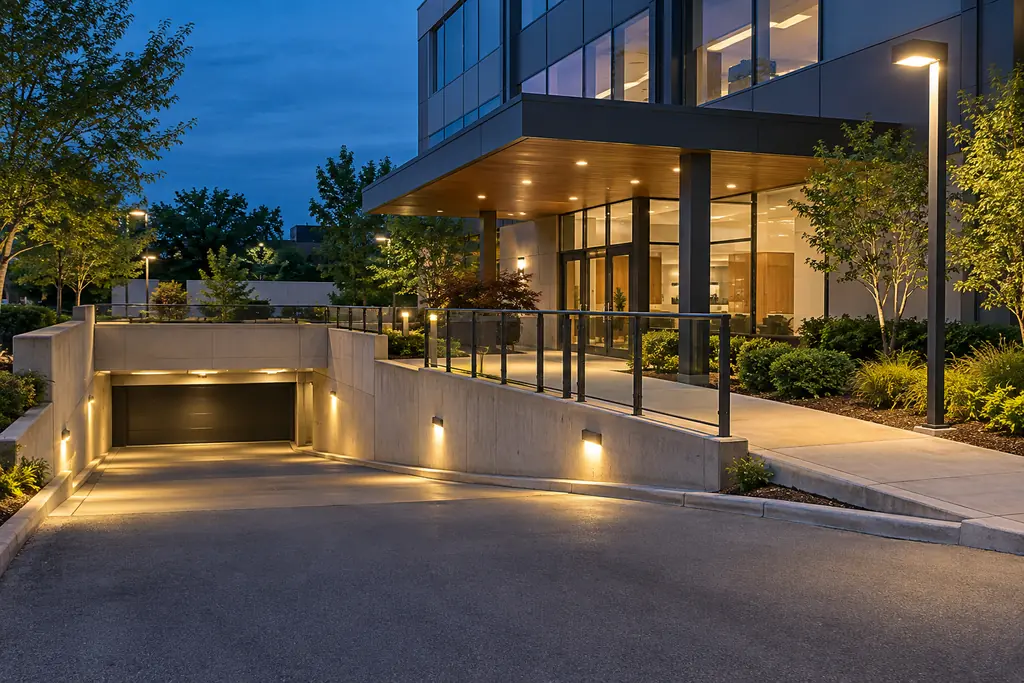
Review the pedestrian connection separately from the vehicle parking surface. A light serving a row of vehicles may not address a raised walkway or the building threshold in the same way. Coordinating pole lighting with entrance and canopy areas can reveal gaps that are missed when each fixture is considered by itself.
The operating brief differs for plaza parking, managed properties and automotive or showroom properties; describe the actual arrival and closing patterns.
For a broader work overview, explore commercial lighting services.
Repair, replacement and layout review are different decisions
A current failure should not automatically become a proposal to replace every pole head. Equally, a planned replacement should not be based only on the count of fittings. Record the problem and the project objective separately, so the work can be discussed with clear boundaries.
| Parking concern | Starting information | Likely review emphasis |
|---|---|---|
| One pole head is dark | Pole reference, affected head, neighbouring operation and symptom timing. | Fixture condition, compatible repair and the existing control arrangement. |
| Several poles are not operating | Which poles are affected and whether their behaviour follows a common pattern. | Extent of the issue and relevant fixture, control or installation conditions. |
| An older row needs LED replacement | Fixture models if known, quantities, operating hours and existing coverage concerns. | Replacement distribution, mounting compatibility, controls and serviceability. |
| A revised lot has uneven coverage | Current layout, routes, added areas, retained poles and nearby property relationships. | The lighting arrangement as a site project, including applicable documentation. |
Make an outage request specific and safe
Identify the pole using an existing number, parking row or a description tied to the building. If a pole carries more than one head, describe which appears affected from a safe ground position. Note whether the failure is constant or intermittent, when it was first observed and how adjacent lighting behaves.
For several dark poles, describe the extent of the area rather than assuming independent fixture failures. Include the expected schedule and any maintenance history already available. Lights that do not operate at night can involve different fault categories; a visible symptom does not establish whether the issue is a photocell, a fixture component or another installation condition.
Photographs can show the location and the lot arrangement. A daylight overview often explains access better than a dark close-up. Stay away from damaged equipment, and do not open a pole base, climb, attempt testing or move electrical components to collect information. Immediate hazards belong in the facility’s safety or emergency process.
Use the parking lot lights not working guide for a fuller observation checklist. If the concern is wrong-time operation across exterior zones, the exterior controls problem guide is more focused. The lighting repair pathway keeps the immediate service need distinct from a future capital upgrade.
The commercial lights not working guide also addresses wider outage descriptions.
Compare distribution and glare at the actual mounting position
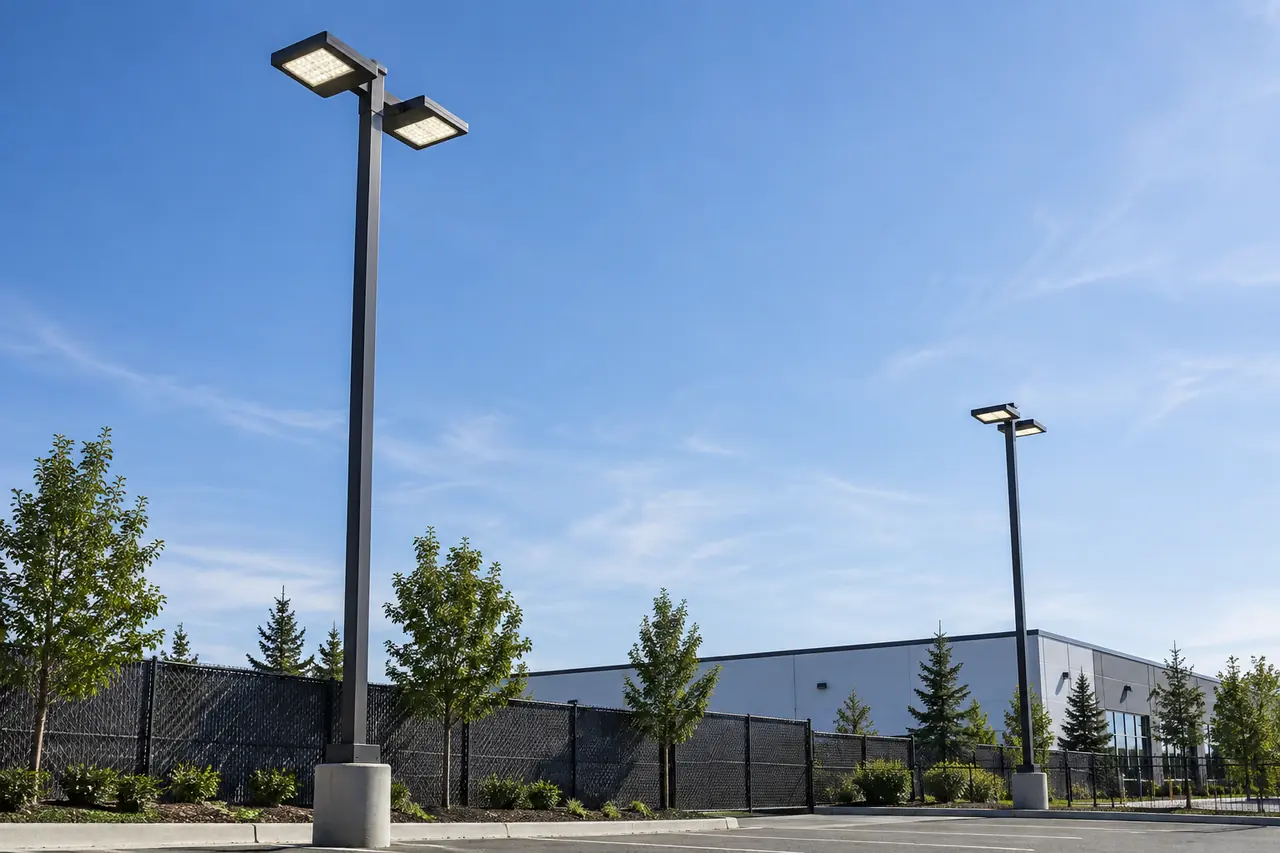
A pole-mounted replacement should be compared with the area it must serve. The mounting height, number of heads, orientation and relationship between poles influence the distribution across the lot. Product input power or a general lumen figure alone does not show whether the intended surfaces and routes receive useful coverage.
Look across the parking area from normal approach directions. A bright source can be uncomfortable from an entrance or neighbouring window even when the pavement directly below it appears well lit. Shielding, optical distribution and fixture orientation therefore belong in the replacement discussion alongside output and efficiency.
Take surrounding property into account. Record fences, adjacent residential or commercial uses, boundary conditions and any relevant existing approvals. Do not assume that turning a fitting toward a darker corner is an acceptable solution without considering where else the light travels. A fixture change should be assessed within the complete site relationship.
Review the difference between the main lot, the driveway and the pedestrian path. Their geometry and use may call for different lighting arrangements. The objective is a coherent scope for the parking area and its connections, not maximum brightness at every point. Neither a replacement product nor a lighting layout should be presented as preventing crime, guaranteeing security or eliminating liability.
LED replacement needs a clear retained-equipment boundary
An LED project can retain existing poles while changing heads, but the retained assembly still requires an appropriate review. Record pole and mounting information already held by the property, the fixture configuration and any known condition concerns. Do not assume a new head makes the pole, base or associated installation equivalent to new equipment.
The proposed replacement needs compatibility checks for the mounting, electrical interface and intended control. Where an older head is unusually shaped or uses a particular bracket, a visually similar product may not be an interchangeable replacement. State whether adapters, mounting changes or other work need review before procurement.
Structural questions should be directed to the appropriate professional rather than inferred from a lighting enquiry or a photograph. The lighting scope should say what is being replaced and what remains subject to separate assessment. Obvious damage or instability should be raised through the property’s safety process without approaching the equipment.
The commercial LED retrofit page explains baseline and investment comparisons. For a lot, organize that baseline by pole or lighting zone, including actual operating hours and control behaviour. A phased replacement plan should identify which row is changed first and how the remaining equipment will be recorded and maintained.
The parking lot repair-versus-replacement guide develops that comparison for existing pole fixtures.
Prepare the lot for a defined lighting scope
Locate the concern
Identify the affected poles, heads, parking rows and routes. Explain whether the need is an outage, uneven coverage or a planned replacement. Include a current layout and safe overview photographs where available, with the hours the lot is actually used.
Establish retained conditions
Review fixture and mounting information, control arrangements and documented condition concerns. Identify requirements that need separate property or professional confirmation. A lighting replacement should have a clear boundary around the equipment being retained.
Coordinate the access area
Agree parking clearance, traffic restrictions and the route available for suitable access equipment. Include deliveries, tenant schedules and pedestrian connections. Name the property contact who can prepare and authorize the area before work is organized.
Review operation after work
Check the agreed switching behaviour and observe the intended parking and approach areas under relevant evening conditions. Record installed models, pole references and settings. Keep any follow-up concerns connected to the defined scope rather than losing them in a general completion note.
Access is part of the work, not an afterthought
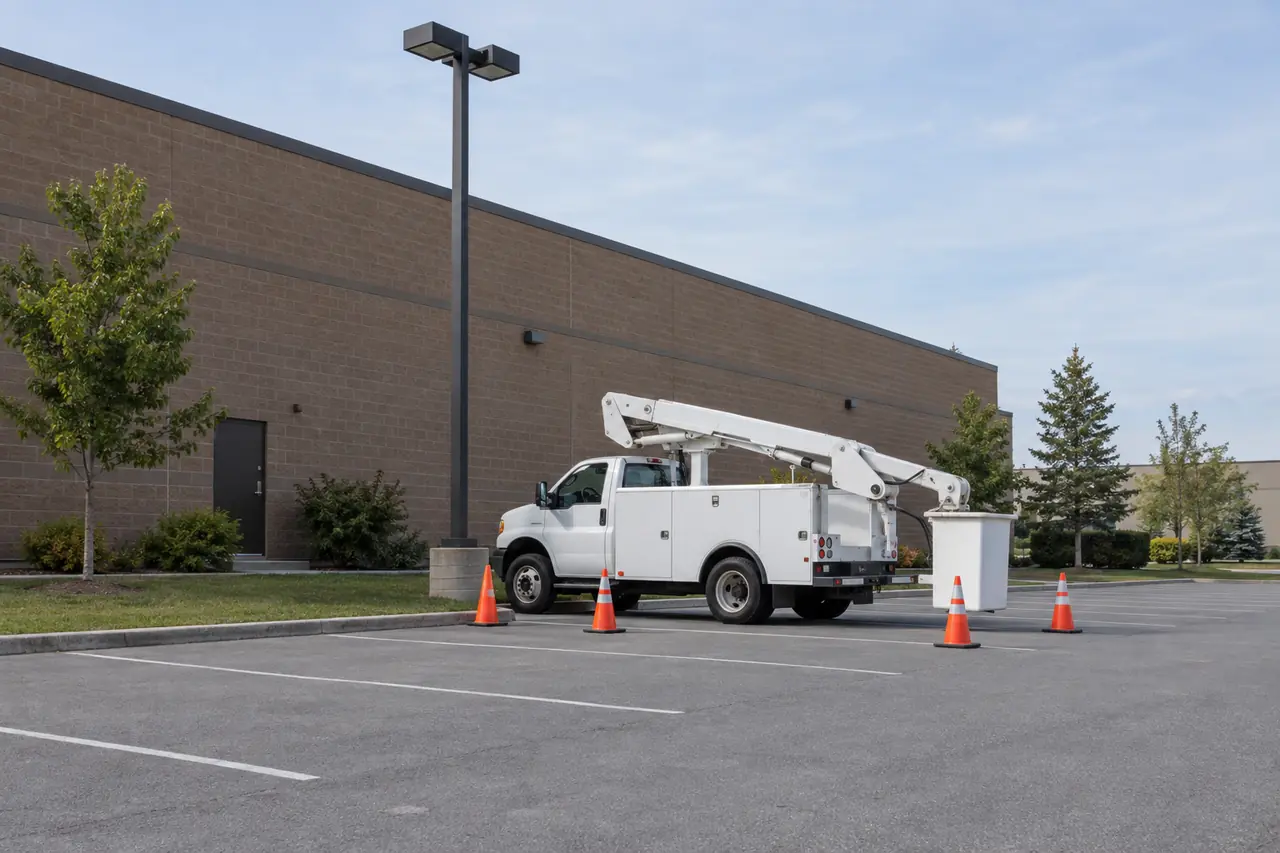
Service at height requires a suitable plan for the actual lot. A fixture near a landscaped island, a sloped driveway or a narrow building edge can present different access conditions from one beside an open parking row. Include those features in the enquiry, along with any known ground or property restrictions.
The work area may need to be released before access equipment arrives. Identify how vehicles will be moved, who can notify tenants and which routes must remain open. A parking space available in a photograph is not a confirmed service area. The property contact should be able to agree a practical window with the people who normally use it.
Deliveries and shift changes can affect that window. A warehouse lot may share an approach with trucks; an office property may have visitors throughout the day. Describe the pattern instead of selecting a time based only on when the lot appears quiet. Weather and site conditions can also affect the work arrangement, so timing should remain tied to the confirmed scope.
Maintain a clear distinction between lighting access and unrelated property work. If vegetation, stored material or a damaged surface prevents access, identify who will address it and when. This helps avoid a repair request reaching the work stage with a critical preparation item still unresolved.
Controls and site documentation complete the parking plan
Write down the intended lighting behaviour at dusk, during occupancy and after the usual operating period. A photocell, timer or combined approach needs to match those expectations and remain compatible with the selected fixtures. Include occasional late access and the way an authorized override should return to normal operation.
Where lights stay on during daylight or switch inconsistently, report the pattern and affected poles. Do not assume the solution is a new photocell without review. The photocell controls and lighting scheduling pages distinguish the equipment and schedule questions that can sit within a whole-lot project.
For a revised lot or development scope, confirm what formal documentation applies. The Town’s site plan approval process and lighting submission guidelines are relevant starting points. Routine repair and a new or altered site arrangement should not be assumed to have identical requirements. Applicable zoning and property conditions still need project-specific confirmation.
In Milton’s industrial and business-park context, parking often connects offices, staff entrances and loading activity on one property. Keep those operating interfaces in view. The commercial exterior lighting page considers the wider site, while the photometric planning resource explains when exterior documentation may become part of the discussion.
For a property with mixed generations of pole fixtures, maintain a record of each row rather than a single description of the lot. Note the installed model, intended orientation and control grouping after each phase. This helps a future service request distinguish a newer replacement from an older retained fitting that happens to look similar from the ground.
Define how substitutions will be considered if a selected fixture becomes unavailable. Compare the mounting and optical information as well as the visible shape. The person approving the change should understand whether it affects the agreed coverage or documentation. Keep that decision in the property record so later maintenance does not rely on an outdated specification.
For wrong-time operation, use exterior lighting control symptoms. The property maintenance guide supports the record for retained equipment after the project.
Questions about this lighting scope
Can a single failed head be repaired?
The actual fitting and installation need review. Compatible parts, fixture condition, surrounding equipment and safe access affect the decision. A single failure does not by itself justify a full-lot replacement. Describe the location and symptom so an immediate repair scope can be considered separately from any broader upgrade.
Can existing poles remain during an LED upgrade?
They may form part of a proposed retained-equipment scope, subject to the relevant condition and compatibility review. A new head does not establish structural suitability or renew an older base. Identify what is retained, what requires separate confirmation and what the lighting replacement specifically includes.
What should a property manager provide?
Provide the layout, pole references or approximate locations, known models, current schedule, tenant operating hours and access restrictions. Include maintenance history and any existing site-lighting documents. If only part of that information is available, start with it and mark the remaining details for review rather than making assumptions.
Does an uneven lot always require more poles?
No single conclusion follows from uneven coverage. Existing distribution, orientation, obstructions, mounting and changes in use can all warrant review. Describe the dark areas and the routes they serve. Compare potential fixture or layout changes within the site’s actual requirements before deciding that additional poles are necessary.
Ready to plan?
Plan the parking lighting around the whole lot.
Tell us where the lighting needs to change, how the building operates and what timing matters. Start with the information you already have.