
Commercial & industrial lighting · Milton
Warehouse Aisle Lighting in Milton
Warehouse aisle lighting is judged where people pick, replenish and read stock information. A well-lit floor does not necessarily mean that labels on a lower shelf or cartons near the top of the rack are easy to see. Racking and the stored load create a different lighting problem from an open warehouse bay.
Review the aisle as a working space: its width, length, rack faces, entry points and typical stock conditions. Fixture distribution and controls should be considered together so the proposed lighting serves the occupied positions along the aisle, including the transitions at its ends.

Read the aisle from the picking position.
Begin with the shelf locations that staff identify as difficult. Record whether the issue affects low picks, higher storage, one rack face or both sides. Labels, carton finishes and the depth of the stored load can influence how the problem appears. An aisle that looks bright from its entrance may have shadowed positions further along or behind projecting stock.
Observe the normal viewing angle rather than only looking upwards at the fixtures. Picking and replenishment may involve different positions and directions. A worker looking down at a low label has a different relationship to overhead light from someone checking an upper rack location. Note any shadows from shelf beams, stock or the person's normal working position.
The dark warehouse aisle guide helps organise those observations. It is particularly useful when a complaint describes the whole aisle but the difficulty is concentrated at a few shelf levels. A practical brief identifies the task and representative load conditions, which gives a later lighting review more useful information than a photograph of an empty floor.
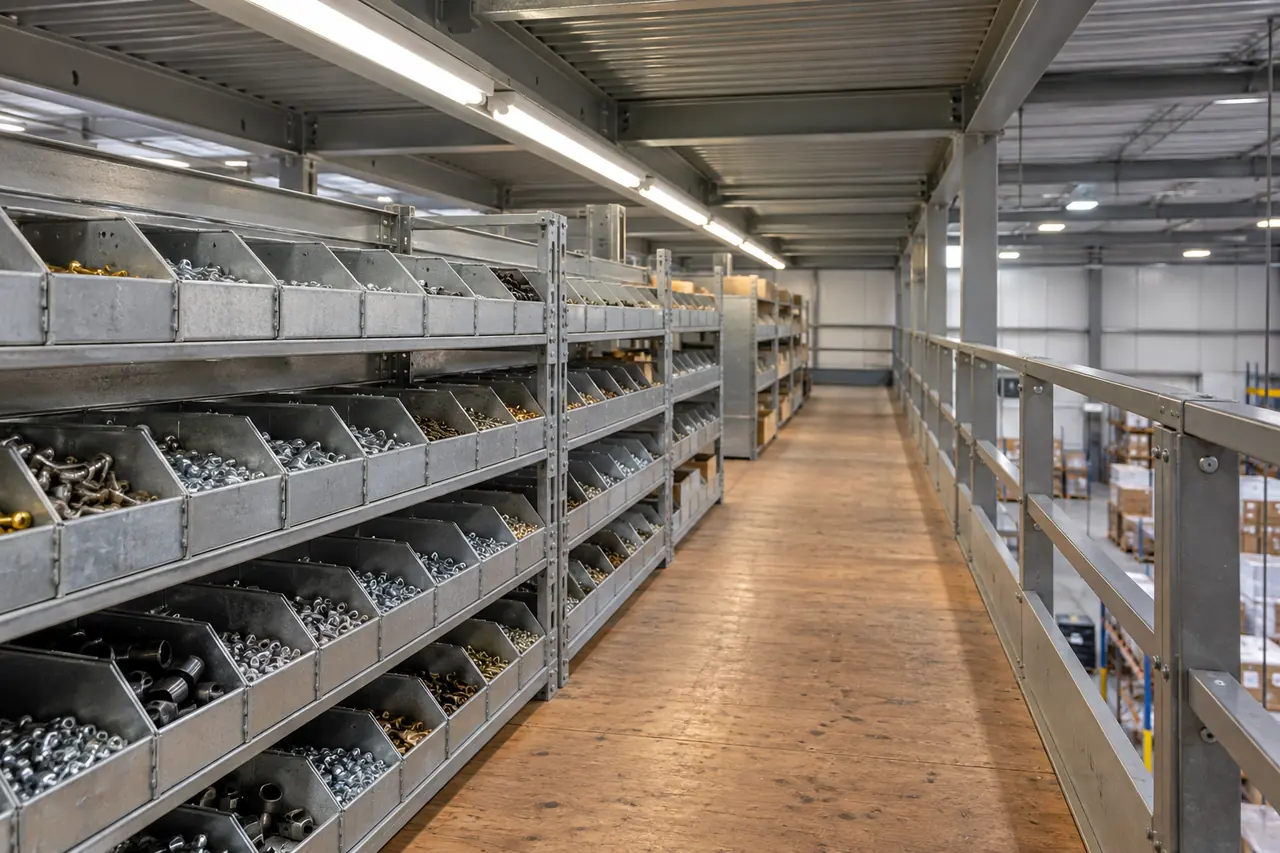
Match distribution to the rack geometry.
Aisle lighting needs to account for where useful light travels, not only how much a fixture produces. A broad distribution chosen for an open floor may send a significant part of its light onto rack tops or beyond the working aisle. The relationship between mounting position, rack height, shelf face and aisle width should be examined before selecting a replacement.
High-bay LED lighting addresses product selection at elevated mounting heights, including distribution and practical servicing. The aisle-specific question is whether the proposed arrangement reaches the required viewing surfaces without creating troublesome glare. Mounting above the aisle centre may be relevant in one layout; an offset arrangement may need review in another. Neither is a universal prescription.
Keep the current rack plan and any proposed changes together. If the rack block is being rotated or storage heights are increasing, a like-for-like fixture replacement can lock in positions that will soon be poorly aligned. Aisle geometry should inform the lighting scope before quantities are treated as final.
Treat cross aisles and rack ends as part of the scope.
The end of a rack aisle connects focused picking activity with wider movement. Staff may approach from a brighter open area, enter beneath shelving shadows or look across a cross aisle containing temporary loads. A proposal that stops at the last rack bay can overlook the transition where people and equipment enter the working space.
Record forklift routes, pedestrian arrangements and the points where operators turn or merge into an adjoining area. Lighting is one aspect of visibility and does not replace the facility's traffic management measures. The scope should support the existing operating arrangements without claiming that additional light removes collision risk or makes an unplanned shared route suitable.
Warehouse lighting considers those wider storage, packing and circulation relationships. For warehouses and distribution centres, aisle work should connect to the neighbouring zones. Where the building serves a transport-facing operation, logistics and supply-chain facilities adds context for staging and receiving activity. Use the actual movement pattern to decide which transition areas belong in the review.

Sensor coverage must follow the occupied aisle.
Racks can affect the area visible to a sensor, and entering an aisle is different from working quietly at a fixed picking position. Record where lights change unexpectedly, whether the concern follows a particular task and which controls appear to serve the area. Those observations help separate a coverage issue from a fault or an unsuitable operating setting.
Occupancy and vacancy sensors considers detection and control behaviour. The warehouse controls guide relates that behaviour to racking and activity. Product compatibility, mounting location, zone boundaries and the intended response should be reviewed together. A setting that works in an open room cannot be assumed to behave the same way in a loaded rack aisle.
Discuss how users should experience entry, continued work and departure. Keep frequently used cross aisles and slower fixed-position tasks visible in that discussion. Staff should report unexpected behaviour through the agreed service route, rather than bypassing sensors or altering electrical equipment. The handover should identify the authorised way to request a settings review if the operation later changes.
| Aisle condition | Useful observation | Scope question |
|---|---|---|
| Low shelf picks | Labels behind beams or projecting stock | Is useful light reaching the actual shelf face? |
| Upper storage | Viewing direction and source glare | Does the distribution serve high positions comfortably? |
| Rack ends | Turning routes and temporary staging | How does the aisle meet the adjoining area? |
| Controlled zones | Entry and fixed-position activity | Does detection match representative work? |
A packing point beside an aisle may need a separate layer.
Small workstations often appear at rack ends or within spare bays. Staff may check labels, complete documents or pack cartons there. A lighting arrangement intended for moving along an aisle may not reach the bench surface well, particularly beneath a shelf or mezzanine. Identify the task rather than assuming that the nearest aisle fixture provides enough useful light.
Industrial task lighting covers focused work positions. A local layer can be worth comparing with changes to the general aisle system, especially when only one bench is underserved. Its placement should account for hands, cartons, screens and normal viewing direction so it does not add a new reflection or shadow.
The warehouse lighting guide explains how high bays, racking and work areas connect. The logistics and distribution lighting guide is relevant where aisle picking feeds packing, staging or dispatch. These connections help define the boundary of the project: the goal may be an aisle improvement plus a small work-area change, rather than replacement across the whole hall.
The lighting services directory can help define adjoining task, warehouse and control work where the aisle enquiry crosses several applications.
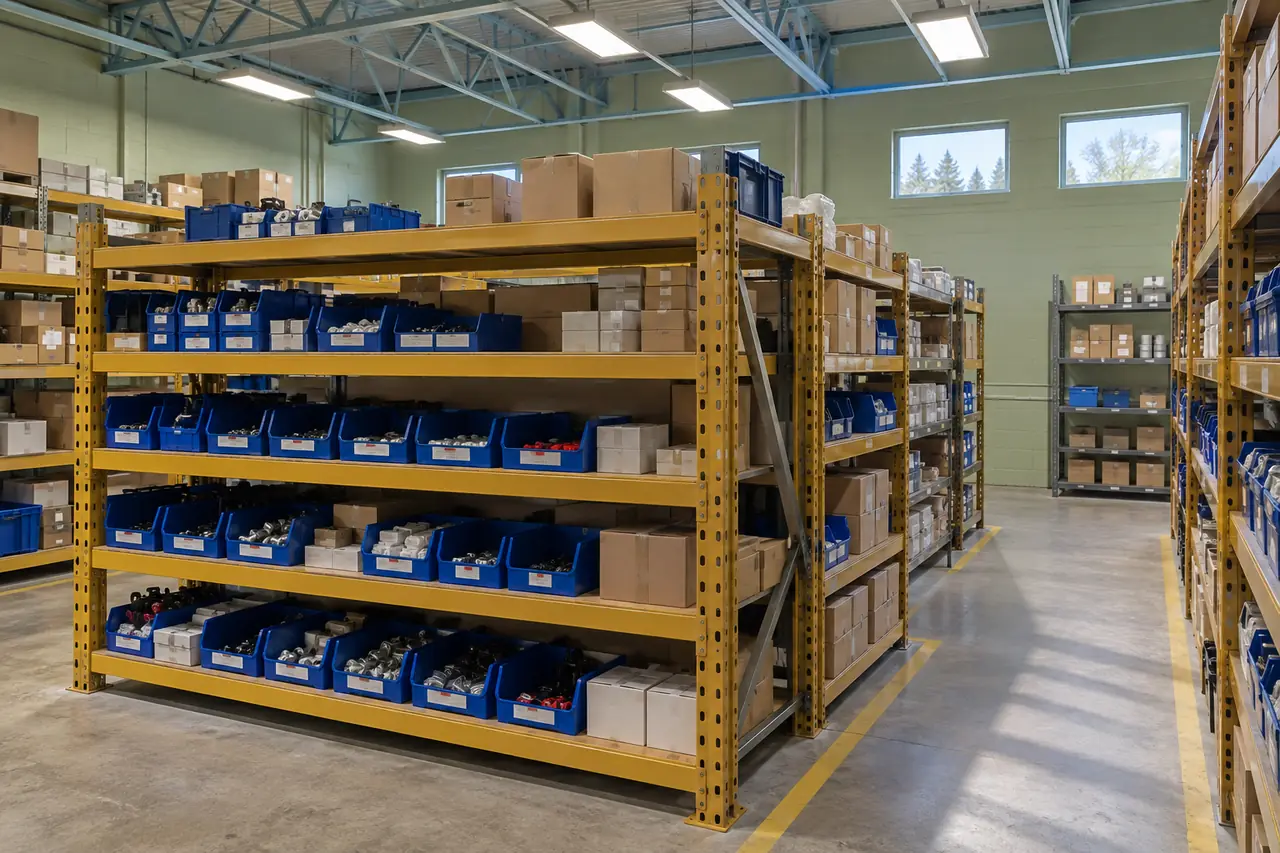
Arrange access around stock and normal movement.
Aisle spacing and loaded racks can limit access to overhead equipment. Identify where an access route exists, which bays must remain operational and what stock would need to move. The lighting plan should not depend on reaching every fixture from a cross aisle without checking the actual arrangement.
Coordinate the work window with the people directing picking and replenishment. A temporary aisle closure may shift activity into nearby aisles, so the wider operation needs to understand the sequence. Record any restrictions on floor loading, equipment movement or overhead clearance that are known to the facility, with the work method determined for the actual site.
Provide readily available plans and photographs from normal ground level. Do not climb the racking to obtain product information or improvise access above stored loads. Missing fixture details can be identified as a later professional survey requirement. A clear access brief allows the scope to address useful light at the rack face while remaining workable within the warehouse operation.
Review the installed arrangement with representative stock.
Agree what will demonstrate the intended improvement before products are finalised. The review should return to the shelf levels and viewing directions identified in the brief. An aisle temporarily cleared for installation can look quite different after stock returns, so representative loaded conditions matter to the discussion.
Where controls are included, observe ordinary entry, replenishment and slower picking activity in the relevant zones. Include adjoining cross aisles and any workbench that formed part of the project. Record approved setting changes and the fixture locations actually used, so a later service request can identify the same positions.
Retain the rack plan that informed the work. If new racking, higher loads or a different picking method is introduced later, that record makes the changed conditions easier to recognise. It also helps distinguish an equipment fault from a lighting system that is still operating as intended but now serves a different layout.
Warehouse aisle lighting questions.
Can the existing fixture grid be retained?
Possibly, where the positions still relate well to the rack layout and the proposed distribution serves the relevant shelf faces. Confirm those relationships before treating the grid as fixed. A fixture above a rack top may need a different scope from one already aligned with the aisle, even when the products have similar nominal output.
Why does an aisle look bright but picking still feel difficult?
Floor brightness does not describe the light reaching vertical labels, deep shelves or surfaces behind beams. Contrast, glare and shadow can also affect the view. Record the precise picking positions and representative stock rather than judging the whole aisle from its entrance. The assessment can then focus on the surfaces that matter to the task.
Should aisle lighting change when the racks are moved?
A rack change deserves review because it can alter fixture alignment, obstructions and sensor coverage. The existing system may remain useful, but that should be checked against the new aisle positions and heights. Bring the proposed rack plan into the scope before procurement or installation decisions make later changes harder to coordinate.
Ready to plan?
Share the rack layout and the picking positions that need attention.
Include the aisle location, rack heights if known, typical stock, reported visibility issues and normal operating schedule. Add planned rack changes and any restrictions on aisle closure.