
Commercial & industrial lighting · Milton
Commercial Exterior Lighting in Milton
Commercial exterior lighting connects the building with the routes around it: entrances, service doors, loading approaches, pedestrian paths and parking edges. A useful plan looks across those zones, including where the light travels beyond the area it is meant to serve.
Describe the outdoor areas at your Milton property, their operating times and the current concern. An existing failed fixture belongs on the lighting service path; a revised layout, LED replacement or new exterior area needs a defined project assessment. Both should consider mounting, controls, access and neighbouring property.
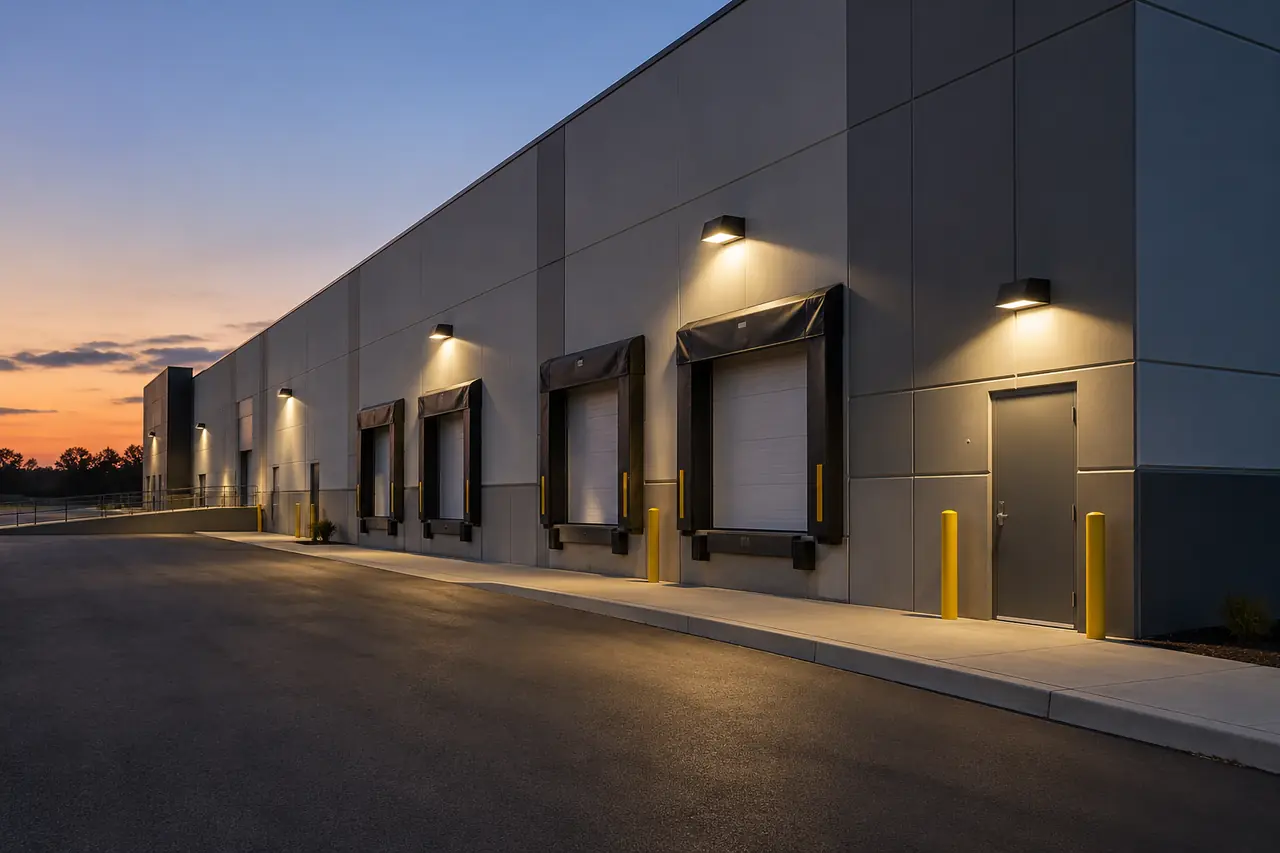
Map the exterior as connected operating zones
Begin at the building and follow the routes people actually use. A staff entrance, a customer approach, a delivery lane and a refuse enclosure may have different hours, users and lighting needs. Identify those zones on a site sketch or existing plan, including the places where vehicles and pedestrians cross or share an approach.
List the existing fixture locations and types where known. Wall-mounted lights may serve a building face, canopy fittings may cover the transition at a doorway and pole fixtures may address a wider open area. These should be considered together so one zone is not made unnecessarily bright while its connecting route remains poorly served.
Explain the operation after sunset. A warehouse may continue receiving while its front office is closed. A commercial plaza can have tenants with different closing times. An industrial unit may need occasional access outside its usual schedule. A single assumed closing time can leave important differences out of the project brief.
Include physical changes under consideration: a moved entrance, altered parking, an expansion, new screening or a revised loading pattern. Exterior lighting positions that worked before those changes may need review. The purpose is to define what each zone must support before choosing a replacement fixture or extending an existing row.
The site brief will differ between warehouse properties, retail plazas, managed portfolios and landlord and tenant properties. Identify the outdoor responsibilities for your property.
For a broader work overview, explore commercial lighting services.
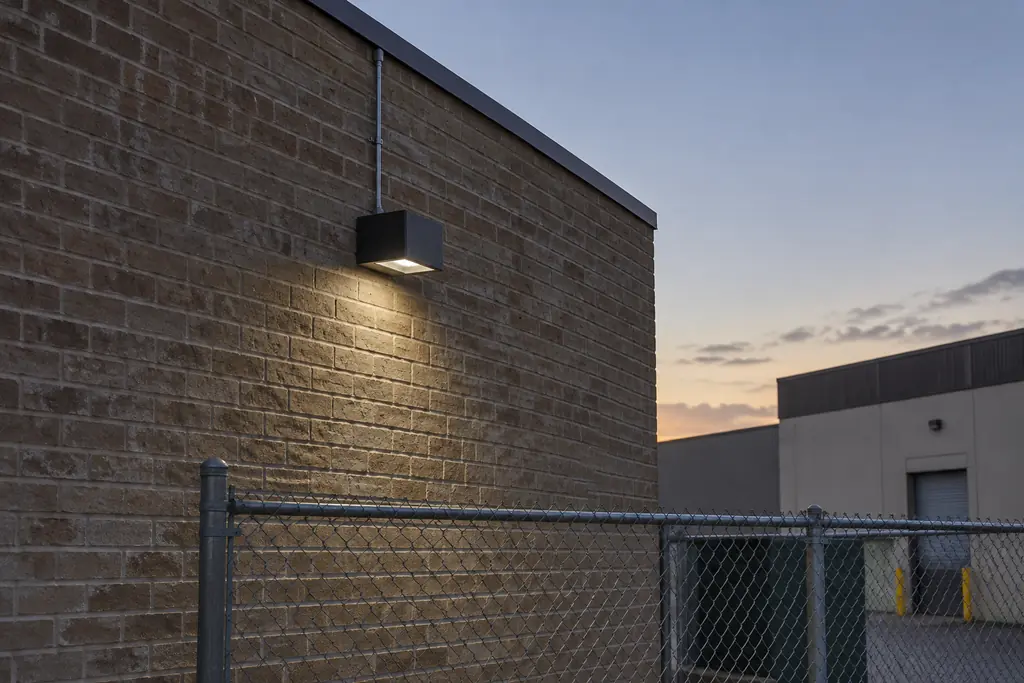
Consider the view from the boundary, not only the building
Distribution describes where a fixture sends light; shielding influences how the source is seen from surrounding positions. The exterior assessment should consider the illuminated surface, the normal approach to it and the neighbouring locations from which the source may be visible. More output alone does not establish a better result.
Review building corners, fences, grade changes, neighbouring windows and the orientation of parking or service routes. A fixture angled to reach farther into a yard can change its effect beyond the intended zone. Similarly, a bright wall fitting may make a nearby entrance appear well lit from a distance while placing an uncomfortable source in the approach view.
For property-specific work, establish the applicable requirements through the Town’s current zoning directory and any relevant approvals. Urban and rural contexts, amendments and site-specific conditions should not be assumed to be identical. A general website description cannot determine that a proposed arrangement complies with a particular property’s requirements.
Keep neighbour concerns specific. If light enters an adjacent dwelling or a neighbouring business reports glare, record the fixture position and the viewing direction described. Avoid promising that a brighter installation will improve security or eliminate liability. The practical lighting scope is about visibility, distribution and operation within the constraints of the site.
The commercial security lighting page keeps visibility considerations separate from guaranteed security outcomes.
Match the exterior question to the right work
A whole-site exterior project may include several of these scopes. Keep the boundaries visible so the assessment does not overlook a walkway between two well-lit areas or confuse a controls problem with a need for more fixtures.
| Outdoor zone | Useful scope information | Focused service pathway |
|---|---|---|
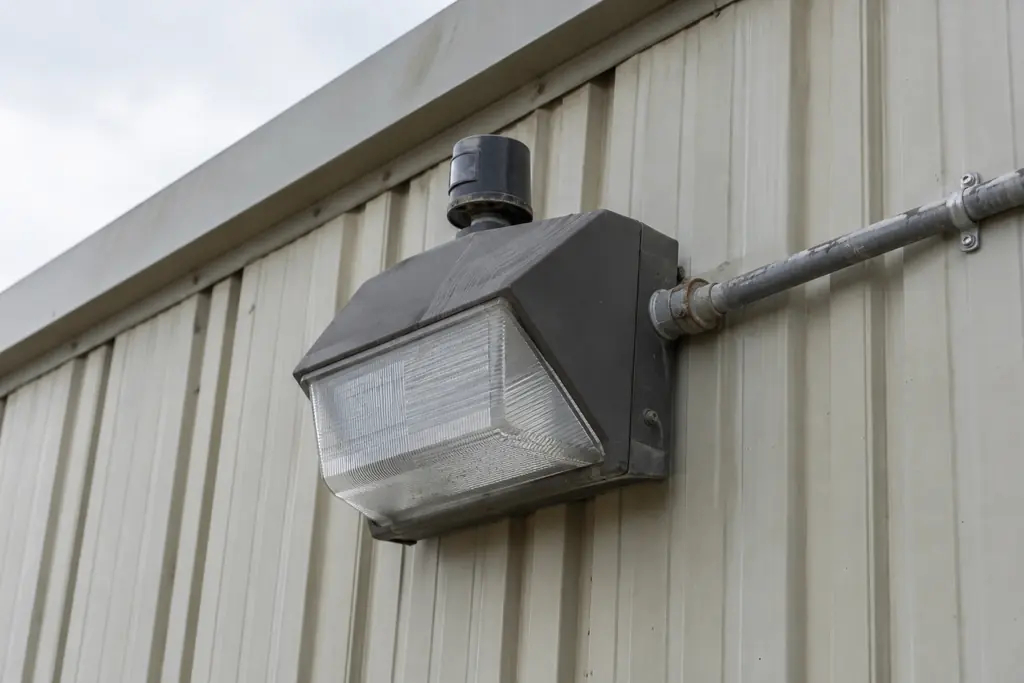
| Building wall or service door | Mounting position, existing fitting, doorway use, boundary relationship and access. | Wall pack lighting for wall-mounted fixtures. |
| Entrance or pedestrian connection | Normal walking direction, steps or transitions, operating hours and adjacent zones. | Entrance and walkway lighting for the approach and route. |
| Open parking area | Pole locations, affected parking rows, vehicle access and neighbouring property. | Parking lot lighting for pole-mounted coverage and service. |
| Covered threshold | Canopy construction, mounting arrangement, door use and the exterior-to-interior transition. | Canopy and soffit lighting for covered areas. |
| Lights operating at the wrong time | Expected schedule, actual pattern, affected zones and known control method. | Photocells and exterior controls for switching behaviour. |
Separate a current failure from an exterior improvement
If a fitting is dark, intermittent or operating at the wrong time, begin with the service information: its location, what staff observe, the extent of the affected area and when access can be provided. A photograph from ground level can show the mounting and surroundings. Do not open an outdoor housing, climb a pole or attempt electrical checks to strengthen the enquiry.
A repair assessment can consider the fixture, compatible support and the control or installation conditions relevant to the symptom. The visible fault alone does not establish which part has failed or whether a wider replacement is necessary. Where several fixtures appear affected, describe whether they share a building face or an operating pattern.
A planned improvement asks different questions. The building use may have changed, coverage may be uneven or the existing system may be approaching a broader replacement decision. That scope can compare fixture distribution, retained mounting positions, controls, access and maintenance as a project rather than a collection of unrelated callouts.
Use commercial lighting repair for the immediate problem and a site assessment for the planned exterior change. The two can inform each other without becoming the same proposal. An owner should be able to see which items address the existing fault and which items are separate improvements to be considered.
For an existing outage, review lights not working or parking lot lights not working. The parking replacement comparison addresses a planned decision after the fault is described.
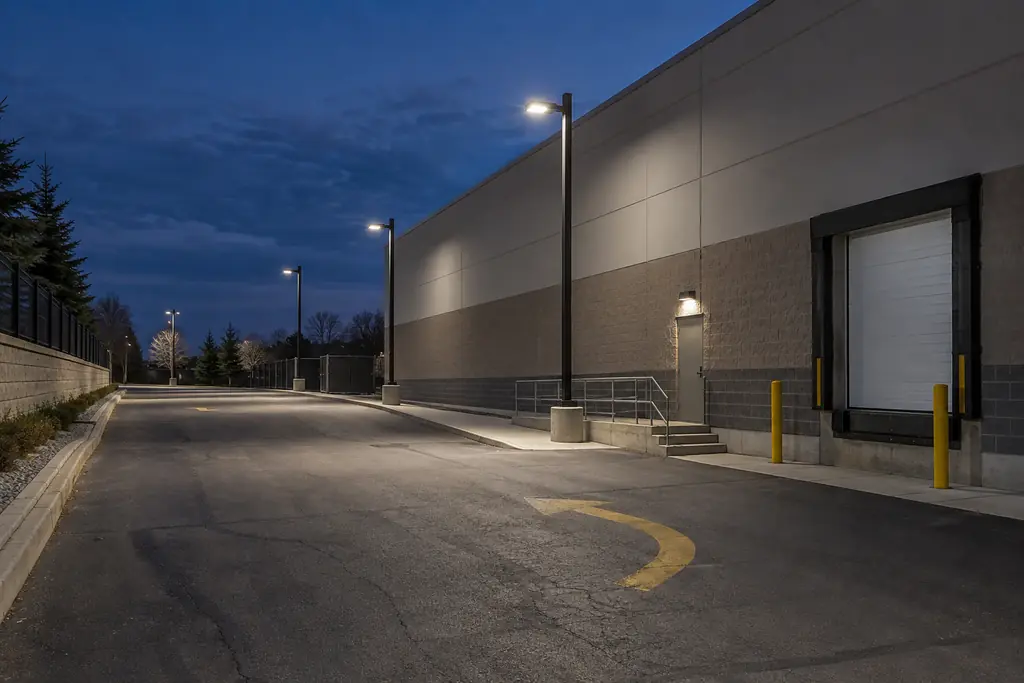
Follow the pedestrian and vehicle routes
Lighting at a door is only part of the approach. Look at the path leading to it, the point where a pedestrian leaves the parking area and the places where a canopy or building projection changes the view. Include stairs, ramps, kerbs and changes in surface that are already part of the route. The assessment should understand these conditions without assigning a single universal lighting target to every exterior area.
Vehicle routes need their own context. A loading approach, service lane and customer parking entrance have different movements and surrounding structures. Record how trucks turn, where deliveries wait and which pedestrian routes need to remain available. Lighting decisions should be coordinated with those operational constraints rather than made from a building elevation alone.
Review transitions between zones. A strongly lit doorway can sit beside a much darker path; a pole fixture may cover parked vehicles while a raised pedestrian connection is served differently. A coherent exterior scope compares the connecting areas and the direction of travel instead of checking each fitting in isolation.
The project discussion should also include normal obstructions. Parked trailers, seasonal storage, landscape growth and screens can affect access or block light. Identify what is fixed, what changes with operations and what may be altered as part of another project. Those distinctions influence whether a fixture replacement is sufficient or a location requires further planning.
Operational interfaces differ for logistics and distribution and industrial-condominium properties; identify the doors and routes your brief includes.
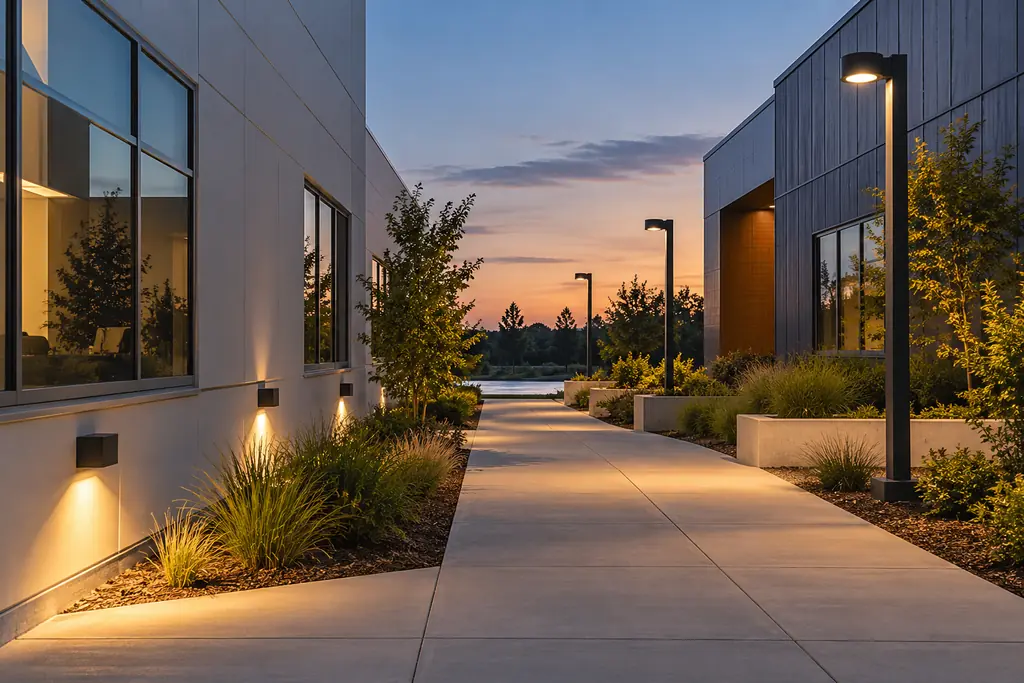
Develop the exterior scope from the site outward
Describe use after dark
List the entrances, service areas, paths and parking zones in use, along with their operating times. Explain the current concern and which areas are changing. Include a current site plan or sketch where available, without assuming every existing fixture location is suitable to retain.
Review the property relationships
Record boundary conditions, neighbouring views, obstructions and mounting arrangements. Identify any relevant approved site information and the party responsible for confirming property requirements. Keep routine service separate from changes that may need additional development documentation.
Agree operation and access
Set out how the lighting should switch and which areas need separate schedules or overrides. Plan access around traffic, deliveries and tenants. Identify who can authorize work and prepare the work area, including any permissions affecting shared exterior fixtures.
Check the installed behaviour
Observe the agreed zones and approach directions after dark when practical. Review switching, local glare concerns and the intended control sequence. Keep fixture information and settings with the property record so future repairs refer to the actual installation.
Specify the expected switching behaviour
Exterior controls should reflect how the site operates. A photocell-based approach responds to ambient light, while scheduling can relate to the hours a zone is used. Some properties need a combination or a defined override for occasional access. Describe the intended sequence first, then consider which compatible control arrangement can deliver it.
State what should happen at dusk, during normal operating hours and after the area closes. Distinguish an entrance that remains in use from a yard that is inactive. Explain any reasons a zone must continue operating, and confirm that the proposed sequence fits the property’s obligations rather than assuming every exterior fitting can simply be switched off overnight.
A complaint that lights run in daylight should include which fixtures are affected and whether the pattern is consistent. A fitting that does not operate at night may involve the fixture or the controls; the symptom does not establish a photocell diagnosis. The exterior lighting control problem guide helps organize those observations.
Settings and operating responsibility should be part of the handover. Identify who is authorized to adjust the schedule, what an override does and how the normal mode is restored. Clear information is particularly useful at shared properties where tenant hours vary or a site contact changes.
Use exterior control symptoms to describe a current concern separately from revised schedules.
Where timing is the project focus, review lighting timers and scheduling.
Routine work and development documentation are different
Replacing a failed exterior fitting and planning a new exterior area are different project contexts. The work may retain an existing layout, or it may change fixture positions, mounting heights, building use or site circulation. Establish that scope before assuming which documents or approvals apply.
The Town’s site plan approval process is the primary route for confirming development-related requirements. Its lighting submission guidance addresses information such as fixture positions, mounting, specifications and boundary calculations where applicable. That does not mean every routine repair requires a new photometric plan.
Where formal documentation is needed, clarify the required deliverables and the professionals responsible for them. A lighting service discussion does not establish engineering, stamped drawings or approval authority. Existing approved plans can be useful inputs, but they need to be checked against the current proposal and property conditions.
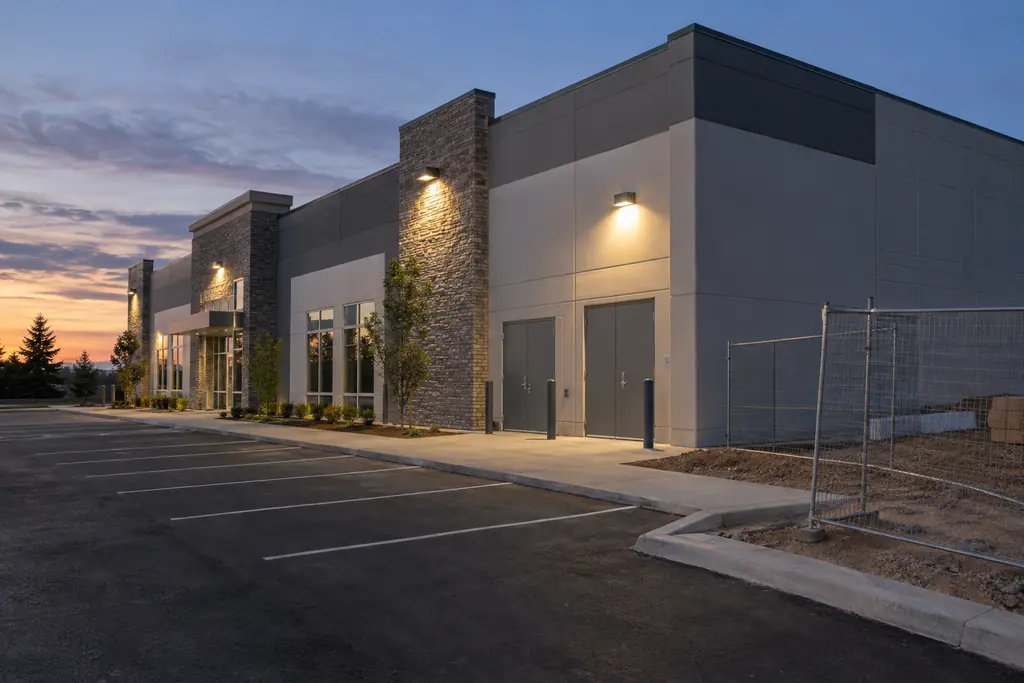
Milton’s employment areas, including the 401 Business Park and Derry Green, give exterior projects an operational context: loading approaches, industrial entrances, parking and shared property edges can all form part of a facility brief. A property’s actual layout and permissions still govern the work. The exterior lighting and photometric planning resource explores the documentation distinction in more detail.
Retained exterior equipment also needs a condition review. Record obvious damage, weathered lenses, missing covers or concerns reported in maintenance records without approaching or touching the equipment. Product selection should account for the intended outdoor environment and the mounting assembly, with any uncertainty referred to the appropriate review. A new light source does not renew every part of an older installation.
Keep the site record organized by location. A clear reference for each wall fitting, canopy group or pole makes future faults easier to report and helps avoid confusion between similar entrances. Include the intended operation and any changes made during the project, so the next service request starts from the system actually installed.
If the exterior work accompanies a new facility, consult the new-facility planning guide. For a wider replacement or retained system, the retrofit guide and maintenance planning guide consider those separate scopes.
Questions about this lighting scope
Does every exterior replacement need a photometric plan?
Do not assume a universal requirement. The distinction depends on the work and the property’s applicable processes or conditions. Describe whether the proposal retains existing positions or changes the exterior arrangement. Confirm documentation needs through the relevant property and municipal process; ordinary service and development submissions are not automatically equivalent.
Should brighter fixtures solve a dark outdoor area?
More output is only one possible consideration. Review distribution, mounting, obstructions, surrounding contrast and the routes people use. A brighter fitting in the same unsuitable position may create glare or send more light beyond the intended area. Define the coverage concern before selecting a replacement.
Can exterior work be coordinated with tenant access?
Provide the tenant hours, delivery pattern and site contact responsible for the work area. Discuss which routes must stay available and when a zone can be released. The method and timing depend on the conditions, so access should be part of the scope before a service window is assumed.
What information helps with a neighbour-light concern?
Identify the fitting or building face involved, the direction from which the concern is reported and the times it occurs. Include current fixture information and site plans if available. A review should consider the actual boundary and viewing conditions rather than assuming a general product label resolves every property concern.
Ready to plan?
Describe the exterior areas that need to change.
Tell us where the lighting needs to change, how the building operates and what timing matters. Start with the information you already have.