
Commercial & industrial lighting · Milton
Industrial Task Lighting in Milton
Industrial task lighting addresses a defined piece of work at a defined position. Reading a small marking, inspecting a finish or assembling components can reveal a visibility problem that general room lighting does not resolve. The important information is what the person needs to see and how the work is normally performed.
A useful scope considers the surface, viewing angle, equipment and surrounding light together. Local lighting may be appropriate, but its position and distribution should be selected for the task rather than added simply because the bench appears dark.
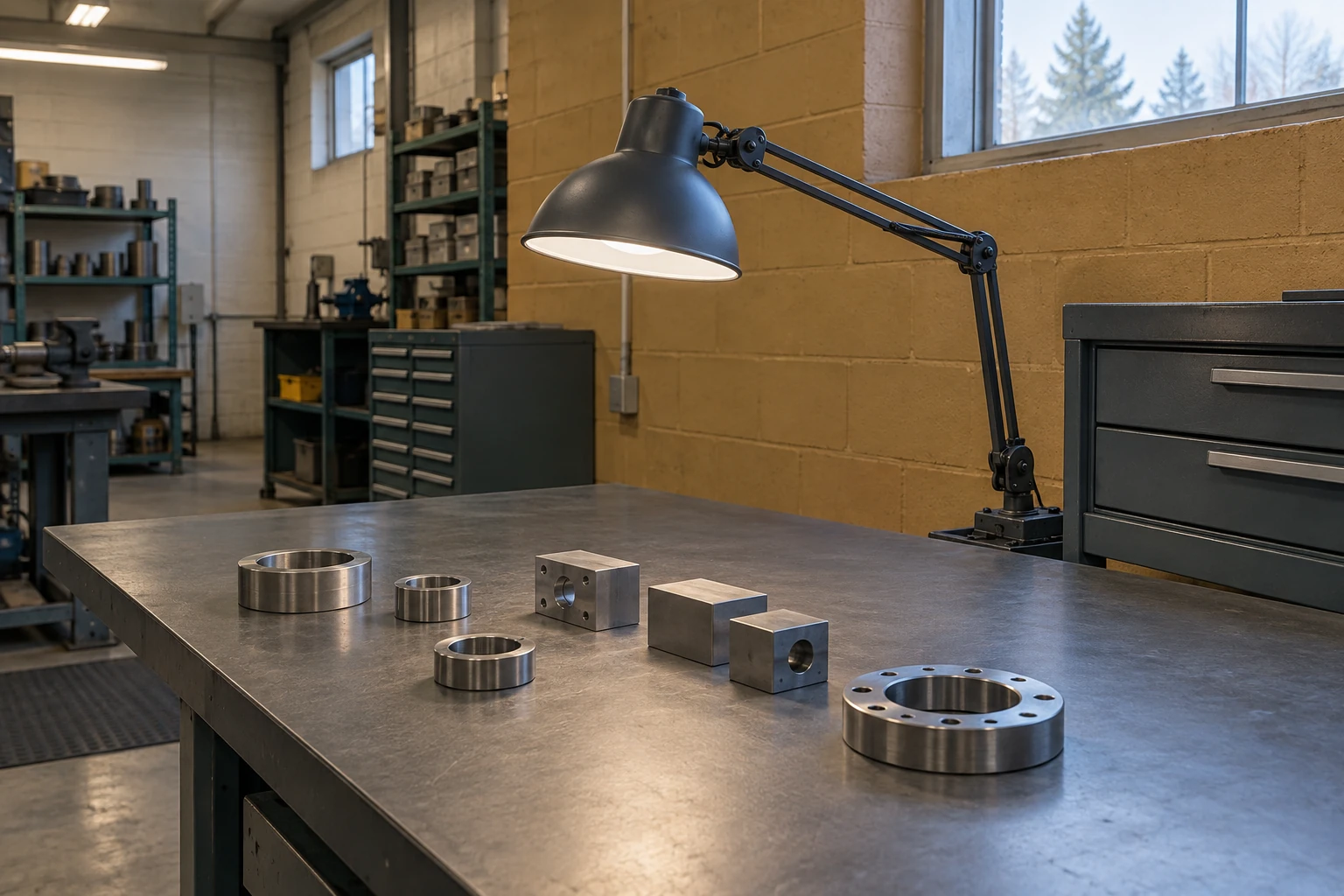
Describe the visual task in practical terms.
Explain the feature the worker must recognise: a printed label, an edge, a colour difference, a surface defect or a small assembly detail. Include normal working distance, whether the item moves and which direction the person faces. These details are more informative than the room name or the overall impression of brightness.
Record the work surface and materials involved. A polished item may reflect a fixture differently from a matte component; a pale label against a pale background may have limited contrast. The task can also change between stages, so identify whether preparation, assembly and inspection happen at the same position or different ones.
For manufacturing and industrial facilities, that discussion should involve the people who understand the process. Automotive and showroom properties may have detailed work around reflective finishes, while small-bay industrial units can combine bench work with storage. The task itself determines the focused scope, even when several facilities share the same general industrial use.
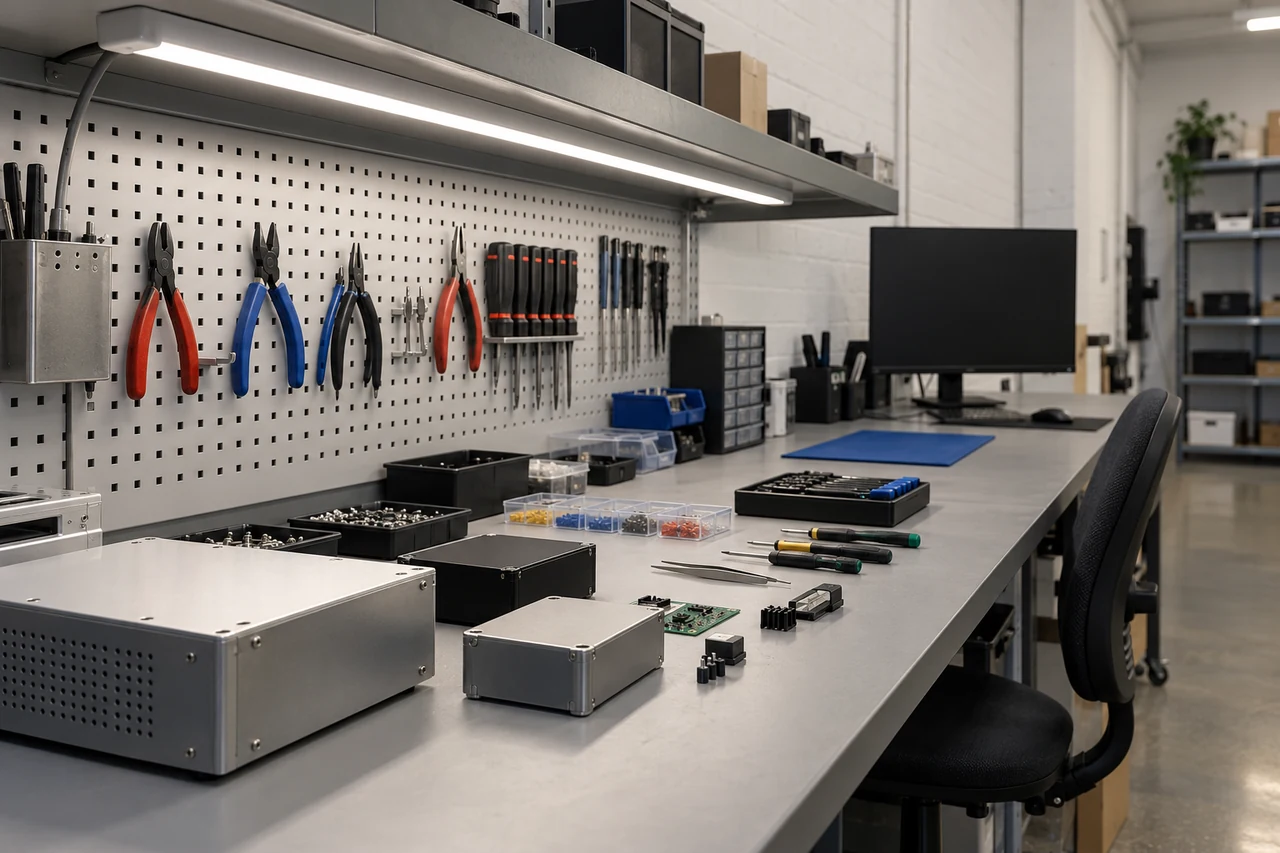
Find the shadow at the normal working position.
A bench can be well lit when empty but shadowed once the worker, tools and materials are in place. Hands, machine housings and stacked parts can interrupt the useful light. Observe the ordinary position of the task and the person rather than assessing only a cleared surface prepared for the visit.
Ask whether the difficulty changes when the item is turned or moved. That can indicate a relationship between the light direction, surface and viewing angle, although it does not establish a final design. Record the condition for review rather than directing staff to improvise new electrical arrangements or bring unsuitable equipment into the work area.
CCOHS lighting survey guidance covers shadows, glare and contrast alongside insufficient light. Those distinctions matter particularly at a focused task. Increasing output in the same direction can leave a shadow untouched, and a very bright local source can create an uncomfortable contrast with the surrounding area. The proposal should explain the condition it intends to improve.
Position equipment around the task and the machinery.
Lighting near equipment must account for the work environment and normal movement. Identify machine guards, moving components, material paths and the space used by the operator. The proposed fixture should be reviewed for its intended application and mounting arrangement, with any process-specific requirements established by the appropriate people.
Access for cleaning and service matters too. A fixture placed close to the task may be exposed to more debris, moisture or physical contact than the general ceiling system. Retain manufacturer information and identify how the location can be serviced within the facility's procedures. Do not assume that an easily reached position is an appropriate electrical installation point.
A preliminary scope can compare fixed and adjustable arrangements without prescribing a work method. Adjustment is useful only where it remains suitable for the application and users understand the permitted operation. A fixture that is repeatedly moved into an awkward sightline or obstructed by tools may need a different arrangement rather than continual user correction.
| Task feature | Observation to record | Lighting question |
|---|---|---|
| Fine detail | Working distance and viewing direction | What distribution reaches the detail usefully? |
| Reflective finish | Source reflections at the normal view | Can positioning reduce troublesome glare? |
| Hands and tools | Shadows during ordinary work | Is another direction or layer needed? |
| Machinery nearby | Movement, guards and exposure | What installation and service constraints apply? |
Compare a local layer with changes to overhead lighting.
General lighting and task lighting have different roles. The general system serves the surrounding room and movement; a focused layer addresses a particular work surface or viewing condition. If many similar positions are affected, the overhead layout may deserve review before each bench receives a separate fixture.
Industrial lighting covers whole-building conditions and environmental suitability. Manufacturing facility lighting considers production-area relationships. Bring those scopes into the comparison when the problem extends across a line or bay. Keep the specific inspection or bench objective visible so a general change is not assumed to resolve every detailed task.
The warehouse lighting guide is useful where a packing or checking bench sits beside racking, while the warehouse visibility guide helps distinguish a local bench concern from a dark aisle. A focused addition should remain coordinated with the surrounding system, including colour appearance, glare and controls. More independent fixtures are not automatically the most practical long-term arrangement.
The lighting services overview can help identify which related building or production scopes should accompany the focused task review.
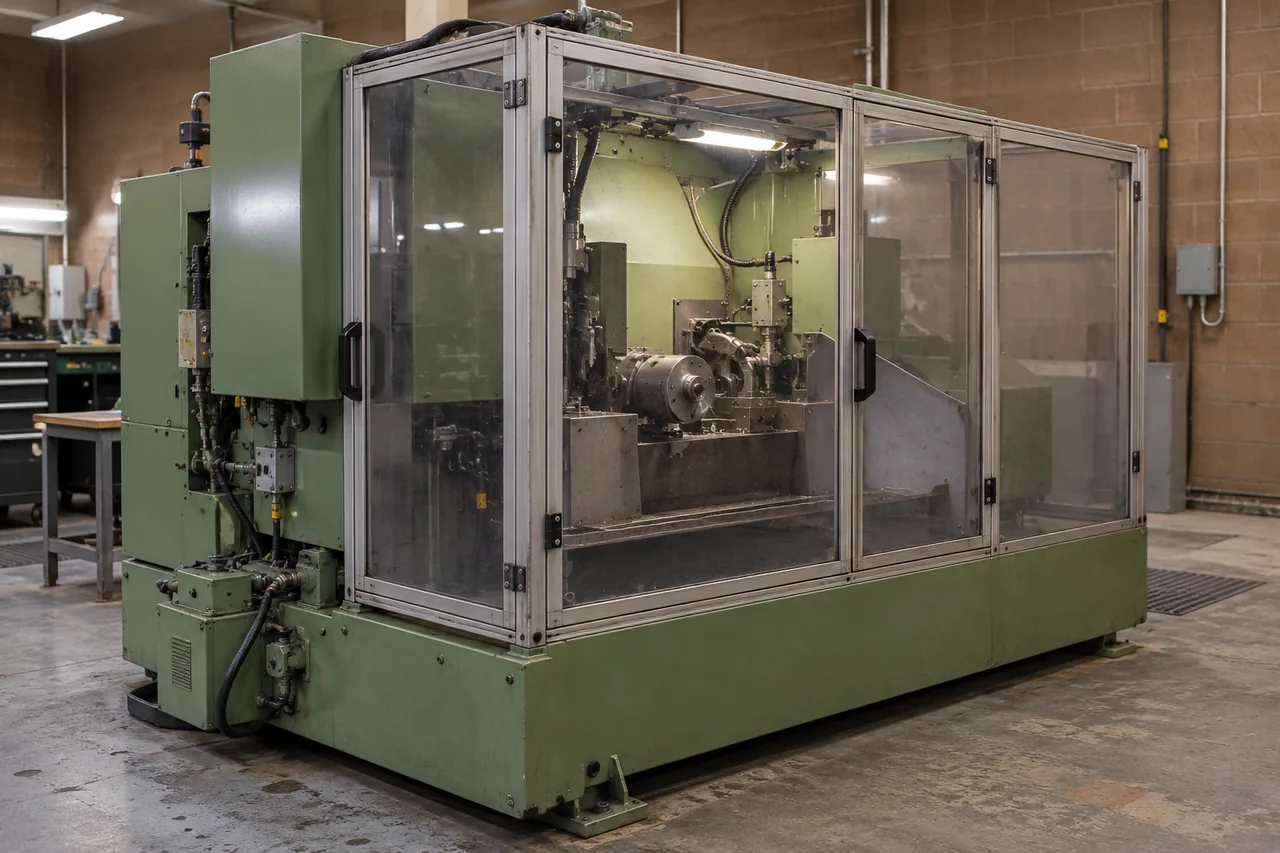
Bring small-unit constraints into the scope early.
A focused task area in a small industrial unit may sit beneath an office mezzanine or close to mixed storage. Ceiling access, landlord boundaries and the existing general circuit arrangement can influence the installation scope. Identify the unit layout and who can approve changes before selecting equipment solely for its work-surface effect.
The industrial condo lighting guide explains the relationship between workshop, storage and office uses. Use that context to make the task improvement practical within the premises. A bench addition may be the central need, but the surrounding route and occupied area should still be reviewed if the proposed local light creates a marked change in appearance.
Keep readily available plans and product information with the task brief. Note inaccessible details as questions for professional review. The user contribution is a clear description of the work and its constraints; it does not require opening fixtures, modifying controls or reaching equipment to create a more complete first enquiry.
Controls should be useful at the work position.
A task-lighting control should relate to the activity and the people authorised to operate it. Some positions may need a consistent setting; others may have several approved modes for different work. Discuss those needs before assuming that dimming or individual adjustment will be beneficial.
Dimming and zoning addresses how light levels and zone boundaries are controlled. Fixture, driver and control compatibility needs review for the proposed equipment. The ability to dim one product does not mean it will perform as intended with an existing control, particularly if several different loads are grouped together.
Include what happens before and after the main task: setup, cleanup, document work and occasional inspection may use the bench differently. The surrounding room should remain part of the review so a local setting is not judged in isolation. Record the agreed operating arrangement and the contact for requesting a change, rather than leaving users to solve recurring visibility complaints with uncoordinated adjustments.
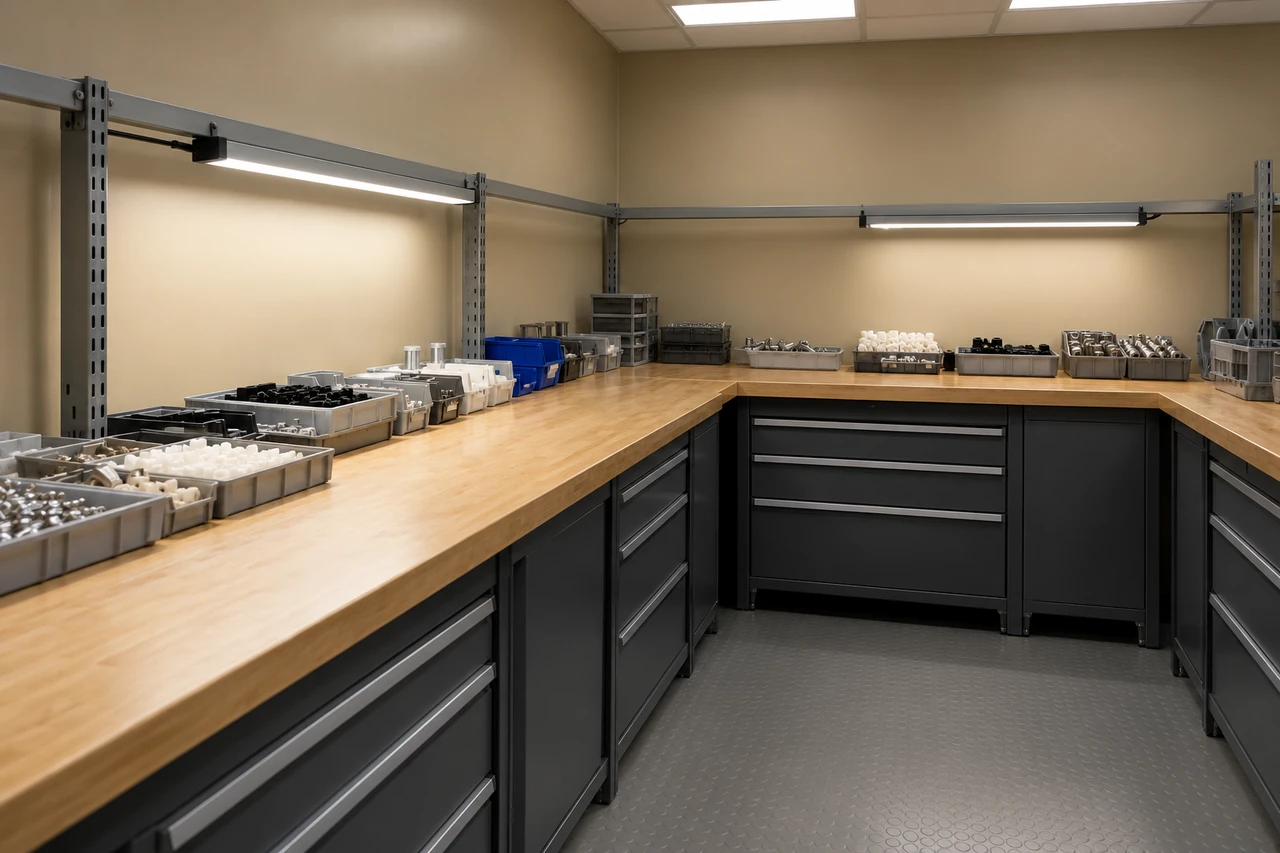
Use a representative task when reviewing the result.
Agree which task, material and normal working position will be used to review the improvement. A bare tabletop cannot show how the arrangement performs when tools, parts and the operator are present. Where the task involves a reflective finish, include the normal viewing direction and representative surface rather than an unrelated sample.
Invite feedback that describes the condition specifically. Is the detail easier to recognise, does the hand shadow remain, or has a reflected source become more noticeable? Such observations are more useful than a simple brighter or darker judgement. Detailed measurement or specialist assessment should be a defined deliverable where needed, with the applicable task conditions clear.
Record fixture positions and approved settings after the review. If the workstation moves or the task changes later, revisit those assumptions. A lighting arrangement can still operate normally while becoming less suitable for a new material, working distance or machine layout. The handover record gives the next discussion a reliable starting point.
Industrial task lighting questions.
Is a higher-output lamp the first solution to a difficult task?
Not automatically. The direction of light, shadows, contrast and reflected glare can matter as much as output. Describe the task and observe the ordinary working position first. The review can then compare a different distribution, fixture position or local layer with a change to the general system.
Should each workstation have its own control?
That depends on the task, users and surrounding system. Individual operation may be useful in some areas, while consistent settings or grouped zones may suit others. Confirm compatibility and identify who can authorise adjustments. A control arrangement should make the work easier to support rather than leave neighbouring positions with unexplained differences.
What should be included in an inspection-lighting enquiry?
Describe the item, feature being checked, surface finish, working distance and normal viewing direction. Add the surrounding equipment, existing lighting and when the difficulty occurs. Representative materials and ordinary ground-level photographs can help communicate the condition, with any specialist assessment or measurement clearly identified for the next scope.
Should users be involved in selecting the task review conditions?
Yes. The people doing the work can identify representative items, working distances and the positions where visibility becomes difficult. Use those observations to define the professional review, while keeping product selection and installation suitability in the appropriate scope. Record differences between operators or task stages where they affect the view, instead of choosing an unrepresentative sample simply because it is convenient to demonstrate.
Ready to plan?
Tell us what needs to be seen at the workstation.
Share the facility location, task, work surface and normal viewing position. Include surrounding equipment, observed shadows or glare and any limits on installation or service access.