
Commercial & industrial lighting · Milton
Commercial Lighting Resources for Milton Facilities
Choose a resource by the decision you need to make. A planned LED project needs a description of the existing arrangement and proposed change. An outage needs locations and observed behaviour. A new facility or exterior development question needs its own sequence of property and documentation decisions.
The planning articles below explore those choices in depth. The six problem guides help prepare safe, factual service information. Use the material alongside your own facility records, then distinguish what is known, what has been observed and what needs an appropriate site review.

Planning guides: define the project before selecting products.
Start with the commercial LED retrofit guide when the question concerns replacing an existing arrangement. Identify current equipment, operating periods and the desired change, then compare the proposed scope as a complete project. Commercial LED lighting retrofits develops the related service direction, while lighting assessments and planning connects the equipment with layout and tasks.
A new building or new working area has a different starting point. The new commercial and industrial facility planning article follows construction and occupancy decisions. New commercial and industrial lighting installation addresses that work type. Do not treat a new-facility project as a copy of a retrofit proposal; equipment schedules, responsibilities and milestones may differ.
These articles support a prepared conversation. They do not identify the final product or regulatory requirement for every building. Supply the current use, available drawings and people responsible for decisions. The scope becomes easier to discuss when its objective is clear before a fixture model or budget assumption is selected.

Choose the working-area guide that matches the facility.
The warehouse lighting guide connects high bays, rack faces, aisles and task positions. Warehouse lighting covers that wider arrangement. The logistics and distribution guide distinguishes internal fulfilment zones from transport interfaces; distribution centre lighting and logistics facility lighting develop those connected service scopes.
The industrial condo guide considers several uses within a compact premises, including office, storage and workshop areas. Industrial condo lighting addresses that service direction. The warehouse controls article looks at zone activity and operating response, with commercial lighting controls as the broader service route. Choose the article by the actual decision, rather than reading every topic as a requirement for the whole property.
Operating context is available in the industry guides for warehouses and distribution centres, logistics facilities, manufacturing properties and industrial condos and small-bay units. Those pages add procurement, authorization and access questions. They complement the technical scope without assuming that similar-looking facilities have identical equipment or responsibilities.
Ten planning articles, each with a different outcome.
Use the reading list to find a specific next question: how to compare a replacement, how to describe a working zone or how to organize the property records. Several articles may be relevant, but keep the decisions separate in the enquiry. A controls strategy, a failed fitting and an exterior layout change should not automatically become one undifferentiated project.
Commercial LED Lighting Retrofit Guide for Milton Businesses
Compare an existing lighting arrangement with a defined LED retrofit scope.
Warehouse Lighting Guide: High Bays, Aisles, Racking and Controls
Connect high bays, racking, aisles and working positions.
Lighting for Logistics & Distribution Facilities in Milton
Coordinate internal distribution zones with transport and loading activity.
Industrial Condo Lighting Guide for Milton Businesses
Separate office, storage and workshop needs in compact industrial premises.
Planning Lighting for a New Commercial or Industrial Facility in Milton
Connect new-facility lighting decisions with construction and occupancy milestones.
Commercial Exterior Lighting & Photometric Planning in Milton
Distinguish routine exterior work from broader site and photometric planning.
Parking Lot Lighting: Repair vs LED Replacement
Compare a parking-light repair with a planned replacement decision.
Warehouse Lighting Controls and Occupancy Sensors
Explore zone activity, sensor response and warehouse control responsibilities.
Commercial Lighting Incentives in Ontario: Current Guide
Follow a hypothetical eligibility and purchasing decision sequence.
Commercial Lighting Maintenance Planning for Property Managers
Build useful property records for maintenance and recurring reports.
Problem guides: report symptoms without guessing a diagnosis.
A service enquiry benefits from the affected location, timing and normal operating expectation. The flickering lights guide distinguishes visible pulses, interruptions and unstable output. The lights not working guide separates one failed fitting from a wider outage. These are observation categories, not instructions to test electrical equipment.
The dark warehouse aisles guide maps the task, rack face and changed layout, while office lighting problems considers screens, reflections, daylight and occupied positions. Existing records and normal accessible views are useful. Do not climb, open fittings, bypass controls or use access equipment to complete an enquiry.
Start with commercial lighting repair for an existing failure. If the findings point to a broader equipment or layout decision, define that as an additional scope rather than assuming it from the symptom alone. A useful report preserves uncertainty: the observed condition is clear, while the cause and final work remain for appropriate investigation.
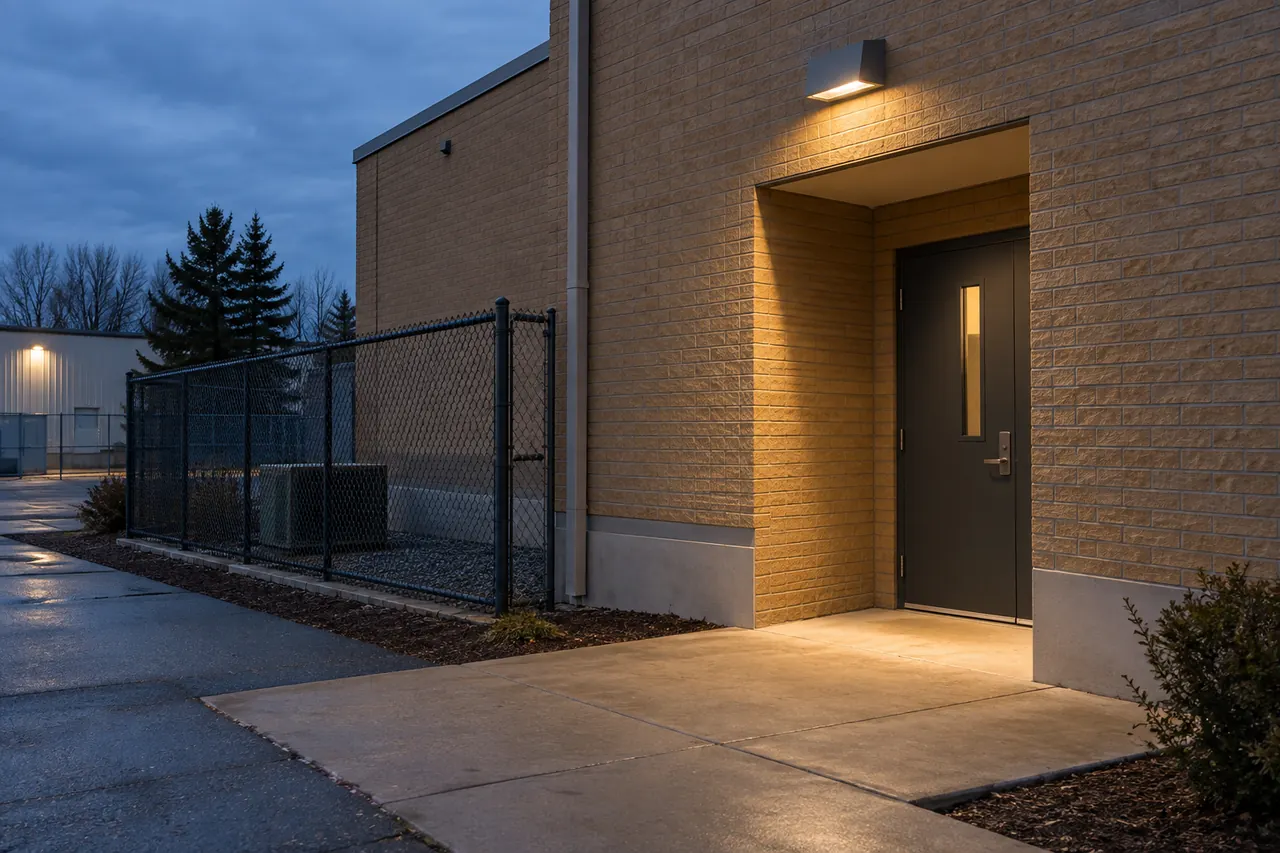
Six guides for common commercial lighting reports.
The guides organize information that facility and property contacts can collect through ordinary observation and retained records. Pick the symptom closest to the report, then keep the actual location and operating period in the description. If more than one guide applies, identify the different conditions separately so they are not mistaken for one confirmed cause.
Commercial Lights Flickering
Record the observed pulse, interruption or unstable output.
Commercial Lights Not Working
Locate failed fittings and distinguish isolated from wider outages.
Warehouse Too Dark / Dark Warehouse Aisles
Map aisle floors, rack faces, tasks and changed warehouse layouts.
Parking Lot Lights Not Working
Identify affected poles, heads, operating times and access conditions.
Exterior Lighting Control Problems
Compare daylight and scheduled operation with intended exterior use.
Office Lighting Problems
Describe office glare, reflections, dimness and uneven zones.
Exterior work and incentives need current decision routes.
The parking lot outage guide identifies poles, fixture heads and dusk observations. Exterior lighting control problems covers unexpected daylight or scheduled operation. Parking lot lighting and commercial exterior lighting address the connected service scopes. The repair versus LED replacement article then helps distinguish restoration of operation from a planned equipment change.
For a broader property project, the Milton exterior and photometric planning article explains which site information is useful and why routine service differs from development documentation. Retail and plaza properties, managed condominium properties and automotive showrooms can have different exterior use, approval contacts and access conditions. Start with the real property rather than assuming one municipal requirement applies everywhere.
The current commercial lighting incentives page provides a dated route to official program conditions. The incentive eligibility walkthrough is a hypothetical reasoning example. Keep those functions distinct: the example explains the decision sequence, while current program requirements need confirmation before purchasing or making a binding commitment.
Use property records to turn reading into a practical brief.
The maintenance planning article for property managers explains how location records support recurring service decisions. Commercial lighting maintenance can be relevant when reports span several visits or equipment groups. A useful record identifies the property, affected locations, available equipment information, prior work and who can authorize the next step.
For property managers and multi-site portfolios, preserve the differences between properties instead of assuming one replacement fits every site. Commercial landlords and tenant properties should identify the tenant request, ownership information and approving contact. Offices and business parks may need separate room and occupied-hours descriptions. Reading becomes more useful when these operating facts accompany the enquiry.
Attach only information relevant to the lighting decision. A marked plan, a few safe location photographs and retained schedules can be enough to begin. Label estimates and missing details, and avoid including confidential business material or personal information that does not help explain the scope. The review can then establish which additional information is actually needed.

Continue with the right enquiry.
The commercial lighting FAQ answers common scope and coordination questions, while the Blog provides the full article collection. Use those routes when a question needs more background, but keep the purpose of the enquiry concise: restore a reported failure, compare equipment, improve a working zone or plan a new area.
For a planned project, the site assessment request can include tasks, hours, layout and desired changes. For an existing fault, request lighting service with affected locations and observed behaviour. If both are relevant, identify the immediate problem and future decision separately. That helps prevent a repair request from being mistaken for approval of a wider project.
Keep the useful resource with the project records and return to current official sources when timing, program conditions or municipal material matters. General education can prepare a strong conversation, but the final work scope must address the actual facility, authorized parties and installation conditions.
Give each resource a role in the project file.
Use a resource to answer a particular question, then note the facility facts needed to apply that reasoning. For example, a warehouse article may prompt a rack-and-task map, while a maintenance article may prompt a location register. The useful outcome is a better project record, not a requirement to read every article or collect every possible document before making contact.
Keep three kinds of information separate in that record. Existing documents describe what was designed, installed or previously serviced. Ordinary observations describe what people currently experience. Proposed changes describe the decision still to be made. If those are mixed together, a historical schedule or a desired product can be mistaken for the current installation.
Source-dependent questions deserve a dated reference. An incentive pathway or municipal submission question should point to the current official requirement and the actual scope discussed. If the project changes, revisit that reference. A planning article can explain why to ask, while the official source and responsible project contact establish the current answer.
For an internal review, summarize the decision in a few connected sentences: the area concerned, the current condition, the desired change and the outstanding question. Attach the relevant plan or report rather than a large collection of unrelated material. This gives purchasing, facility and property contacts a common starting point without exposing unnecessary confidential information.
After a repair or project stage, retain the agreed scope and any useful equipment or operating information. If a future enquiry concerns a different area, update the record rather than assuming the earlier discussion applies everywhere. The resource collection remains available for the next decision, while the site's own records explain what actually happened at the property.
This approach also makes uncertainty manageable. Unknown model numbers, estimated dimensions and incomplete schedules can be listed for review. They should not be filled with guesses from a photograph or a similar building. A clear question is a useful result of preparation even when the final equipment or requirement has not yet been established.
Ready to plan?
Start with the facility and the decision.
Describe the property, its current lighting and the change you want to evaluate. Include operating hours, layout information and relevant photographs.