
Commercial & industrial lighting · Milton
Commercial Security Lighting in Milton
Commercial security lighting is a review of useful exterior visibility at the areas a property wants to observe and use. Dark corners, entrances and routes should be described precisely, with the lighting arrangement considered alongside cameras, site procedures and maintenance. More brightness alone does not establish a better view.
Begin with the location, viewing direction and operating period. Compare distribution, shadows, source glare and control reliability before choosing an intervention. Lighting can form part of a property's security arrangements, while outcomes also depend on factors beyond the lighting system.
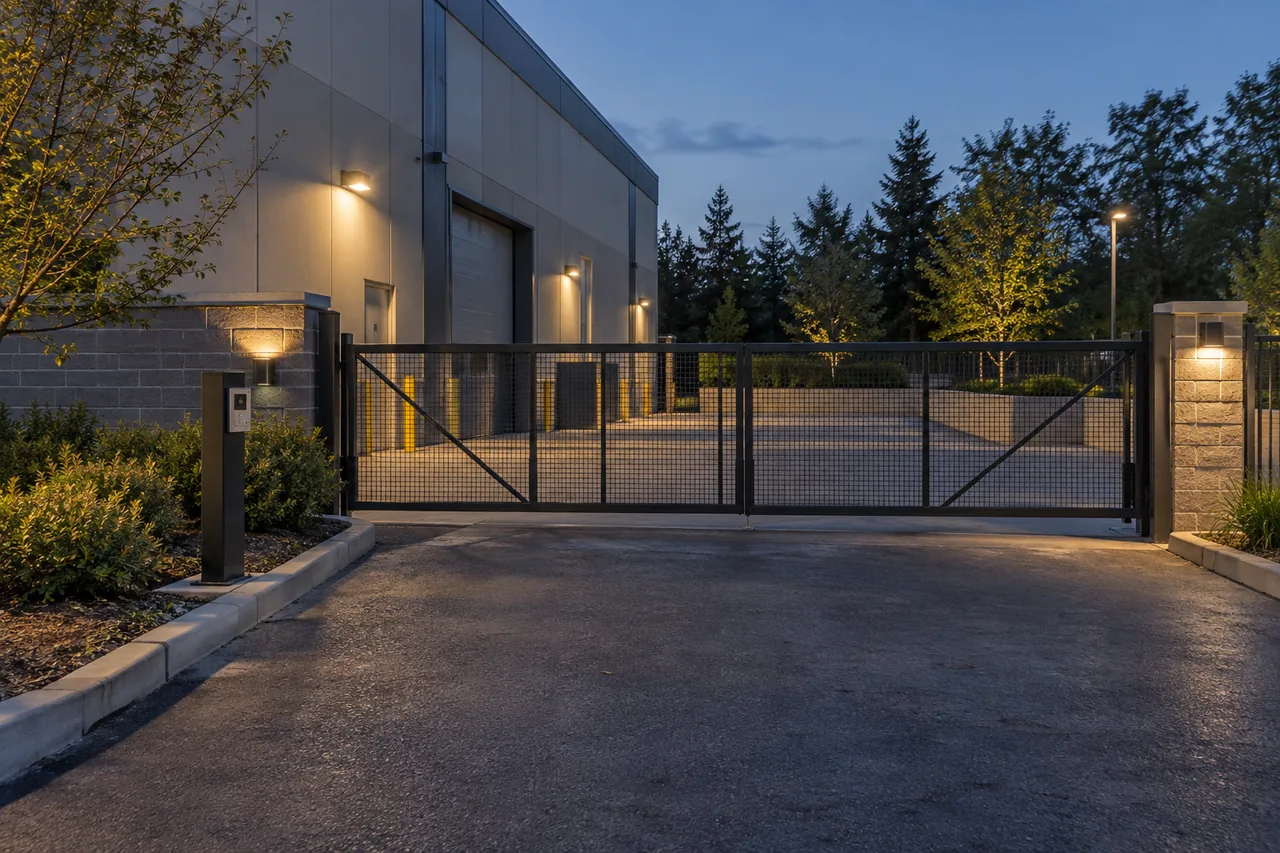
Identify the area and view that need attention.
A report of a dark site should be broken into recognisable locations. Identify the entrance, service area, route or boundary concerned and the position from which it is normally viewed. Record whether the issue affects people using the area, a camera view or both, because those conditions may require different assessment.
Representative parked vehicles, stored materials and landscaping can interrupt useful light. A cleared photograph may not show the shadow present during ordinary use. Include the operating period and any recurring changes in the scene rather than relying only on a single image.
For warehouses and distribution centres, an outside observation area can be connected to a dock or staging route. Condominiums and multi-residential properties can have resident and visitor approaches. Keep those uses explicit so the lighting review follows the actual property function instead of applying a standard security fixture assumption to every dark location.
Lighting and camera views need coordinated review.
A camera-facing concern should include the relevant view and the conditions under which the difficulty occurs. Bright sources, reflections and shadows can affect the scene being recorded. Camera capabilities, settings and placement also matter, so a lighting change should not be presented as the sole answer to an image problem.
Identify the person responsible for the camera system and coordinate the review where the lighting scope is intended to address that view. The brief can distinguish the area requiring useful illumination from questions that belong to the camera equipment or security procedures. Avoid specifying camera performance from a ground-level photograph of the site.
The exterior lighting and photometric planning guide supports the site information needed for a distribution review. Keep the lighting objective concrete, such as reviewing a shadowed entrance surface or a conspicuous reflected source. This is more useful than an undefined promise of better security or a claim that lighting will prevent crime.
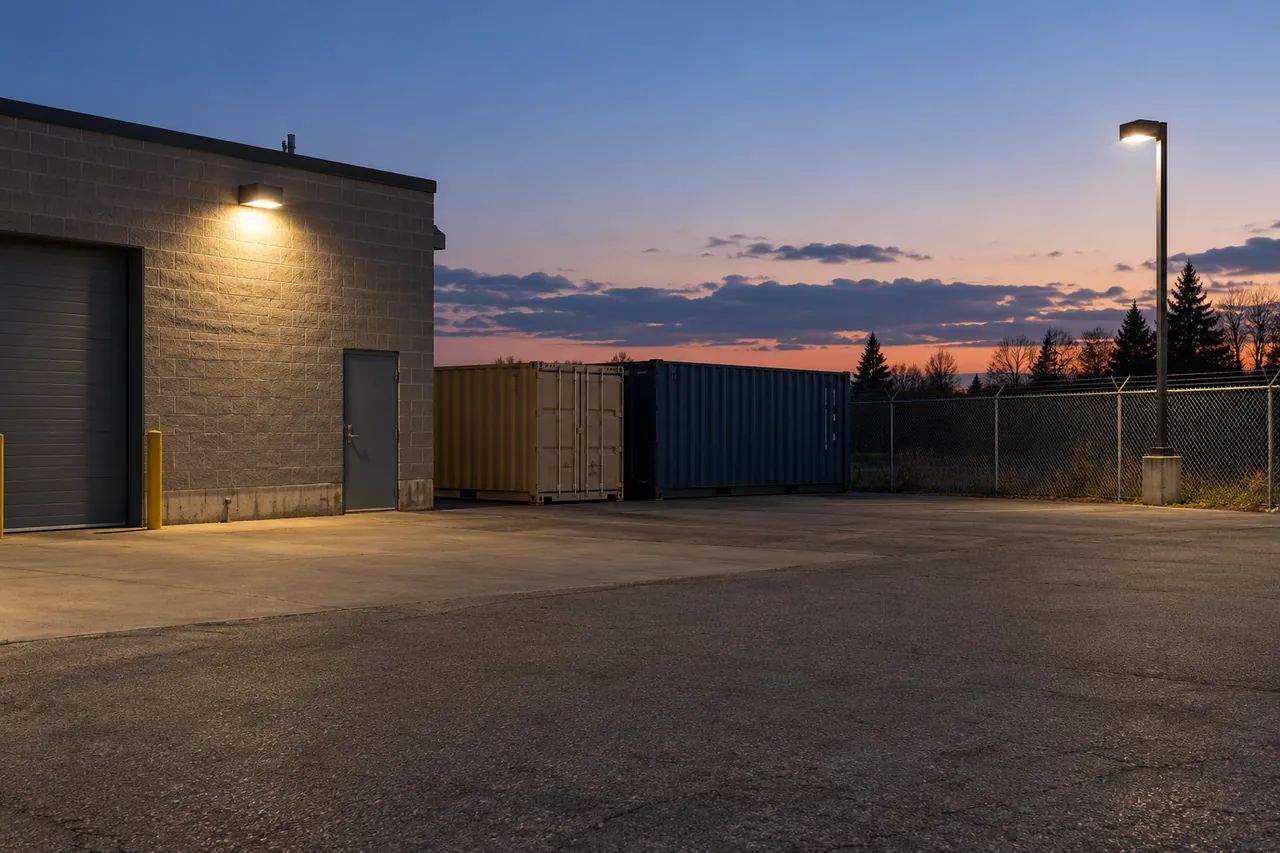
Review distribution before increasing output.
Useful light needs to reach the intended surface without creating a troublesome source in the normal view. A bright fixture can leave another area in shadow, while strong contrast can make the darker part of the scene more difficult to interpret. The proposal should connect output, position and distribution to the observed condition.
Commercial exterior lighting covers the wider site arrangement. Wall pack lighting develops wall-mounted applications where the proposed scope uses building faces. The equipment choice should follow the area and view rather than assuming that a more powerful version of the existing fitting will correct every problem.
Record mounting positions and heights where known, with uncertain details marked for confirmation. Existing plans and ground-level photographs provide context, but do not establish the complete distribution or electrical scope. Where detailed photometric work is relevant, define its deliverables and responsibility rather than treating it as an automatic part of an ordinary service enquiry.
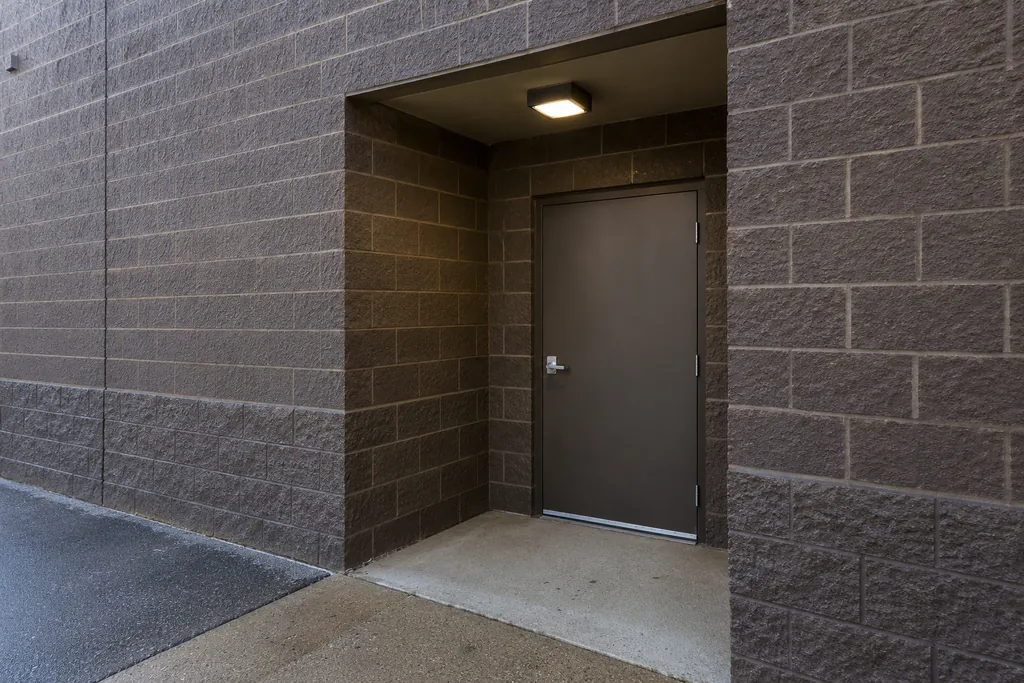
Boundary effects belong in the security-lighting brief.
A proposed source can affect adjoining property or be visible from a route beyond the intended area. Include neighbouring uses and current property plans where available. Useful light at a site entrance does not justify assuming that unnecessary spill or glare elsewhere is acceptable.
The Town's zoning by-law information provides the official route to applicable current material. The site plan approval information is relevant where development or exterior changes may need review. Confirm the requirements for the actual proposal instead of applying one blanket approval assumption to every lighting replacement.
For property managers and multi-site portfolios, keep the boundary information specific to each location. A shared fixture standard may need different shielding, distribution or positions at different sites. Document those reasons so later service preserves a deliberate application choice instead of replacing equipment solely by visual similarity.
Entrances and routes remain everyday-use areas.
Security-oriented lighting can also serve people arriving, leaving or carrying out ordinary work. Review the approach to the door, the route across the site and the transitions between areas. A source aimed primarily at a camera-facing scene should not be assumed to provide comfortable or useful light from every pedestrian direction.
Entrance and walkway lighting considers those approaches and viewing positions in more detail. Connect that scope where the observed concern involves steps, a door threshold or the path leading to the entrance. Keep the intended coverage and any remaining areas outside the proposal clear.
The lighting review should sit alongside the property's existing access and operating procedures. It does not determine whether a route is suitable or remove the need for other site measures. Describe the actual use and lighting condition so the appropriate property participants can assess the complete arrangement.
The lighting services overview can help connect the security-oriented enquiry with the specific exterior, entrance and control work it needs.
| Observed concern | Information to supply | Review connection |
|---|---|---|
| Dark location | Area, surface and ordinary viewing direction | Distribution and obstructions. |
| Camera-facing difficulty | Relevant view and operating conditions | Coordination with the camera-system contact. |
| Entrance or route | Approach and transition points | Useful light for everyday movement. |
| Unexpected operation | Time, affected group and known controls | Reliability and compatibility review. |
Operating reliability matters alongside the intended coverage.
A well-positioned exterior light provides little useful function if its operation does not follow the intended period. Record unexpected switching, intermittent output or groups that remain off when normally needed. Keep those observations separate from a confirmed technical finding.
Photocells and exterior lighting controls addresses daylight-responsive operation and the interaction with other controls. Confirm the intended schedule, retained equipment and compatibility before assuming that a replacement fixture can use the existing strategy unchanged. Nearby sources and property changes may also need to be described for the review.
Staff should report ordinary observations through the service route rather than bypassing controls or altering equipment to maintain a preferred setting. Where a control change is included, retain the approved operation and identify who can request an authorised adjustment. This gives future reports a known baseline and avoids confusing a deliberate schedule with an equipment problem.
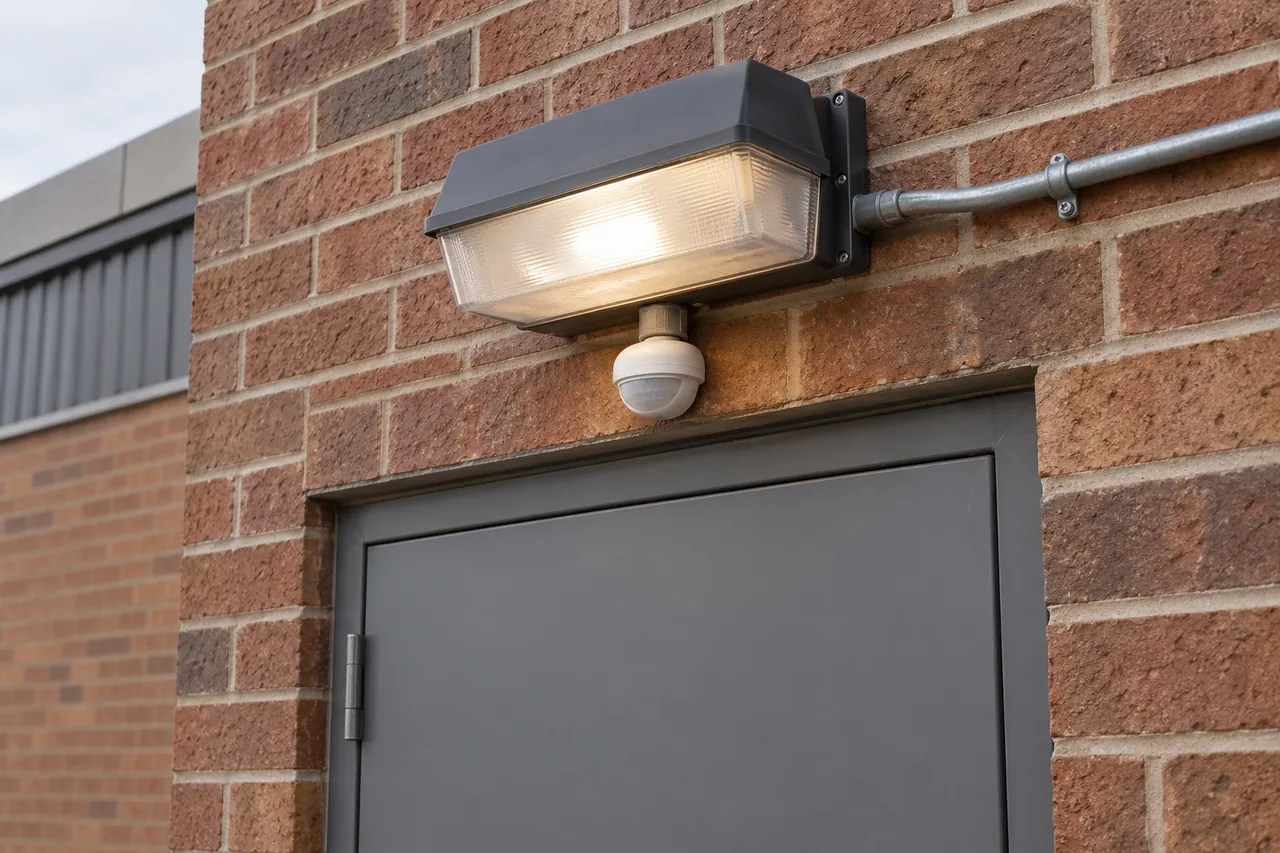
Maintenance should preserve the intended scene.
Retain location references, product information and control groups for the lighting that serves the identified areas. Record service actions and any confirmed changes to the equipment. A mixed series of replacements can alter distribution or colour appearance over time even where every light still operates.
Access constraints should be known before work is planned. Identify active entrances, vehicle routes, stored materials and the periods when the area can be isolated. The actual service method must be established for the site, rather than inferred from fixture height or a clear daytime photograph.
Review landscaping and operational changes as well as equipment condition. New storage, a moved camera or different parking use can change the scene while the original lighting remains functional. The location record gives the property a way to connect those changes with the earlier objective and decide whether the next request concerns maintenance or a revised application.
Use the defined lighting objectives to review the result.
Agree which locations, views and operating periods will be used to discuss the result. Return to representative site conditions and the specific dark surfaces or glare concerns identified at the start. Where the scope relates to a camera view, involve the relevant system contact so lighting findings are not confused with camera adjustments.
Retain approved control settings and the equipment actually used. Identify any remaining questions or areas outside the agreed work. That record makes the decision reviewable and supports future service without implying that a lighting project resolves every security issue on the property.
Changes in use or equipment may warrant another review. A different entrance pattern, relocated camera or altered outdoor storage can change what needs to be seen. The appropriate next step is to examine that new condition against the documented lighting arrangement, rather than assuming that an operating fixture continues to meet every future purpose.
Commercial security lighting questions.
Does brighter exterior lighting always improve a camera view?
No. Glare, reflections, contrast and shadows can affect the scene, while camera placement and settings also matter. Identify the view and conditions, then coordinate the lighting review with the camera-system contact. A stronger fixture in the same position should not be assumed to resolve an image concern.
Can security lighting guarantee that a property is safer?
Lighting is one part of the property’s overall arrangements. It can be reviewed for useful visibility and reliable operation, but crime, incident and liability outcomes depend on many factors. Keep the project objective tied to the defined lighting conditions rather than an outcome the equipment alone cannot establish.
What helps distinguish a distribution problem from a fault?
Record whether the equipment operates as expected and where useful light is missing. Include timing, affected groups and changes in the scene. A functioning source that leaves an entrance shadowed needs a different discussion from a source that remains off, although both may belong in one coordinated property brief.
Ready to plan?
Describe the exterior areas and views that need attention.
Share the Milton location, entrances or dark zones, relevant viewing positions and operating periods. Include known controls, camera coordination needs, neighbouring conditions and limits on access.