
Commercial & industrial lighting · Milton
Exit Sign Lighting in Milton
Exit-sign service begins with the sign location, observed condition and the building’s existing equipment records. Illumination concerns and physical damage should be described clearly for professional review.
A repair or replacement scope is different from approving the route, sign layout or building design. Bring recent alterations and unresolved maintenance findings to the responsible building contact so those decisions are coordinated separately.
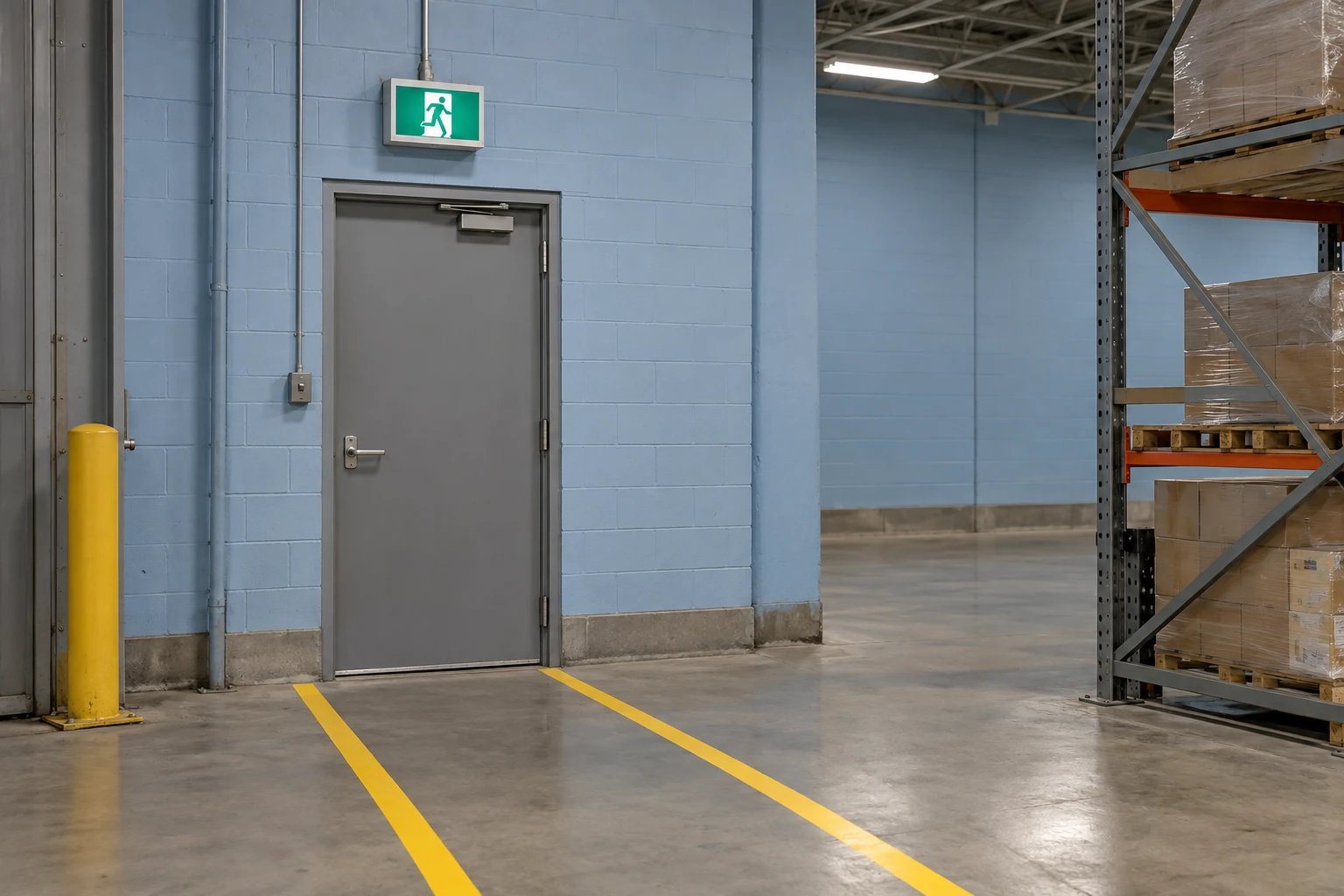
Describe the sign that needs attention.
Use a location reference that identifies the actual sign. A floor, corridor, door or room number is more useful than a general report that the exit signs need service. State whether one face appears affected, the sign is damaged or an existing maintenance report identifies an unresolved item. Describe the observation without naming a failed component unless it has already been professionally established.
Record the surrounding condition as well. A sign can be difficult to see because of an obstruction, changed furniture, a new display or an altered approach. Those concerns may require a different response from an illumination fault. A ground-level photograph from a normal viewing position can help show what the building contact needs to review.
Commercial lighting repair is the wider service pathway. Where emergency illumination is also involved, include a separate emergency lighting request or location list. The two functions may share aspects of a system, but a concern with one sign should not automatically be represented as a diagnosis of all emergency equipment in the building.
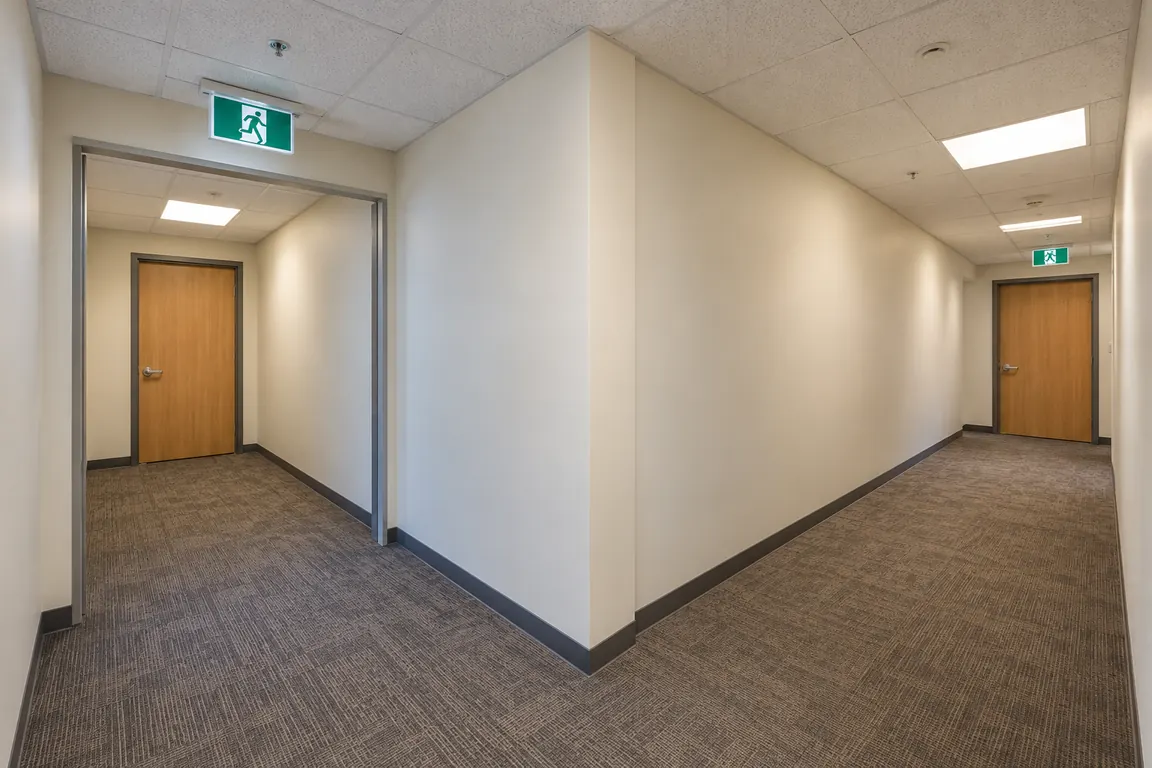
Visibility and legibility are part of the observed condition.
A sign may be present and lit while its ordinary view has changed. Identify the direction from which the concern is reported and what is visible along that approach. Recent partitions, storage, decorations or displays can matter. The responsible contact should review those observations within the building’s normal fire-safety and property processes.
Ontario’s current Fire Code addresses visible, clean and legible exit signs, illumination during occupancy and maintenance in operating condition. The application and maintenance requirements must be verified for the particular building and equipment. Confirm the applicable sign design, maintenance and replacement requirements for the particular building and equipment with the responsible professionals.
Keep sign condition separate from route decisions. An electrical service scope can address defined equipment, but changes to an exit route or the number and position of signs may need wider professional or authority coordination. A website enquiry and a photograph do not establish the correct egress arrangement. Provide the current layout and identify the parties responsible for those decisions instead of asking a component replacement to resolve an undefined design concern.
Classify the concern without diagnosing the system.
A concise location record helps separate equipment faults from changes in the surrounding space. Use one entry per affected sign or distinct concern. Include existing professional findings where available, with unknown details marked for review. This gives the initial discussion enough structure to define the work without asking staff to inspect electrical components.
The scope should identify the result requested and the boundaries of the review. If the concern is an unlit sign, state that. If a sign has become obstructed after alterations, provide the changed layout. If both occur, keep both in the record. They may involve different responsible contacts and should not disappear into a single generic repair description.
| Reported issue | Information to provide | Review question |
|---|---|---|
| Illumination | Location and visible behaviour. | Equipment service needed. |
| Physical damage | Visible condition from safe position. | Replacement compatibility. |
| Obstructed view | Normal approach and obstruction. | Responsible building decision. |
| Changed layout | Current plan and alteration. | Wider professional coordination. |
Know the existing equipment before replacement.
An illuminated sign can have different equipment and backup arrangements from a similar-looking sign elsewhere. Product records, drawings and prior maintenance documents help establish what is installed. A replacement should be reviewed against the existing arrangement rather than chosen only because its housing or face looks familiar.
Identify information already available to the property contact, including product details and any known connection to emergency power equipment. The professional scope should resolve unknown installation conditions. Do not open the sign, access concealed wiring or interrupt its supply to obtain that information for an enquiry.
The ESA product approval guidance explains recognised approval marks for electrical equipment. The selected sign and associated components still need to suit the actual application. Where one equipment family has been replaced in stages, record the variations. Mixed ages and products can be important to maintenance and replacement decisions, without proving that every older sign needs immediate replacement.
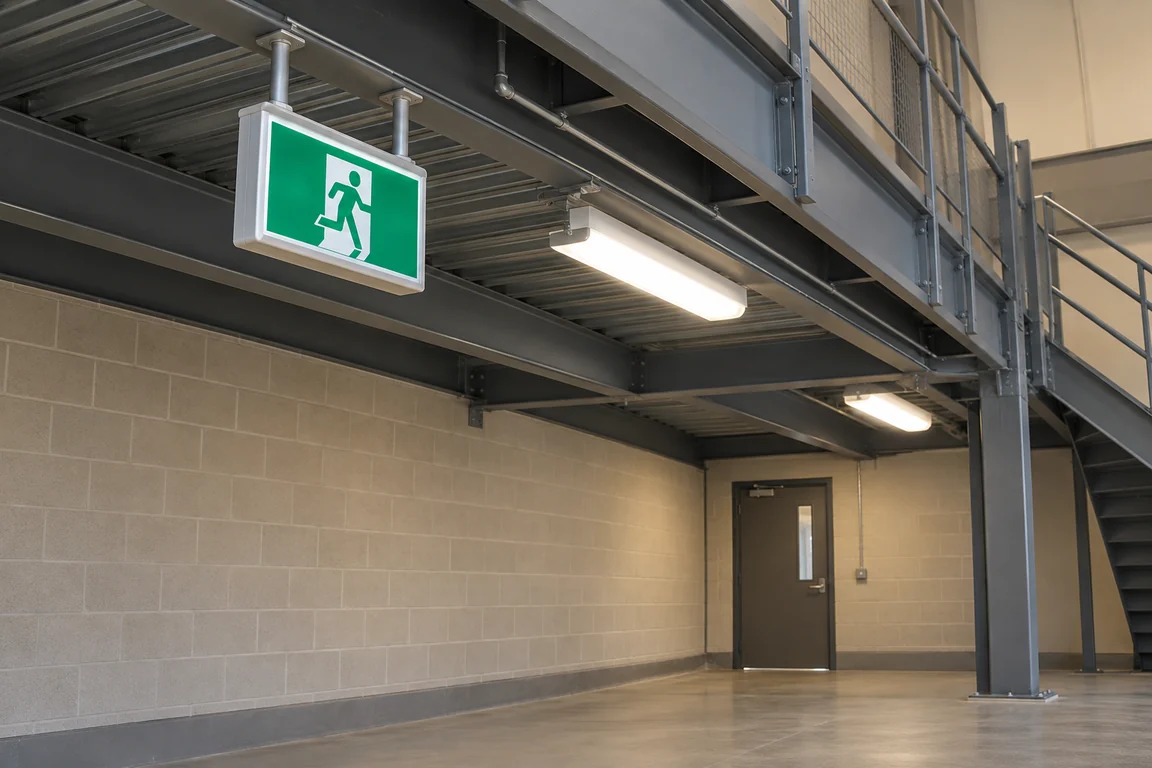
Coordinate tenant and base-building responsibilities.
Signs can be located in a tenant area, common corridor, shared entrance or parking structure. Identify the property and occupant contacts who hold records and can authorise access. A lease or management agreement may allocate responsibilities, but that allocation should be confirmed by the relevant parties rather than assumed from the sign’s position.
For offices and business parks, an interior alteration may involve tenant contractors and a base-building contact. Property managers and multi-site portfolios adds the need for accurate location references and approval routing across properties. Condominiums and multi-residential properties involves common-area access and resident communication. These differences affect the service process even when the visible equipment is similar.
Use one clear contact route for the initial enquiry and identify any additional approval needed. Existing findings should reach the party responsible for deciding the next step. Avoid a service arrangement in which an occupant assumes the landlord is handling the issue while the property contact has not received the report or the information needed to authorise a review.
Access planning must respect occupied routes.
Signs are commonly positioned above doors or along shared routes. A work zone can affect circulation even where the electrical task is small. Provide normal occupied periods, restricted areas and the person who controls access. The professional work plan and responsible building contact should address the timing and any operating constraints for the actual site.
Do not assume an affected doorway can simply be closed for convenience. A lighting service enquiry does not decide whether a temporary route arrangement is acceptable. Where such decisions are necessary, they belong to the responsible parties and applicable processes. The scope should keep them visible before work is scheduled.
Photographs from safe accessible positions can show mounting height and nearby obstructions. Existing drawings may provide better equipment or route information than an improvised close-up. Staff should not climb, remove covers or operate electrical equipment to help identify a sign. A clear location list and relevant records are sufficient to start the discussion; further investigation can be planned within the professional scope.
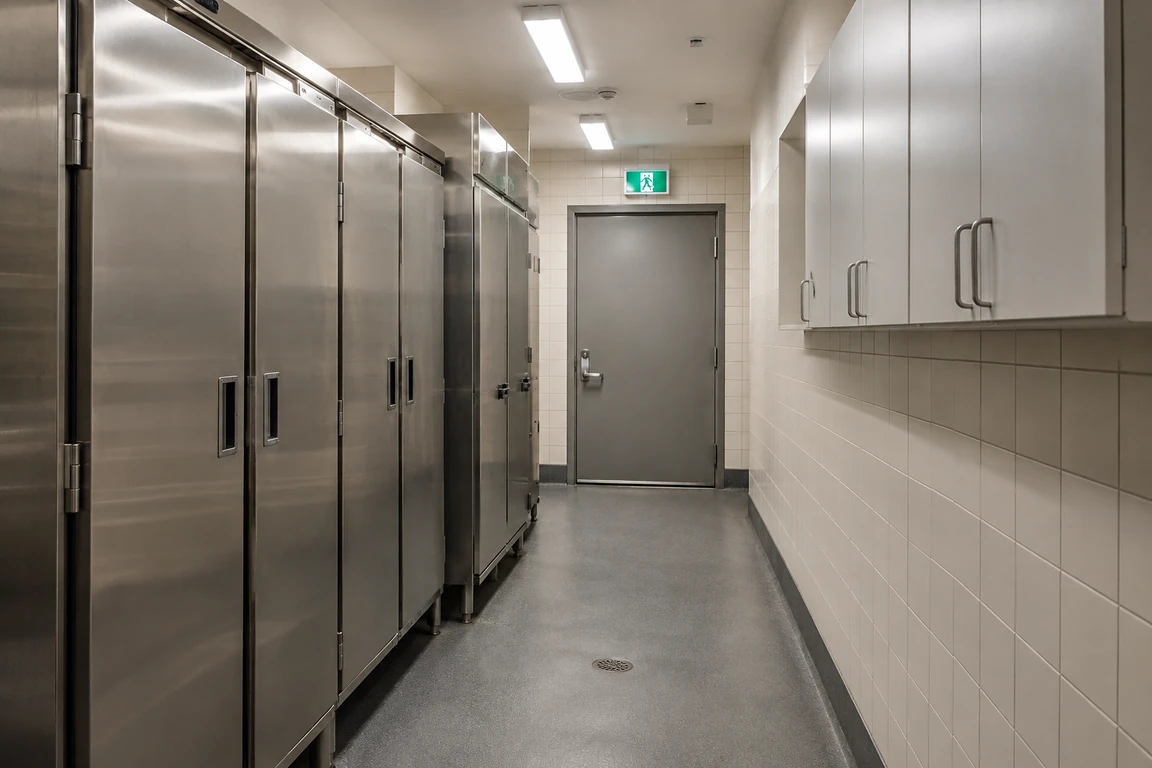
Retain an equipment record that supports later service.
A completed service record should identify the affected sign, the work performed and any further issue noted within the agreed scope. Use the same location references as the enquiry. Product information and relevant documentation should be retained with the building records so a later request can identify the equipment without repeating the original investigation.
Commercial lighting maintenance develops the broader record-keeping approach. Exit-sign equipment should retain its verified maintenance requirements and the appropriate professional scope. A general lighting inventory should not erase the distinction between ordinary luminaires and equipment associated with exit indication or emergency arrangements.
When alterations occur later, compare the new condition with the current records. An equipment replacement does not approve future partitions, changed routes or a different occupancy. The responsible building contact should coordinate any wider review those changes require. Clear records help that process, while avoiding an unsupported statement that a service visit has certified the entire building or all egress-related decisions.
Make the next step specific and reviewable.
Before authorising work, identify whether the request covers investigation, defined replacement or coordination of a wider concern. The proposal should state the equipment scope and documentation expected, with any additional review assigned to the appropriate contact. This keeps the service decision tied to the actual reported issue.
Compare the commercial lighting services if the sign enquiry is part of broader fixture maintenance or an occupied-building alteration.
List the signs and concerns.
Provide a location reference, visible symptom and any prior professional finding for each affected sign. Include recent alterations and the normal viewing approach where relevant. Obtain existing records rather than investigating concealed conditions.
Confirm the professional responsibilities.
Identify the electrical contractor and the applicable installation requirements for the proposed work. Coordinate access with the responsible building contact. Route questions about layout, sign position or egress arrangement to the relevant parties instead of treating them as incidental equipment decisions.
Preserve the completed information.
Keep the work record, product details and unresolved findings appropriate to the service scope. Confirm who receives the documents and who authorises any follow-up. A future maintenance request should be able to reference the same sign location and known equipment arrangement.
Questions about this lighting scope.
Does an illuminated sign prove all exit-sign requirements are met?
Illumination is one aspect of the condition. Visibility, legibility, equipment operation and the building’s arrangement also matter within the applicable requirements. A casual observation is not a compliance determination. Provide the concern and existing records for the appropriate professional and responsible-party review, without assuming a lit face resolves every issue.
Can a replacement sign be chosen only by appearance?
The existing equipment, power or backup arrangement, product approval and application need review. Similar-looking signs can have different requirements. Provide known product records and location information. The professional scope should establish replacement compatibility for the actual installation rather than relying on a housing shape or visual match alone.
What if a new partition blocks the view of a sign?
Report the changed layout and the normal approach to the responsible building contact. That concern may involve a wider route or sign-arrangement review, separate from equipment repair. Do not move or disconnect the sign informally. The appropriate parties should determine the required next step for the altered space.
What should staff do before requesting service?
Collect existing drawings and maintenance findings, record the affected locations and describe visible concerns. Safe ground-level photographs can help. Staff do not need to remove covers, interrupt power or test backup equipment. Electrical investigation and applicable maintenance verification belong to the agreed professional scope for the installed system.
Lighting service
Describe the affected equipment and service need.
Share the affected sign locations, observed illumination or physical condition and existing maintenance records. Include the responsible building contact, recent alterations and access restrictions so equipment service and any wider review can be coordinated.