
Commercial & industrial lighting · Milton
Photocells & Exterior Lighting Controls in Milton
A photocell responds to light conditions at its location. That location may experience a different mix of daylight, shadow and artificial light from the area served by the fixtures.
Plan the intended exterior sequence before selecting or replacing a control. If lights operate unexpectedly, record when and where it happens so the sensor, fixture and scheduled control can be considered together.
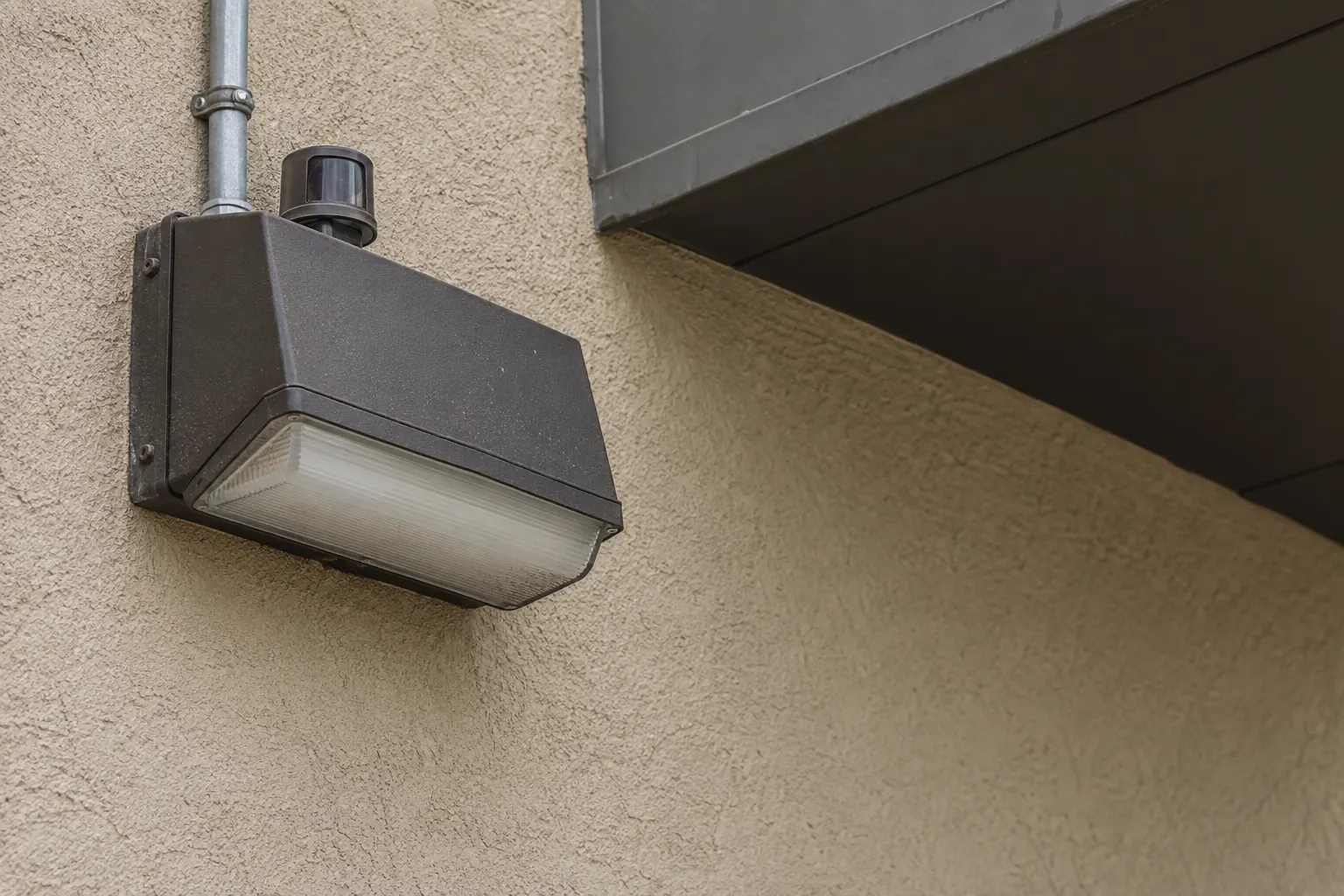
Describe the behaviour before naming a failed part.
An exterior system that stays on during the day or remains dark after dusk has a clear symptom, but the symptom alone does not identify the cause. The control sequence, sensor environment, connected equipment and electrical condition can all be relevant. Start with what is visible during ordinary use and keep assumptions separate from observations.
Note whether the issue affects one fitting, a group or the whole exterior area. Record the time, weather and nearby lighting conditions when it occurs. If the behaviour changes after a delivery door opens, a sign illuminates or a neighbouring light comes on, include that detail. A short pattern of observations can be more useful than describing the photocell as defective without evidence.
The exterior lighting control problems guide helps organise daylight-related complaints. Where parking fixtures remain dark, the parking lot lights not working guide helps identify the affected poles or zones for a service request. Commercial lighting repair addresses a service need; a new control arrangement should be treated as a planned scope once the existing conditions are understood.
The sensor location sees its own daylight.
A photocell installed under a deep overhang, beside a shaded wall or near reflective glazing experiences local conditions. Those conditions may not represent the sky light available across a parking area. A surrounding tree, new sign or building extension can also change the exposure after the original installation.
Review the relationship between sensor placement and the fixtures it controls. Artificial light reaching the sensor can affect its response, depending on the equipment and sequence. The direction it faces, nearby surfaces and permitted mounting arrangement should be checked against manufacturer guidance. Relocation should not be treated as a simple user adjustment; it belongs to the qualified electrical scope.
Commercial exterior lighting considers the complete site arrangement, while wall pack lighting focuses on building-mounted fittings that can influence nearby sensors. In warehouse and distribution properties, a sheltered wall beside a dock may have quite different conditions from an open yard. Describe those relationships on a site plan so the review begins with the physical setting.
Seasonal observations can help explain a changing pattern. A sensor beside deciduous planting or a surface that receives different sunlight may experience conditions that vary through the year. Record that context clearly without adjusting or shielding the device. The professional review can compare the documented pattern with product guidance and the site arrangement, while keeping any proposed relocation or replacement within the agreed electrical scope.
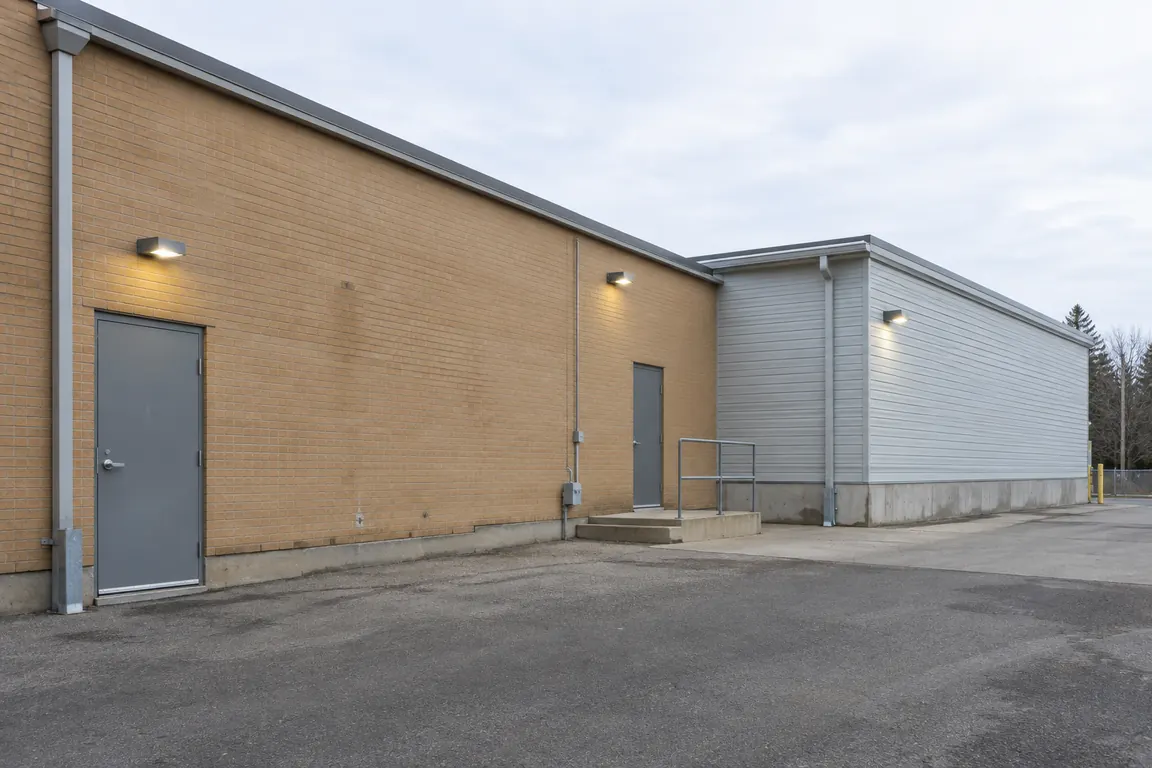
Separate the daylight decision from the schedule.
A photocell answers a daylight-related question; a timer answers a calendar-related question. Systems may combine them, but the intended relationship needs to be stated. An exterior area may require light after dusk only during defined occupied hours, while another zone has a different requirement. A control review should explain those differences rather than describe every fixture as dusk-to-dawn.
Record what each area should do during opening, closing and unusual activity. Include overnight staff access and deliveries if applicable. Identify any local override and who is permitted to use it. These operational questions establish the desired sequence; the electrical professional then reviews how the actual devices can provide it.
| Condition | Operational question | Scope consideration |
|---|---|---|
| Daylight | When is exterior light needed? | Sensor exposure and device response. |
| Closed premises | Which zones remain in use? | Calendar relationship and boundaries. |
| Late delivery | How is temporary activity supported? | Authorised override or separate zone. |
| Neighbouring light | Does another source reach the sensor? | Placement and compatibility review. |
Connect the parking area and tenant frontage.
A shopping plaza may contain shared parking, individual frontages and a rear service lane with different hours. A photocell controlling all of them can obscure the operational boundaries. Establish whether the fixtures and controls belong to a tenant, the landlord or another responsible party, and who can approve changes to the sequence.
At a parking area, the discussion includes the intended lit routes and the surrounding property. At a tenant entrance, it includes opening hours and local signs. Treat adjacent zones as connected conditions without assuming they must share one device or setting. Parking lot lighting develops the open-area scope and its mounting conditions.
The retail stores and shopping plazas industry page explains trading and landlord coordination. For several managed areas, property managers and multi-site portfolios focuses on request ownership and records. The exterior lighting planning guide can help bring the areas into one brief. A useful control project identifies which responsibilities and operating windows have been confirmed before equipment is purchased.
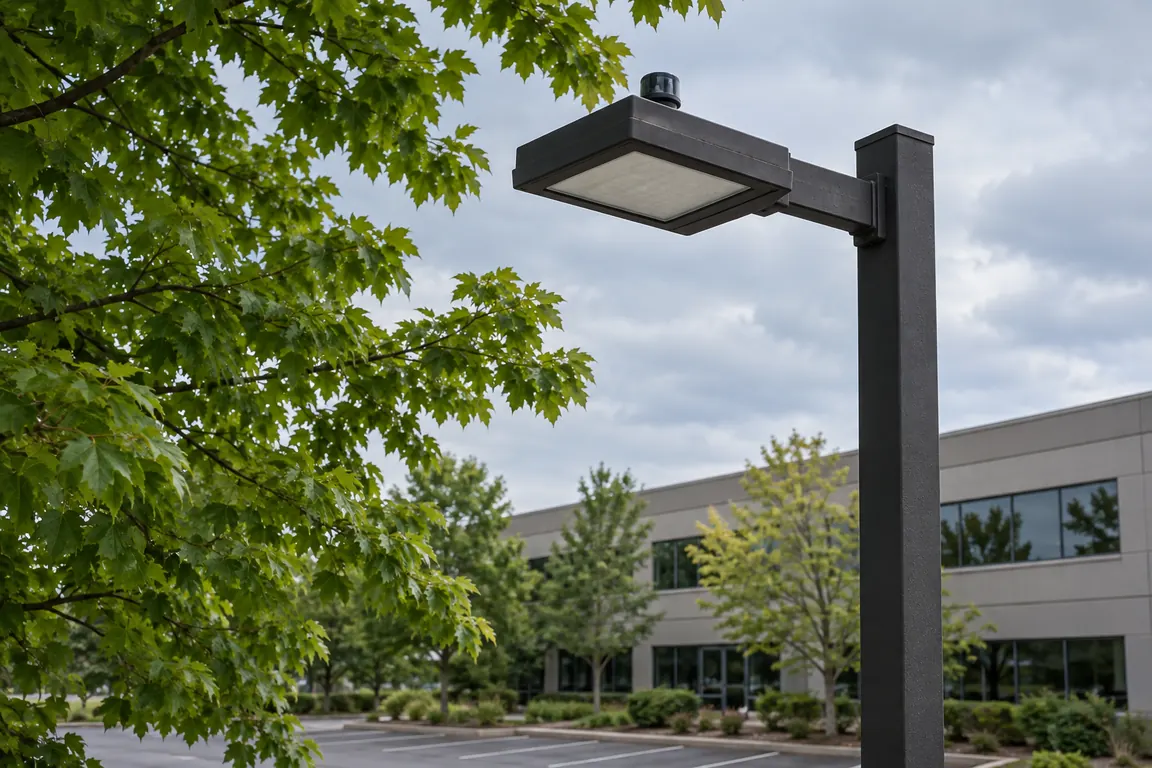
Review compatibility before replacing the control.
The existing photocell may be integral to a fitting or part of a separate control arrangement. Record known equipment information from manuals, drawings or prior service documents. The proposed replacement needs to suit the connected lighting and the installation conditions. Physical resemblance does not establish electrical compatibility or the intended behaviour.
Replacing older fixtures can also prompt a control review. The connected equipment and its operating characteristics may change, and light reaching a sensor can differ after the new fitting is installed. Keep the fixtures and controls in the same scope discussion so the replacement does not introduce an unexplained sequence.
The ESA product approval guidance explains recognised marks for electrical equipment. Approval does not substitute for checking a device against the actual lighting arrangement and environmental conditions. If fixture flicker accompanies the control complaint, describe it separately using the flickering commercial lights guide. Avoid attributing every visible variation to the daylight sensor before the connected system has been reviewed.
Keep safe observations separate from electrical investigation.
Facility staff can identify the affected area and record visible behaviour without reaching the sensor or opening a fitting. A ground-level photograph can show the building face, nearby light sources and obstructions. Include a wider view when the local environment may be important; a close image of the fitting alone may hide the relationship to the overhang or sign.
Do not cover the sensor, alter wiring, open controls or improvise elevated access to reproduce a fault. Those actions change the conditions and can create risk. Service investigation should be planned by the appropriate electrical professional, with the property contact coordinating access and any necessary interruption to the affected area.
The parking lot repair and LED replacement guide helps compare options when the control enquiry accompanies recurring faults in lot equipment. Where the intended hours are the issue, lighting timers and scheduling is the more specific planning topic. A clear service request should distinguish unexpected daylight response from an agreed schedule that no longer matches the property’s operation.
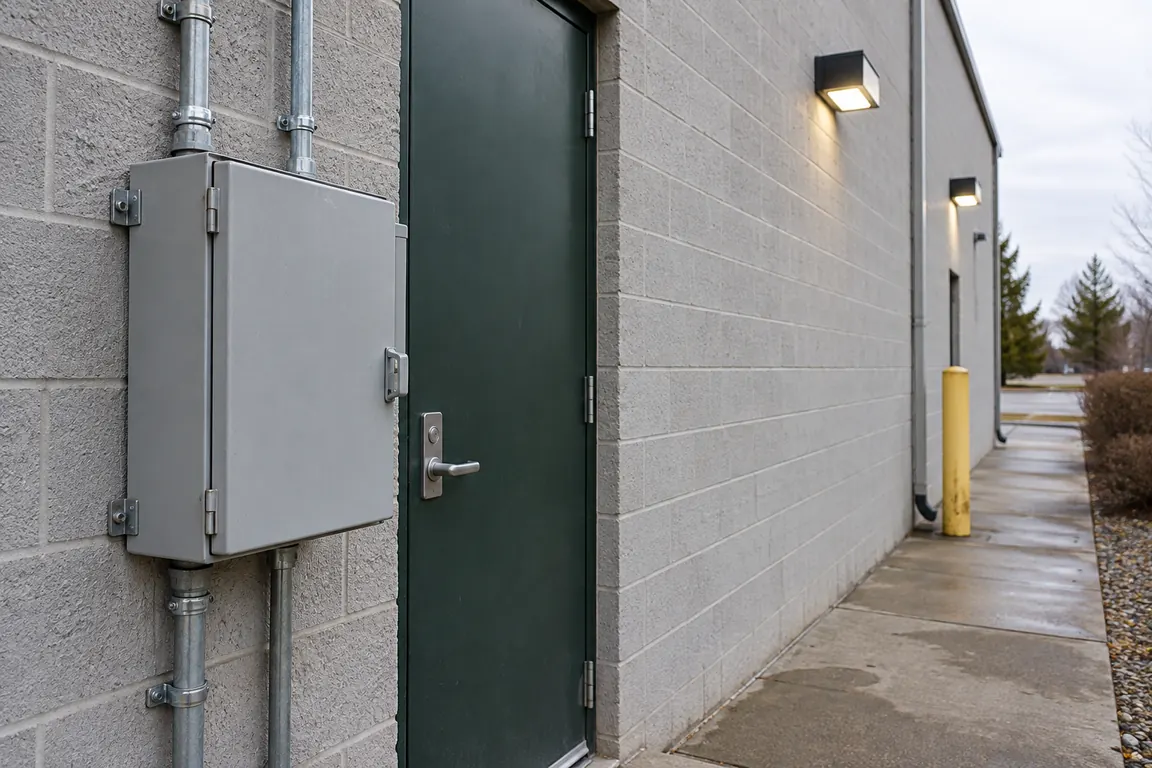
Define the intended sequence and retain it.
Agree how the controlled area will be reviewed after work. Compare the result with the behaviour requested, including the appropriate daylight period and occupied hours. A daytime installation visit alone may not demonstrate every relevant condition; the handover plan should identify what observations remain necessary.
Compare the lighting service scopes when the daylight-control concern also involves fixture replacement, parking coverage or a wider exterior change.
Collect the operating brief.
Identify fixtures, areas, opening hours and any exceptions. Record the observed fault and whether it is consistent or intermittent. Include known control and fixture information without asking staff to access equipment.
Review the control relationship.
The professional scope should establish device location, compatibility and interaction with timers or other controls. Resolve responsibility for each area and confirm applicable notification requirements. Keep changes to the intended sequence visible to the approving property contact.
Document the final operation.
Retain the area map, installed device details and authorised override procedure appropriate to the system. Record any unresolved observations and the contact for future changes. This gives a later service request a reliable starting point rather than an assumed operating schedule.
Questions about this lighting scope.
Why can lights be on when the parking area looks bright?
The sensor responds to conditions at its own location, which may be shaded or affected by surrounding surfaces. The system may also have other controls or an override. Record the area, time and pattern. Those observations help a qualified review determine whether placement, sequence or an equipment issue is involved.
Can a timer and photocell be used together?
A combined sequence may be appropriate, subject to the equipment and installation. First define whether light is required based on daylight, occupied hours or both. The proposal should explain what each control contributes and how exceptions are handled. Simply adding a device without defining the intended relationship can create confusing operation.
Does replacing the photocell guarantee the fault is resolved?
A replacement should follow a review of the actual system. Sensor location, other controls, fixture compatibility or an electrical problem may explain the symptom. A useful service scope identifies the affected equipment and confirms operation against the intended sequence; it does not assume one reported behaviour proves one failed component.
What should a property manager include in the enquiry?
Provide the location, affected fixture group, observed hours and responsible contact. Mention signs, overhangs, nearby light sources and recent changes. Existing drawings or previous service records are useful when available. Gather photographs from safe ground-level positions and leave electrical access, testing and adjustments to the agreed professional service scope.
Ready to plan?
Bring the facility decisions into one scope.
Share the affected exterior area, observed daylight behaviour and intended operating hours. Include known photocell or timer details, nearby light sources and access limits. A failed control can be identified as a service request; a changed sequence belongs in an assessment.