Commercial lighting resources
Commercial Lighting Repair Service in Milton: What to Record Before Service
A useful commercial lighting repair service in Milton starts with a clear description of the visible problem, not a guess about the failed part. Whether a fixture is dark, a warehouse row flickers, or exterior lights run at the wrong time, recording the location, timing, affected area, and access conditions gives the service discussion a practical starting point.
At Milton Commercial Lighting, we provide commercial and industrial lighting repair for existing problems. We also offer maintenance, lighting assessments and planning, LED retrofits, and lighting controls when the evidence shows that an immediate repair is only part of the decision. The key is to keep an urgent fault, a recurring condition, and a possible broader upgrade as separate questions.
Start with the symptom, not a suspected component
A fixture that appears off does not identify the cause. Depending on the equipment and installation, a dark or inconsistent light can involve the lamp, driver, ballast, connection, control, or electrical supply condition. The same is true of a light that flickers or comes on at the wrong time.
Describe what you can safely observe in plain language. Useful descriptions include:
- One fixture is completely dark while nearby fixtures operate.
- A row or zone turns off intermittently.
- Output appears lower than adjacent fittings.
- Lights visibly flicker during a particular time or activity.
- Exterior fixtures remain on in daylight or fail to operate after dark.
- An occupancy-controlled area does not respond as expected.
A phone video or photo can support an observation, but it cannot confirm the cause on its own. Avoid naming a failed driver, photocell, or ballast unless that information has already been confirmed in a prior service record.
Identify the exact area affected
Location information turns a vague report into an actionable repair request. Use references that people at the facility already recognize, such as a room name, warehouse aisle, dock door, exterior building face, parking row, pole reference, or floor level.
For a single fixture, include what is immediately around it and what activity occurs below it. A failed fitting over an active packing position, work area, entrance, or travel route has a different operational impact than one in a seldom-used storage room. For a wider outage, explain whether affected fixtures form a row, share a room, operate in one exterior zone, or appear scattered across the property.
In a warehouse, a report such as “two dark fixtures above aisle C beside the receiving cross-aisle” is more useful than “lights out in the warehouse.” Where poor coverage rather than failed operation is the concern, our guide to dark warehouse aisles can help distinguish a layout or distribution issue from an equipment fault.
Note when the problem occurs and what changes it
Timing can help separate an isolated fixture concern from a group, schedule, or control issue. Record when the problem was first noticed, whether it occurs throughout the day, and whether its behaviour changes with daylight, shift changes, occupancy, or normal schedules.
For example, exterior lights that remain off all evening are different from lights that operate normally at dusk but shut down later. Likewise, a flickering fixture that appears only during certain operating periods should be reported with that pattern rather than treated as a confirmed component failure.
Include recent changes that may provide relevant context, without drawing conclusions from them. New racking can affect sightlines in a warehouse. A changed shift may reveal that an older lighting schedule no longer aligns with operations. A recently replaced fixture may behave differently within an existing control group. These details help frame a review; they do not prove which device is responsible.
Keep controls concerns separate from fixture failures
Lighting controls determine when and how zones operate. Sensors, photocells, timers, schedules, dimming, zoning, and networked controls can all produce symptoms that look like fixture failure. A room may stay dark because its intended sequence is not being met, while an exterior lighting issue may only appear at a particular time of day.
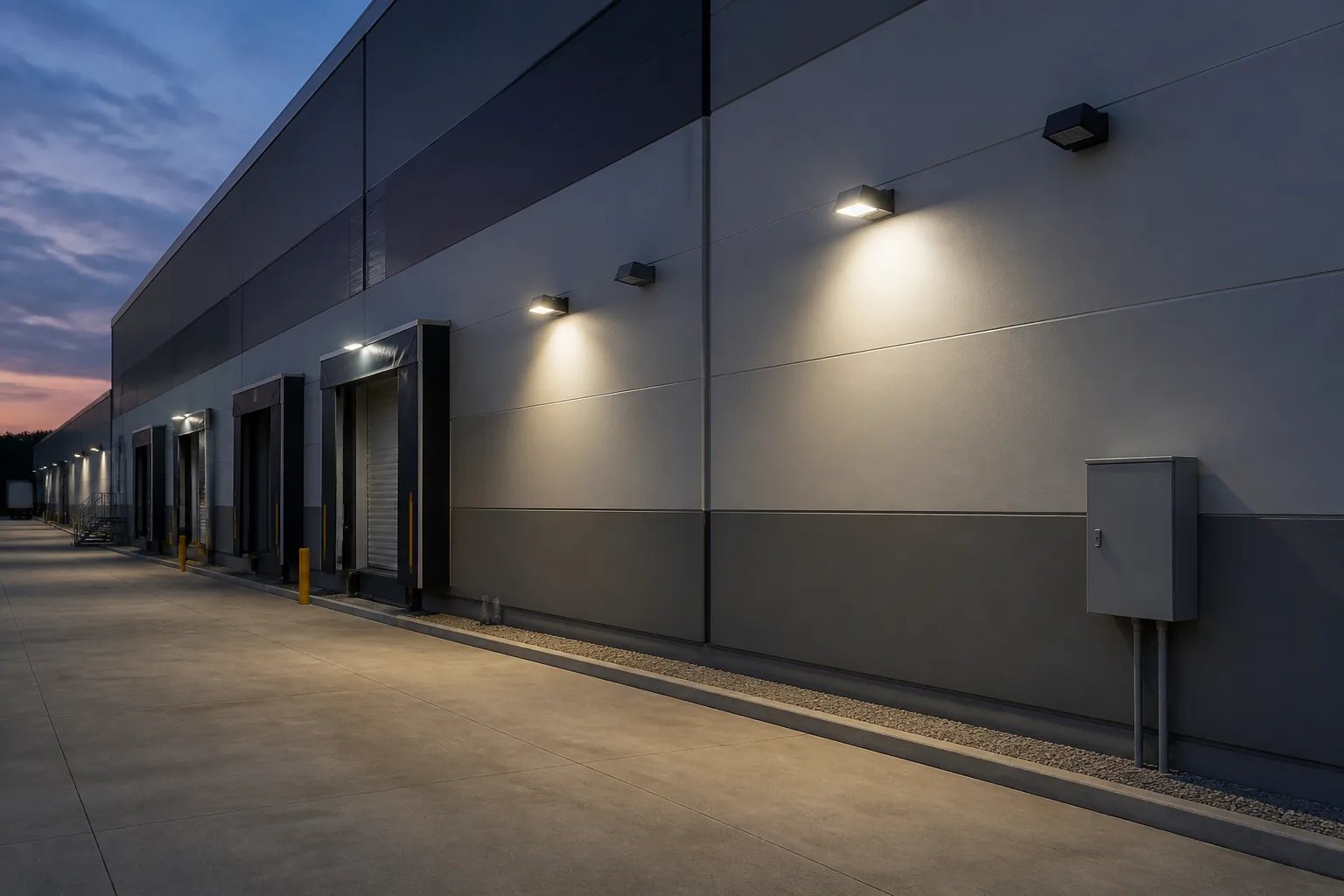
For a control-related concern, describe both the expected and actual behaviour. For instance, state that a loading approach should operate after dark but only some fixtures come on, or that a controlled area switches off while a stationary task is still underway. If the facility has documented settings or a zone map, that information can be useful to share.
Do not bypass controls, alter programming, open devices, or repeatedly cycle electrical equipment to test a theory. Those actions can add risk and make the original symptom harder to understand. For planned changes to zones, schedules, or sensors rather than an immediate fault, see our commercial lighting controls services.
Prepare access information before requesting repair
Access often shapes the practical repair scope, especially where fixtures are elevated or located over active operations. A high-bay fixture above racking, a parking-area pole, or an office ceiling above occupied workstations can require different coordination than an accessible fixture in an open room.
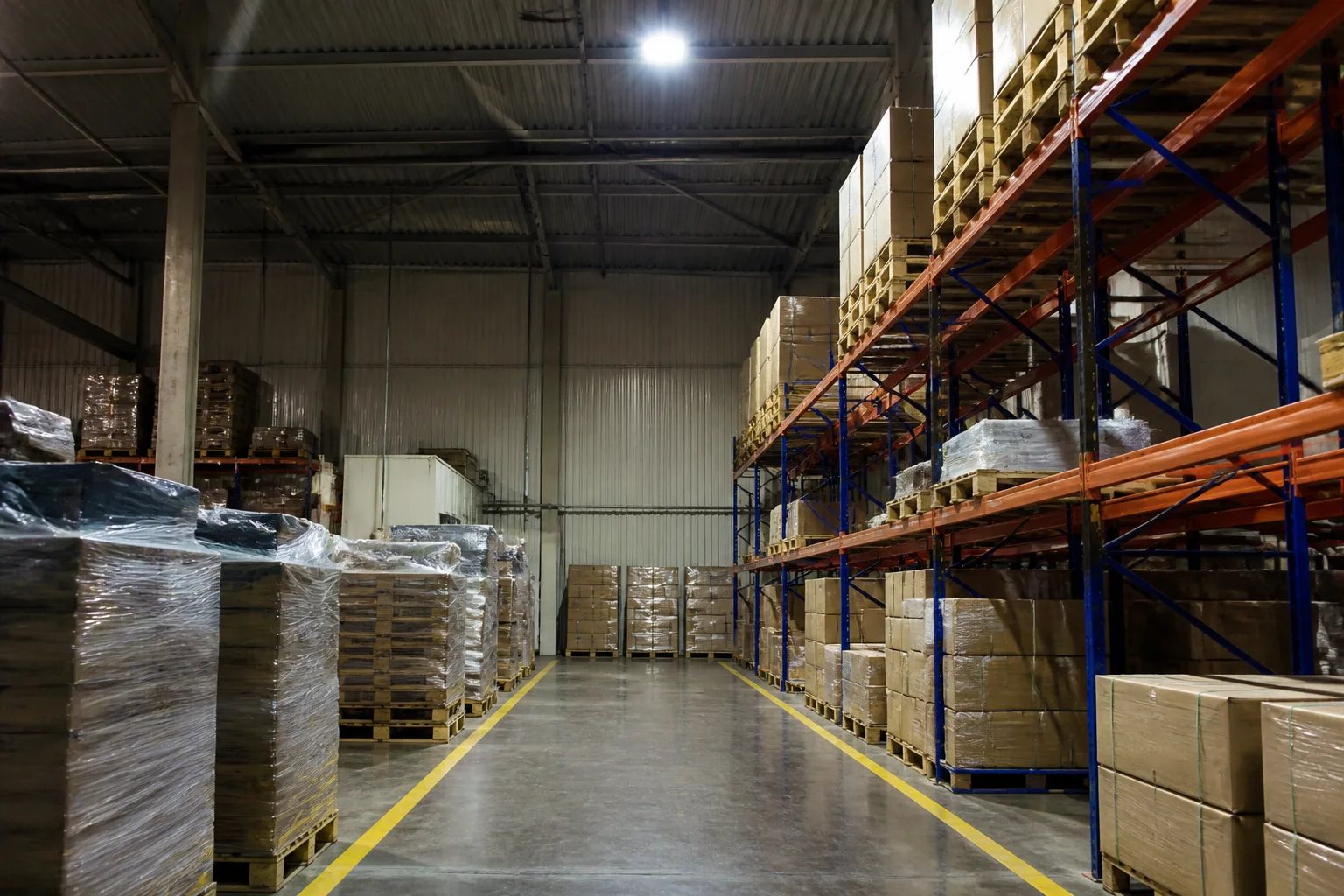
Share the conditions that affect the work area: approximate mounting height if known, aisle width, nearby storage, vehicle traffic, loading schedules, doors, mezzanines, tenant activity, and any building rules. Identify when the area can be released and who can authorize access or coordinate a temporary route change.
Safe, ground-level overview photos can be helpful because they show the fixture location, surrounding obstructions, and access route. Staff should not climb ladders, remove covers, open electrical housings, or access elevated equipment merely to identify a model number. Existing invoices, fixture schedules, and maintenance records are safer sources for known equipment information.
Safety first
Do not troubleshoot elevated or energized lighting equipment
Use accessible records and ground-level observations. Do not remove covers, climb to inspect fixtures, bypass controls, or repeatedly operate electrical equipment to reproduce a fault. If the condition creates an immediate hazard, follow your facility’s safety process rather than relying on a service enquiry.
What to include in a commercial lighting repair request
A concise record does not need to diagnose the equipment. It needs to describe the current condition accurately enough to establish the area, impact, and access requirements.
Service request checklist
Information that helps define the repair scope
Gather the details already available at the facility. Mark unknown information as unknown rather than making an unsafe inspection or a technical guess.
- The facility location and a clear reference for the affected room, aisle, dock, entrance, parking row, or exterior zone
- The visible symptom, such as dark, flickering, intermittent, dim, inconsistent colour, or wrong-time operation
- When the issue was first noticed and whether it changes with daylight, shifts, occupancy, or schedules
- The extent of the problem: one fixture, a row, a room, a control group, or several exterior fittings
- The activity, route, workstation, or access point affected by the lighting condition
- Known fixture details, prior invoices, maintenance records, or zone information already held by the facility
- Access restrictions, including racking, stored goods, traffic, tenant activity, mounting height, and available work windows
- The site contact who can coordinate access and approve release of the work area
For a current outage or visibly unreliable fixture, our commercial lighting repair service is the direct starting point. If you are reporting a broader list of known issues or organizing ongoing facility records, commercial lighting maintenance can support a longer-term approach after the immediate concern has been reviewed.
When repair should lead to a separate replacement discussion
One failure does not automatically mean every fixture needs replacement. A repair may be the appropriate scope when the problem is isolated and the remaining equipment continues to suit the area. However, repeated faults, difficult elevated access, unavailable compatible components, inconsistent output across a zone, or lighting that no longer matches the way a space is used can justify a separate review.
That wider review should not be folded silently into an urgent repair request. A repair scope addresses what needs attention now. A replacement or upgrade discussion should identify what would be retained, what would change, how surrounding fixtures and controls would be affected, and why the broader work is being considered.
Where recurring repairs point to a larger equipment decision, our commercial LED lighting retrofit service provides a separate path for assessing existing lighting. For sites where the main question is how areas, tasks, fixture locations, and access fit together, a lighting assessment and planning discussion can help organize the information that still needs review.
Handle immediate operational concerns through facility procedures
If a lighting condition creates an immediate hazard, follow the facility’s established safety procedures and involve the appropriate safety or emergency personnel. A website service request is not an emergency response channel. Describe the affected route or task, the arrangements already made by the facility, and the responsible site contact when service is requested.
For ordinary faults, a specific symptom record helps avoid unsafe troubleshooting and supports a clearer service discussion. The goal is not to identify an electrical part from the ground. It is to communicate what is happening, where it is happening, and what conditions must be considered to address it responsibly.
Helpful answers