
Commercial lighting resources
Commercial LED Retrofit Planning in Milton: What to Review Before You Replace Fixtures
Commercial LED retrofit planning in Milton should begin with a clear picture of the lighting already in your building: where each fixture is located, what work happens below it, how long that area operates, and whether the issue is equipment condition, visibility, controls, or a combination. That foundation helps distinguish a straightforward replacement from a project that needs a different layout, better zoning, or a phased approach.
At Milton Commercial Lighting, we provide commercial LED lighting retrofits for commercial and industrial properties. A defined scope matters because changing to LED is not one universal method. Retaining an existing housing, replacing components, installing complete fixtures, and changing the layout can each involve different compatibility, access, maintenance, and lighting-performance questions.
Start with zones, not one building-wide fixture count
A warehouse, office area, stock room, loading zone, and reception space can have different fixture types, operating schedules, and visual demands. Treating them as one lighting system can hide the problem that actually needs attention.
Create a simple inventory by area. For each zone, note the fixture style visible from floor level, approximate quantity, known model information, normal operating hours, and any observed concerns. Existing maintenance records, schedules, floor plans, and safely taken photographs can all be useful. When information is unknown, record it as unknown rather than guessing.
Also separate condition from useful light. A fixture can operate reliably yet leave a work surface, shelf face, or aisle poorly served. Conversely, a fixture may be well positioned but have a localized fault that does not justify a full replacement program. This distinction keeps a recurring repair issue from being confused with a broader retrofit need.
Define the problem at the work position
More output is not automatically better lighting. Light distribution, fixture position, mounting height, shadows from racks or equipment, glare, reflections, and the direction people normally face all affect what is visible in a working area.
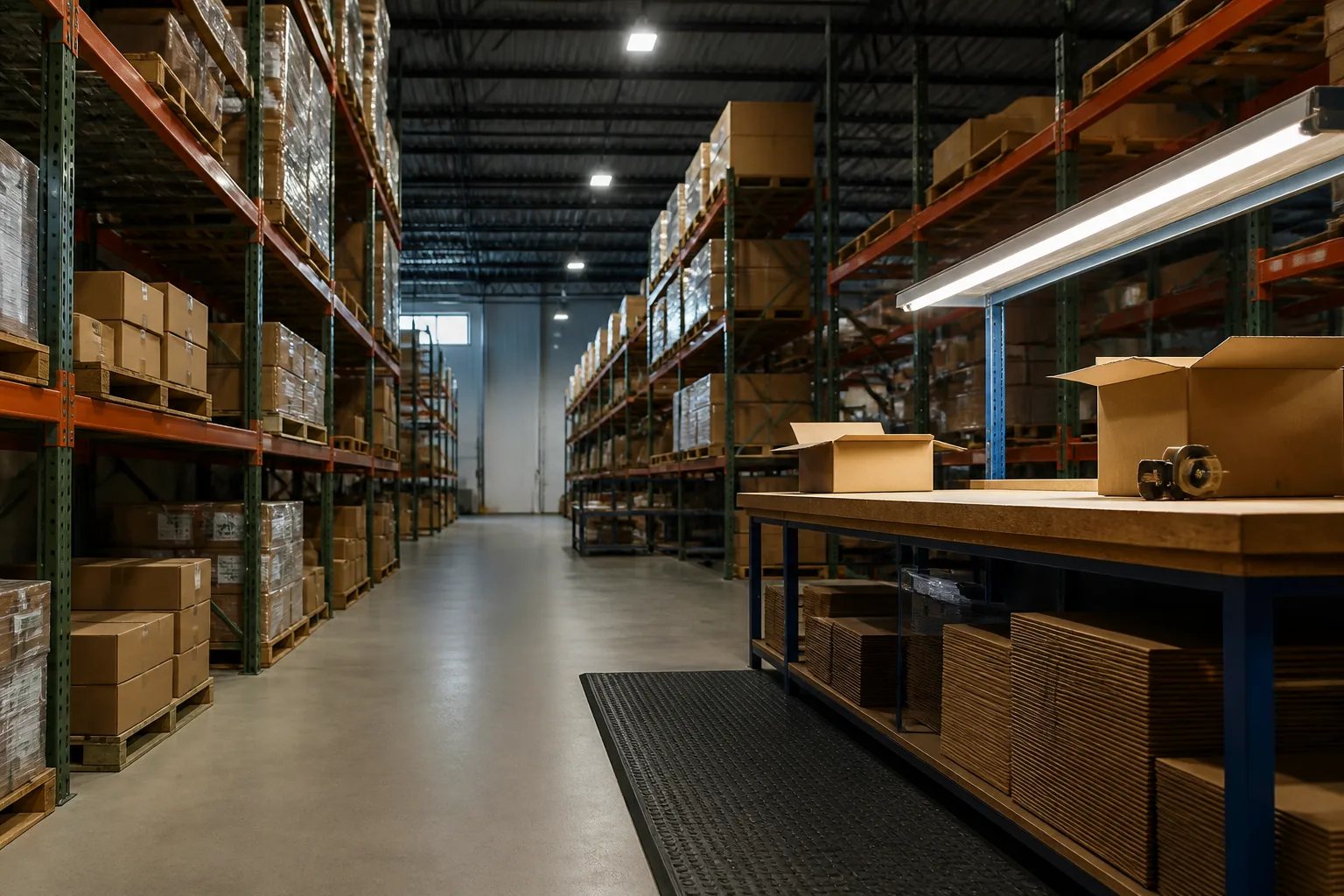
Describe the task in practical terms. Examples include reading labels in a storage aisle, inspecting detail at a bench, viewing screens at a workstation, moving through a loading area, or serving customers at a counter. Then describe the observed concern: uneven coverage, a dark shelf face, glare in a line of sight, reflection on a screen, flicker, or inconsistent colour between fittings.
For overhead industrial applications, the actual ceiling height, rack arrangement, and task area should shape the review. A smaller fixture is not automatically an equivalent replacement for a broad older fitting just because it has a lower listed wattage. Our high-bay LED lighting service addresses the distinct questions that arise where mounting height and coverage below the fixtures are central to the project.
Office and industrial zones also deserve separate consideration. A replacement that works in open storage may not suit desk positions, glazing, screen reflections, meeting spaces, or ceiling finishes. Where office areas are part of the project, our office LED lighting upgrades service provides a more focused starting point.
Compare replacement routes before comparing fixture prices
The term “LED retrofit” can describe substantially different scopes. Ask every proposal to explain what remains in place, what is removed, how the replacement will operate, and which conditions still need confirmation.
| Replacement route | What it can involve | Key questions to resolve |
|---|---|---|
| Lamp-based conversion | Changing the light source while retaining the housing | Is the existing housing in suitable condition, and is the intended arrangement compatible with the fixture and controls? |
| Component replacement | Replacing a failed or ageing component in an existing fitting | Does the complete fitting still suit the area, and will compatible parts remain serviceable? |
| Complete fixture replacement | Removing the existing fitting and installing a new fixture | How will mounting, light distribution, electrical interface, controls, and maintenance access be handled? |
| Replacement with layout changes | Changing fixtures and their placement or control zones | Where are people working, what obstructions exist, and how should the revised space operate? |
Fluorescent, HID, and earlier-generation LED equipment should not be treated as identical starting points. Fluorescent systems raise questions about the housing, optics, and ballast. HID replacements need review at the actual mounting height and against the coverage needed below. Existing LED equipment may have unavailable parts, inconsistent colour after past repairs, or controls that do not suit the intended operation.
Electrical safety approval, efficiency qualification, and compatibility with a specific installation are separate matters. One does not prove the others. The selected route needs to suit the actual equipment and proposed electrical work.
Build energy estimates from visible assumptions
An energy comparison is most useful when it states the inputs clearly. For each zone, compare the existing system input, proposed system input, fixture quantity, and expected operating hours. If controls will change operating time, that should be shown once in the calculation rather than counted again as a separate full saving.
Older equipment can make this less simple than a catalogue comparison. A listed lamp wattage may not represent the complete input of an older lamp-and-ballast system. Likewise, a posted schedule may not match actual shift overlap, seasonal use, cleaning periods, or areas left on for convenience.
Projected savings are planning estimates, not guarantees. Changes in activity, occupancy, rates, operating schedules, and future layout can affect actual results. The upfront comparison should also account for access, removal, installation, controls, staging, and work-area preparation. A lower equipment price can be less useful if it leaves a distribution issue unresolved or creates a harder-to-maintain arrangement.
Key decision point
A direct LED replacement does not automatically correct a lighting-layout problem
If racks, workstations, partitions, or operating patterns have changed, assess where light is needed now. Replacing fixtures in their original locations can preserve the same shadows, glare, or poorly grouped controls.
Plan control behaviour with the new lighting
A retrofit is a good opportunity to write down how each area should operate. The intended sequence is often more useful than starting with a device name: which areas should operate independently, when the space is normally occupied, whether local control is needed, and how inactivity, daylight, or schedules should affect the lights.
Controls are not interchangeable add-ons. Fixture drivers, selected control equipment, room geometry, racking, and the way people occupy the space all affect whether a proposed arrangement is suitable. For example, a sensor in an open area should not be assumed to cover positions hidden by loaded storage racks, and one shared schedule may not suit an office, warehouse aisle, and rear-door activity.
We provide commercial lighting controls, including occupancy and vacancy sensors, timers, photocells, dimming, zoning, and networked lighting controls. The useful first step is to document the behaviour your facility needs before selecting compatible equipment.
Prepare access, phasing, and future maintenance
Access is part of the retrofit scope, not a last-minute installation detail. A fitting above clear floor space presents a different working condition from one above loaded racks, machinery, a customer counter, or a busy travel route. Identify what can be moved, which areas must stay active, available delivery or staging space, and the work windows that operations can realistically provide.
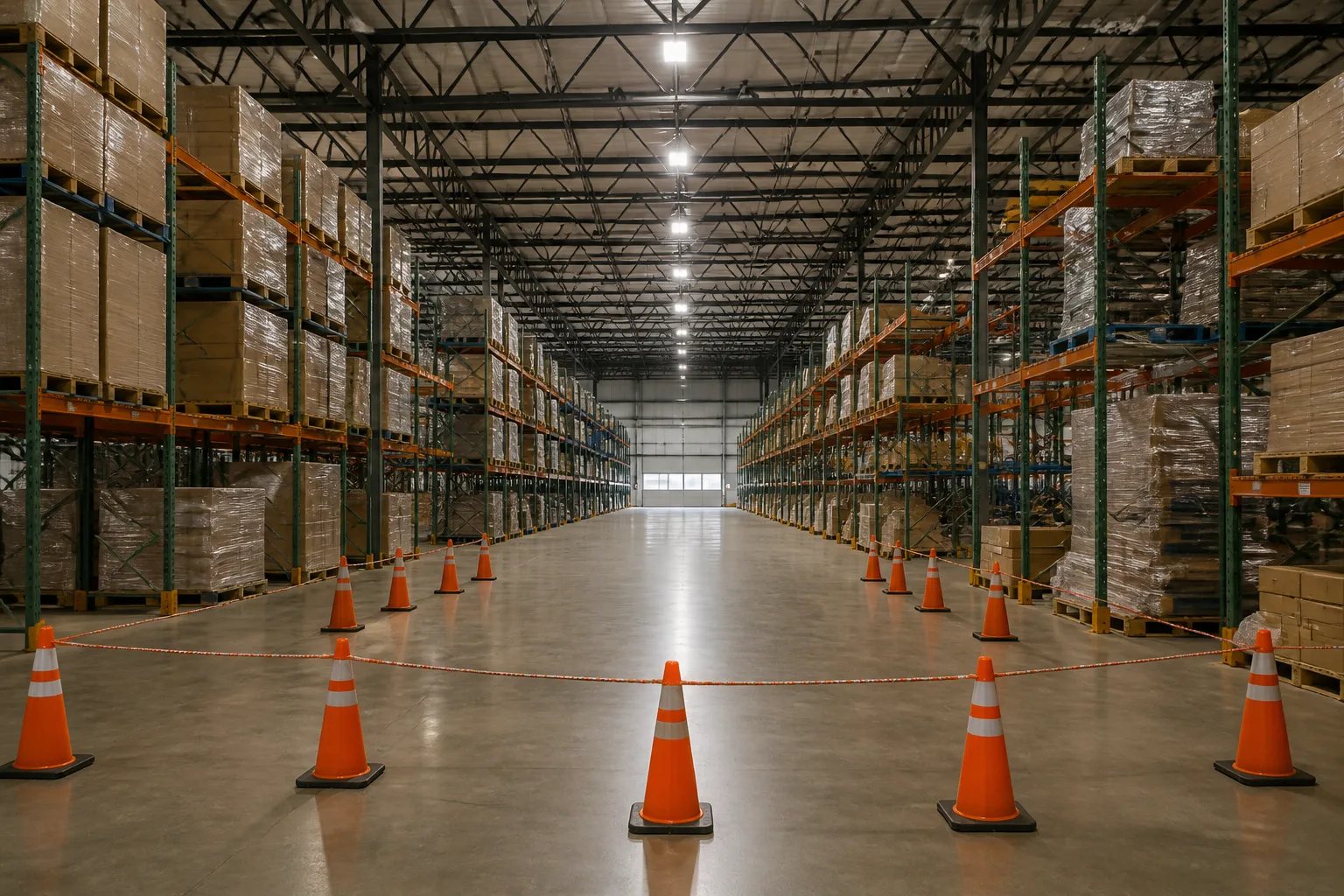
Phasing may follow an aisle, room, department, or agreed operating window rather than an arbitrary fixture quantity. Each phase should identify how the area will be released for work and how it returns to normal use. If older and newer systems will operate together temporarily, record any expected differences in output, appearance, or controls.
Future service deserves the same attention. Keep a fixture schedule organized by zone, along with model references and control information. This makes later failures easier to describe and avoids unnecessary uncertainty if a fixture must be repaired or replaced. Plan removal as well: lamps, tubes, drivers, and complete fixtures may require different collection arrangements.
Retrofit preparation checklist
What to gather before a commercial LED retrofit assessment
Bring together the information that identifies the real scope without asking anyone to open fixtures or access elevated equipment.
- A simple floor plan or sketch showing named zones, racks, workstations, doors, and travel routes
- Safely taken floor-level photographs linked to the correct area and viewing direction
- Known fixture schedules, product information, maintenance records, or prior repair details
- Normal operating hours for each zone, including shifts, intermittent use, and after-hours activity
- A short description of the task or visibility concern in each affected location
- Access limits such as loaded racks, machinery, narrow aisles, customer-facing areas, and available work windows
- The intended control behaviour for each zone and the contact authorized to approve changes
Check incentive timing before equipment is purchased
Potential incentives can affect the order in which a project is planned, purchased, and documented. Eligibility can depend on product type, purchasing channel, customer details, project timing, and the current program requirements. It should not be assumed from the word “LED” alone.
Confirm the applicable requirements before making a purchasing decision or treating an incentive amount as part of the project budget. Product substitutions can also change the review. Our commercial lighting incentives page provides broader context for discussing current retrofit incentive pathways.
Turn observations into a decision-ready retrofit brief
A strong LED retrofit brief does not need every product decision in advance. It should identify the zones to be reviewed, what each area is used for, known equipment information, operating hours, observed problems, access restrictions, intended control behaviour, and the priorities that matter most. Those priorities may include recurring failures, better task visibility, consistency, energy use, maintenance, or a combination.
When the building has changed substantially, such as new racks, partitions, workstations, or operating patterns, the project may need lighting-layout planning in addition to a direct LED replacement. Keeping that distinction clear helps ensure the finished scope responds to current use rather than simply reproducing an outdated arrangement.
Our lighting assessments and planning service can help organize these questions into a practical scope for your property. Start with the affected zones and the decisions you need to make before equipment is ordered.
Helpful answers